Desert Online General Trading LLC
Dubai, United Arab Emirates
Desert Online General Trading LLC
Dubai, United Arab Emirates
Full description not available
S**S
solid
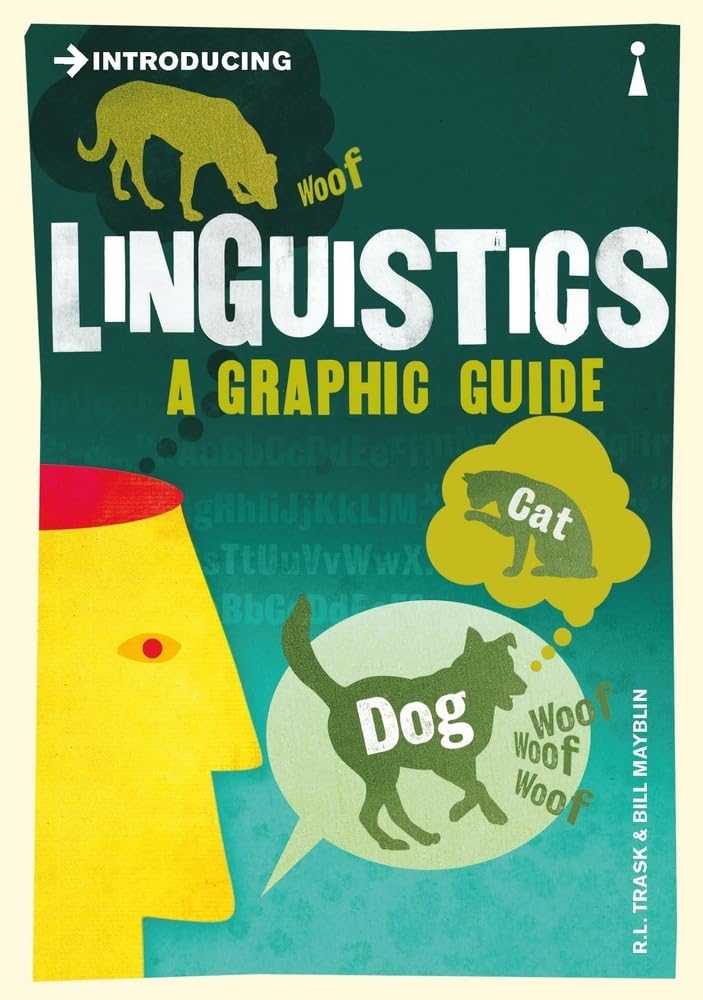
I have an MA in linguistics and I taught Introduction to Linguistics for a few years at university. I found the book accurate and enjoyable. You won't get any technical information about any specific methods of analyzing phonology, syntax, or semantics. What it does contain is a good overview of the modern linguistic approach to studying language and how that approach has developed over the past 200 years or so (with a nod to some ancient linguistics as well).I bought this for my 12 year old son and he enjoyed it, though I think the target audience is adults with a passing interest in the topic. Overall the style may be a little dry for some children.Another review claimed that this book mislabled Greek as a Slavic language. The book does not. I believe that the reviewer misread a passage that said that Slavic languages and Greek (as well as many others) are all Indo-European languages.
M**R
Brief introduction
Although this is a brief book but it provide a very descent general introduction to linguistics.It works as an overview of the topic and a launch pad to further reading.The reason why I gave 4 stars is the illustrations, I thought that they were of mediocre quality and didn't add much to the content.
A**G
A Good Introduction
It's important to understand that the Introducing series is in the business not of teaching you the entirety of any given subject, but merely introducing you to it. This, as with many other titles in the series, gives you a very quick summary of the movement and its history and touches on many of the significant branches. Believe me, you can always go deeper, and really one ought to if one desires anything close to an actual understanding of the subjects the people at Totem Books purport to introduce.What I find is that these books in general, and this title specifically, prepares your for deeper reading by giving you the gist of things, and thus allows you to engage other texts with greater sustain and keener acumen. There are other series of course, Cambridge has their wonderful, if frequently denser, Companion series, and Paul Strathern has made his career giving a similar gist in 90 minutes. I would say that the people at Totem have hit the so-called sweet spot with these though. Strathern is too often concerned with biographical detail for my tastes, and spends less time with the ideas themselves (though of course the life of a thinker is important to understanding them. Cambridge has wonderful guides, but even these may be a tad much for someone merely seeking to dip their toe in and take a look around. This is why I recommend this series.The graphic approach hopefully renders these concepts more accessible to a wider audience, and can indeed make what are often thought of as dull subjects, quite entertaining.
B**L
Good addition to your library
Meh... still a good addition to any library
M**L
A great, brief and accessible introduction
If you're intrigued at all by language, what it is, and the history of its major developments, this is a great start. It's a really inviting read that doesnt bog the reader down at all with anything technical. It surveys a great amount of the major people involved in the history of linguistics from Panini to Sapir to Pinker and their respective contributions without going too deep. A really perfect intro book.
R**G
Intended as an introduction
Effective as a long précis of the subject, ends abruptly leaving the feeling that more could have been said about the current state of the art. Good presentation includes nice drawings.
L**Y
Interesting and Informative
Very good book, easy to understand and follow. The author kept the book interesting and informative. I like the book and I recommend it.
S**R
A good start
The author does a good job of summarizing the development of a complex discipline. I am a professor of ethnomusicology, and use linguistic analysis in my work. As an overview of concepts, I am considering using this as a supplement for my students. The one thing that annoyed was the author's assertion that dolphins do not possess language. Given current knowledge, we know that dolphins transmit sonar scans as part of communication. This would seem to imply some sort of semiotic system. A small point, but I feel the author should qualify their statement.
Trustpilot
2 weeks ago
1 week ago