

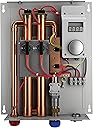


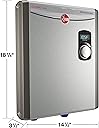
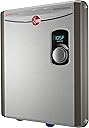

RTEX-18
Product ID: 38866492
Details
- BrandRheem
- Capacity18 gallons
- Power SourceAC Power
- Product Dimensions14.5"W x
- Special FeatureLED Display
⚡18 KW power output
💧4.4 GPM flow rate
🔆±1° LED digital thermostat
Desertcart purchases this item on your behalf and handles shipping, customs, and support to Peru.
🔥 RTEX-18: Hot water on demand, savings on command!
The Rheem RTEX-18 is a high-efficiency, tankless electric water heater delivering 18 KW of power and up to 4.4 gallons per minute flow. Featuring a precise LED digital thermostat with ±1° accuracy and advanced self-modulating technology, it optimizes energy use to cut heating costs by up to 50%. Its compact design is 90% smaller than traditional tanks, perfect for space-conscious homes. Durable copper immersion heating elements are field-serviceable, and simple threaded water connections enable straightforward installation. Ideal for single or multiple point-of-use applications, the RTEX-18 offers endless hot water with modern convenience and cost savings.


| ASIN | B01MR7Z39V |
| Best Sellers Rank | #8,295 in Tools & Home Improvement ( See Top 100 in Tools & Home Improvement ) #1 in Water Heaters |
| Brand | Rheem |
| Brand Name | Rheem |
| Capacity | 18 gallons |
| Color | Gray |
| Customer Reviews | 4.2 out of 5 stars 2,180 Reviews |
| Efficiency | 99.8% |
| Flow Rate | 4.4 gpm |
| Global Trade Identification Number | 00020352685335 |
| Heat Output | 18 KW |
| Included Components | Fittings, Aerators |
| Item Depth | 18.25 inches |
| Item Dimensions W x H | 14.5"W x 18.25"H |
| Item Type Name | Water Heater |
| Item Weight | 14.8 pounds |
| Manufacturer | Rheem |
| Manufacturer Part Number | RTEX-18 |
| Material Type | Stainless Steel |
| Maximum Pressure | 150 |
| Maximum Temperature | 140 °F |
| Model Number | RTEX-18 |
| Mount Type | Wall |
| Number of Items | 1 |
| Power Source | AC Power |
| Product Dimensions | 14.5"W x 18.25"H |
| Special Feature | LED Display |
| Special Features | LED Display |
| Style Name | Whole Home, 18 kw |
| UPC | 020352685335 |
| Unit Count | 1 Count |
| Voltage | 240 volts |
| Wattage | 18000 watts |
X**R
Cost savings in a small box!
a 10+ year old rheem tank needed to be replaced. it wasn't broken but end of service life. and so much so if you drain it. after a lot of research I decided to go with tankless. fearful at first because hey is this truly better? the idea of having on demand seemed appealing. cost savings, of course. but then what type to get?! In the end I settled for a 18k rheem. ecosmart is also well reviewed, but supposedly this is just a rebranded rheem? (like dewalt and black/decker). It is super easy to install. it is small, frees up space, another bonus. costing half of a tank heater. if you can do it yourself... the installation cost is high, as you will have to run new electric and change some plumbing, but that is no biggy. you'll spend about $60 for a valve kit, $50 sharkbites and pex and some for the 8 gauge wire (that can add up if it is a long run btw). for this model you need 2x40amp breakers the water is instantly hot, it easily serves 2 showers, one shower+dishwasher and laundry (tested!) I am very very impressed. also it feels cleaner as there is no water sitting in the tank (you should have seen the drain I had to do from the old tank to get it out of the way). highly recommend a tankless heater and this model works for our household. note: read about technical issues, so far all good, but will update if experienced. installation cost will add up if you can't do it yourself and requires logistics (between plumber and electrician). another installation note: when you get a valve kit with pressure relief (required by most code), it is effectively a gender changer. so when you get flexible hose (female), you need a M/M nipple to attach it to the valve kit... (that is another $20 for 2 nipples to take into consideration). That nipple needs to be taped on the valve attach side, the flex hose side has a o-ring and doesnt need tape (and don't add it either as it will leak)
A**Y
Thermistor Breaks and Reinstall Might Trash the Unit
Update: Rheem agreed to warranty the unit and send a new one. Although it was a bit of work to get done, I am thankful to not have to go out and buy a new one. Worked well for a while, but then the thermistor stopped working. It was a pain to get the replacement part I needed, and warranty didn't cover it. When installing the new one, the small partition inside the hole that the thermistor presses against broke, completely bricking the unit. The thermistor then was stuck with water leaking where the wire comes out, and I had to break it to remove it. Poor design. I don't have experience with other tankless heaters, but I would caution against this one for long term usage.
A**R
Great water heater
Great electric water heater with user friendly install. Make sure to read the manual. I purchased the 18kw system. Depending on the state you live in, depends on if it will run up to two showers at the same time. We're only able to run one, as our outlet temperature is too cold and I have to run an on-line flow regulator at 2.0 gallons per minute. Not an issue for the most part, it'll end up saving on water I'm the end. Things to note: The temperature and pressure of your cold water (inlet) determines how it works out of the box. Read the manual because you will likely need an inlet flow regulator. This will fix the issue if the heater displays and "E5" error code. The error code means the water is leaving the heater too fast for it to heat, leaving you with like warm water. Because it's electric, you may notice light fixtures blinking when running hot water. This is due in part because of the power draw of the heater, but also because the fixtures or outdated/old. I have led recessed lighting and led light bulbs in some rooms. They have no issues, but my other light fixtures that are not led, will blink when running hot water. A system like this will "expose" older hardware. Make sure you have the water shut off valve before the water filter. The water filter helps delay the build up of water deposits in the water heater, which extends the life and make maintenance of the heater easy.
F**I
Updated Review 2+ years Not Great tankless water heater!
I'll leave the original review below. It's been a little over 2+ years and have had to replace every single part and then finally replace the entire unit. Then the new one brand new out of the box did not work properly then finally fail 1yr and 2 months after purchase. This unit should be removed from sale and recalled that is how dangerous they are. If you have this unit installed I would highly recommend take it out and replacing with something else. It almost burned my house down! Just take a look at the pictures in this review and see for yourself. Okay full detail review below. 1st I'd like to say Rheem makes good products but this is not one of them. Here's why: 1st unit failed only less than 1 year of use. The elements exploded inside and needed to be replaced. Fine no problem, kill breaker, shut water off, unscrew 4 wires, take out element replace, re-screw wires, done in 30 minutes. Far beats dealing with a leaking water heater tank with 2 inches of water in your basement. Or lugging a 50lb broken tank up your stairs to replace at the Lowes or Home depot. Ok so I put the new elements in and it's heating again. Not more than a few months later the wire harness started arcing and fused together melting off and almost catching fire. I happened to see the arcing when the unit was on and didn't realize this was not part of how it operates. Thought it was just how it is. It tripped the breaker thankfully. I contacted the company and they sent me a new wire harness. I replaced it, still the unit wouldn't heat. So they sold me new inlet and outlet water sensors and a new flow sensor. That didn't fix it. So they said the motherboard must have fried. So I replaced the motherboard. That didn't fix it. So I purchased a completely new one. I mount the new one hooked it up and the water heater would stop heating randomly during a shower. So I set it to bypass mode 125 degrees and said "heck with the temp controls just give me heat" So a brand new unit I cannot even set the temperature. But I figured 125 is hot enough. Okay moving on. Fast forward to a few days ago, Sept 2nd 2023 brown colored water shot out of my shower head and I knew right away the heater blew. It made 1 year. I open the element rods and sure enough the 1st one exploded worse than any before. Okay no problem, let me swap it with a spare. So I did but.. I had to remove the entire unit from the wall and shake and empty out all the guts that exploded sitting inside the element housing. Still not that hard. So I did it see picture of sink.. EZPZ right? Nope, after repressurizing, a weld must have cracked and a slow drip came down the 1st pipe element housing. I thought maybe its not tight enough. So I tightened it more and the crack go worse and went from a small drip to a full stream. I confirmed it was coming from a welded joint not the threads on the element rod. Okay now the entire unit is trash and needs to be junked all because as I was tightening the element rod it put stress on the joints and cracked them. This is horrible quality in the build and should not happen. So I put the old one back in and swap every part. Wire harnesses, motherboard, elements and finally the sensors. Oh but the sensor's I tightened too much and they broke through the housing which also makes the entire unit useless as that cannot be repaired. So I threaded bolts into their holes and set it to bypass. I ordered a Mizudo instead which does not have copper housings, instead cast aluminum and does not have it's heating rods mixed with the water like this and many unit's have. So far it's been excellent. I highly recommend not purchasing these Rheem electric water heaters for 2 reasons. Fire hazard and quality. They constantly break. Amazon should remove this from their store before someone's house burns down and someone gets hurt or killed. Original Review Below I love this water heater. I really don’t have any complaints. Super easy to install. Takes up like no space. No more water tank to explode damaging my basement. It takes longer to get hot water at the furthest end of the house but it’s so worth it. Once it’s hot it stays hot and I can run a shower plus 2 faucets before I start losing heat. This one took 2 dbl 40amp breakers and it’s powerful enough to heat multiple faucets simultaneously. We never take more than 1 shower at a time anyway with a family of 4. Hasn’t been a problem keeping up with our hot water needs at all. And for the price? This is a great purchase. Ditch the tank! You’ll thank yourself later.
D**E
excellent
I have a small condo and have gone thru 2 water tanks in the last 10 years. When my last one leaked I decided to go tankless. I called my friendly handyman and he recommended this one. I ordered and he installed. I love It!. It was easy to install (per his feedback) and it has so far been an excellent choice. I always have plenty of hot water (just me living here) it has allowed me to control the water temperature and has given me additional space from that ugly cumbersome tank that I had grown to hate. I am saving money on my electric bill (not huge but it all counts) and the cost to install was much less than buying another tank. All in all I highly recommend this unit to anyone that is considering a tankless unit. It is a 5 Star PLUS.
A**R
Worked as expected
Worked as expected
P**O
Tankless water heater
Great system, easy to install. Was a 1/2 day project but over all I'm very pleased on the outcome. The temperature is very easy to set and instant hot on demand was a plus. I did have to add a sub panel
G**A
🤩
Excellent
A**R
Very happy with item great quality easy to install
Very happy with purchase , highly recommend. Easy to install and very effective
J**V
Buen producto
Bastante cumplidor aun para lo que yo esperaba ya que solo requiero una cantidad relativamente baja de agua caliente y da bastante mas de lo esperado, totalmente recomendable
A**O
Buen producto
Es buen producto, solo la instalción se complica por el cableado electrico que debe ser calibre 8 y que los interruptores deben ser dobles por el tema de 220V. Por lo demas puedo comentar que el agua se calienta rapido, se mantiene a buena temperatura (ajustable),
D**Y
Works well.
So far this has worked well saves on electricity takes maybe 30 seconds to heat up and then I jump into the shower.
E**E
Es lo de hoy, fuera gas, fuera depósitos
Excelente equipo
Trustpilot
2 weeks ago
2 weeks ago