Desert Online General Trading LLC
Dubai, United Arab Emirates
Desert Online General Trading LLC
Dubai, United Arab Emirates

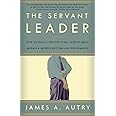
The Servant Leader: How to Build a Creative Team, Develop Great Morale, and Improve Bottom-Line Performance


R**S
Servant Leadership "Must-Read"
James Autry's (2001) book is essential reading for the servant-leader and servant-led who are looking for practical tools to change organizational culture. The book was arranged in four major sections: "A Foundation of Character and Vision" (pp. 1-36); Servant as Manager: The Everyday Nuts and Bolts" (pp. 37-98); The Harsh Realities of Organizational Life" (pp. 99-154); and "Finding the Balance" (pp. 155-240).His main contribution to servant-leadership is threefold: (a) he rightly points out the famous proverb about managers doing things right and leaders doing the right things is not a prescription that recommends leaders to think only of the forest and not the trees; "instead, it is meant to define what a manager must move beyond (focusing on how to do) in order to become a leader (focusing on what to do and how to be" (pp. 37-38); (b) as an organizational leader with deep experience, he does not shy away from discussing the harder aspects of organizational life--he is an effective counterweight for some of the Pollyannaish literature; and (c) as an experienced organizational leader, he provides some management and leadership technologies and understandings that the theorist alone cannot."Because this concept of serving others is an essential part of what I believe about leadership, let me offer you a list of six things I believe about leadership:1. Leadership is not about controlling people; it's about caring for people and being a useful resource for people.2. Leadership is not about being boss; it's about being present for people and building a community at work.3. Leadership is not about holding on to territory; it's about letting go of your ego, bringing your spirit to work, being your best and most authentic self.4. Leadership is less concerned with pep talks and more concerned with creating a place in which people can do good work, can find meaning in their work, and can bring their spirits to work.5. Leadership, like life, is largely a matter of paying attention.6. Leadership requires love." (pp. 20-21).
C**I
A match made in Heaven.
I'm not going to go into the details of the book itself, as previous reviewers have done that sufficiently. And if you're a student of the "Rock Star" CEO's, this probably isn't for you.What I will try and hammer home is that while it might seem contrary, this is the direction that good leaders in the submarine fleet have been going for years. Yes, the military is trying to practice servant leadership. Why? Because all of the assumptions that make Autry's book tick are true for the military. With few exceptions, like a civilian company, you have a team of skilled, highly trained individuals that want to do a good job. The best thing that you can do is provide them with the support, resources and feedback to let them get that job done. My only regret is that someone didn't hand me a copy of this book when I was a baby officer and tell me to read it. IT WORKS. Seriously. It works particularly well when you think it wouldn't, eg: high-stress situations. It works because your people are operating at their peak _effectiveness_ already, so overcoming this latest hurdle isn't the cause for doom and gloom that it might otherwise be.The book overall is a great read with concrete examples, how to implement it successfully and even recommendations for when you screw up (because you will.) I'm really looking forward to using this style in the civilian sector as well.This has a permanent slot on my leadership bookshelf, right next to Good to Great: Why Some Companies Make the Leap... and Others Don't. And this is because having read the two shortly after one another, I see that a great path (perhaps the only path) to becoming a "Level Five" leader is to first become a student of servant leadership. From both, your company can be great as well.
S**S
I think "The Servant Manager" is a better title.
The book started out very slow. 30 pages in I contemplated stopping and moving to something else. In my opinion, it was very unfocused and failed to make the case for the "Servant Leader." I'm glad I stuck it out because it got much better as I read on.As the title of my review says, I think this book should be called "The Servant Manager" instead of "The Servant Leader." This book was more about dealing with issues while managing people (job descriptions, performance standards, performance appraisals, technology on the the job, multitasking, firing people, etc.). From that standpoint, it's actually a really good book. I do not think it addressed the differences between a leader and a manager and how to excel at being a great LEADER, though. I have met many people who are great managers and poor leaders (and vice versa). I was hoping for a book with more emphasis on the traits and qualities (and how to enhance both) of a leader. Mr. Autry sort of combined it all into one thing, which I don't necessarily agree with.As always, these are just my opinions - your mileage may vary.Overall it was a good read and I don't regret having bought the book.
Trustpilot
4 days ago
1 month ago