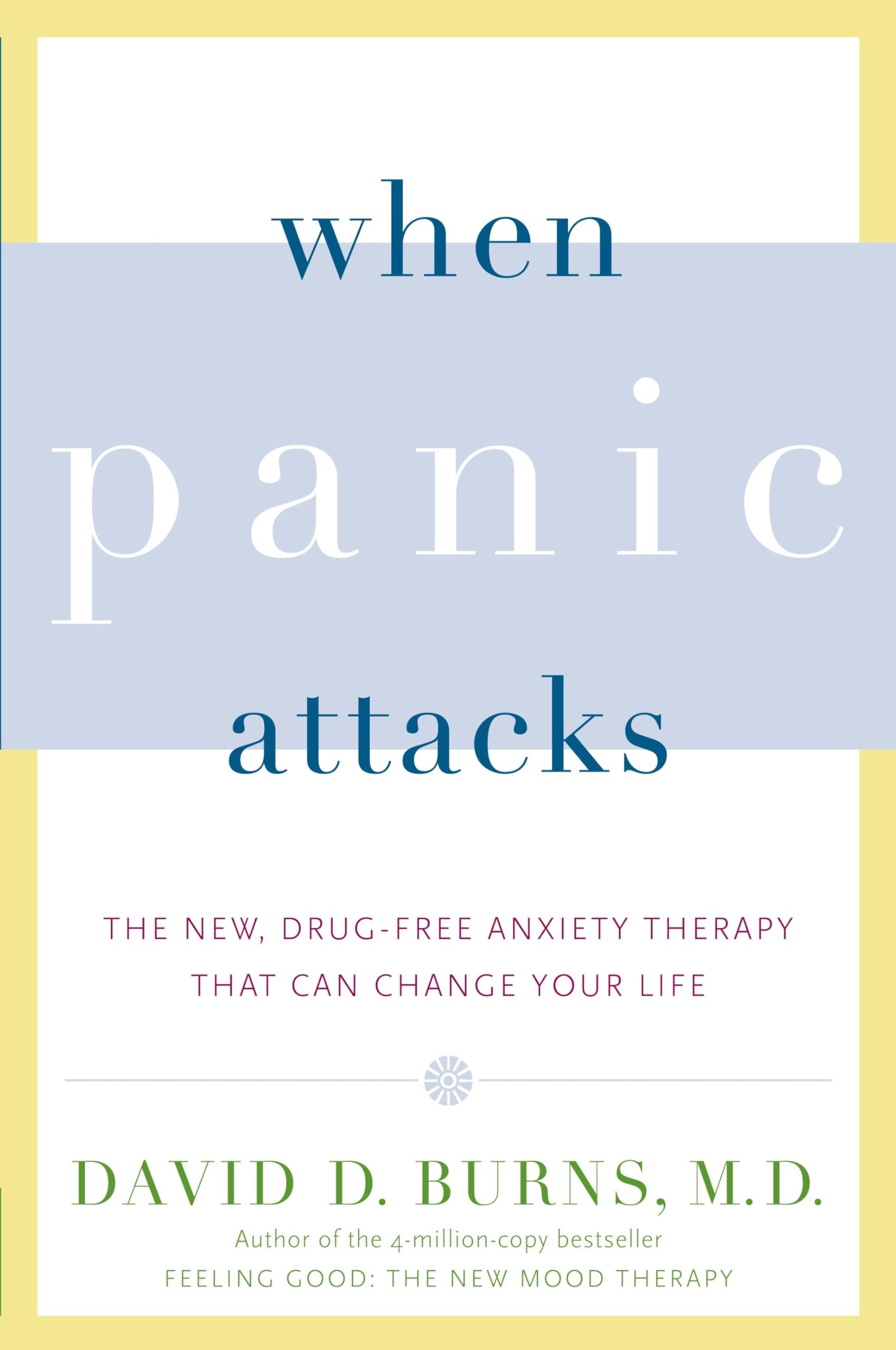
When Panic Attacks: The New, Drug-Free Anxiety Therapy That Can Change Your Life [Burns M.D., David D.] on desertcart.com. *FREE* shipping on qualifying offers. When Panic Attacks: The New, Drug-Free Anxiety Therapy That Can Change Your Life Review: I feel like anyone who hasn't read this is missing out... something for everyone. - I am far from an avid reader. However this is what some would call "A page turner". Well written and easy to understand. This is a practical and logical approach to what many maybe turned off by when it comes to "psychology". I am actually going to read it again. This is one of the 3 reviews I have ever felt inclined to share. If you consider your self a critical thinker or systematic or Socratic, what ever the case maybe, you will not be able to put this book down. I am an ordinary fellow and it helped me. The book exposes many irrational beliefs that at one point of another will all tell ourselves. If you are dealing with an phobia at all, the author shows you several techniques to beat the issue. One of these techniques if call "flooding". This also know as exposure therapy. An example would be if your claustrophobic you would close your self in a closet until the fear was so great that it would climax and eventually subside. Sounds a bit much, but it works. All the techniques are not this intimidating. There are not only techniques but common errors in everyday thinking that cause great stress. The word "should" is an excellent example. Many times we use the word "should" instead of "preferable". This can produce great anxiety when referring to what "we should of done". Should insinuates failure and incompetence when it's requirement is not met. The word "should" applies to laws of gravity, and moral values. If I push this laptop off my desk, it "should" fall to the ground. It's these small adjustments in thinking that make an real difference. Sounds like a commercial but from start to finish the concepts in the book are beautifully simple. There is a chapter called "Hidden Emotion" that states much anxiety is not rooted in a shadowy deep past but often times is due to the elephant in the room that some how we have learned to sweep under the rug. This is easy to do, and our minds have gotten incredible efficient at it. Once these habits and ideas are identified and then addressed by teaching an alternate, more logical, fair approach, much anxiety subsides. As the author said, "Anxiety never just occurs." There are biological aspects but they are far and few in-between. I was diagnosed with PTSD at a late age. After Exposure therapy (which is like looking the school bully in his eyes and saying "take your best shot") I was able to confront the monster, (what I was spending so much time and effort running from) only to find out it had no teeth.This takes incredible courage.>> If your not absolutely sick and tired of dealing with excessive anxiety then this book is not for you. If you are willing to be brave and honest with yourself and do what ever it takes, Dr. Burns Cognitive (thought based) therapy can help put the "truth to the lie" and set your free.. It's like explaining to someone "what the Grand Canyon looks the first time." You just can't. Buy it. Review: Helpful Book. - Dr Burns uses a very simple and straight forward method to describe his techniques. The methods can be applied to manage all types emotions not just anxiety. I enjoyed readying the book and learning more about the techniques. It is not enough to read the book once; you need to read it more than one time and you need to practice all the techniques in it. You will refer back to the book many times until you master the techniques that work best for you. The most important takeaway for me is that it is all in your mind; change how you think "put the lie to the negative thought" and your view on things will change.

| Best Sellers Rank | #20,688 in Books ( See Top 100 in Books ) #33 in Anxieties & Phobias #55 in Anxiety #77 in Stress Management Self-Help |
| Customer Reviews | 4.6 4.6 out of 5 stars (1,867) |
| Dimensions | 6.08 x 0.99 x 9.25 inches |
| Edition | Reprint |
| ISBN-10 | 076792083X |
| ISBN-13 | 978-0767920834 |
| Item Weight | 2.31 pounds |
| Language | English |
| Print length | 464 pages |
| Publication date | June 12, 2007 |
| Publisher | Harmony |
P**T
I feel like anyone who hasn't read this is missing out... something for everyone.
I am far from an avid reader. However this is what some would call "A page turner". Well written and easy to understand. This is a practical and logical approach to what many maybe turned off by when it comes to "psychology". I am actually going to read it again. This is one of the 3 reviews I have ever felt inclined to share. If you consider your self a critical thinker or systematic or Socratic, what ever the case maybe, you will not be able to put this book down. I am an ordinary fellow and it helped me. The book exposes many irrational beliefs that at one point of another will all tell ourselves. If you are dealing with an phobia at all, the author shows you several techniques to beat the issue. One of these techniques if call "flooding". This also know as exposure therapy. An example would be if your claustrophobic you would close your self in a closet until the fear was so great that it would climax and eventually subside. Sounds a bit much, but it works. All the techniques are not this intimidating. There are not only techniques but common errors in everyday thinking that cause great stress. The word "should" is an excellent example. Many times we use the word "should" instead of "preferable". This can produce great anxiety when referring to what "we should of done". Should insinuates failure and incompetence when it's requirement is not met. The word "should" applies to laws of gravity, and moral values. If I push this laptop off my desk, it "should" fall to the ground. It's these small adjustments in thinking that make an real difference. Sounds like a commercial but from start to finish the concepts in the book are beautifully simple. There is a chapter called "Hidden Emotion" that states much anxiety is not rooted in a shadowy deep past but often times is due to the elephant in the room that some how we have learned to sweep under the rug. This is easy to do, and our minds have gotten incredible efficient at it. Once these habits and ideas are identified and then addressed by teaching an alternate, more logical, fair approach, much anxiety subsides. As the author said, "Anxiety never just occurs." There are biological aspects but they are far and few in-between. I was diagnosed with PTSD at a late age. After Exposure therapy (which is like looking the school bully in his eyes and saying "take your best shot") I was able to confront the monster, (what I was spending so much time and effort running from) only to find out it had no teeth.This takes incredible courage.>> If your not absolutely sick and tired of dealing with excessive anxiety then this book is not for you. If you are willing to be brave and honest with yourself and do what ever it takes, Dr. Burns Cognitive (thought based) therapy can help put the "truth to the lie" and set your free.. It's like explaining to someone "what the Grand Canyon looks the first time." You just can't. Buy it.
A**A
Helpful Book.
Dr Burns uses a very simple and straight forward method to describe his techniques. The methods can be applied to manage all types emotions not just anxiety. I enjoyed readying the book and learning more about the techniques. It is not enough to read the book once; you need to read it more than one time and you need to practice all the techniques in it. You will refer back to the book many times until you master the techniques that work best for you. The most important takeaway for me is that it is all in your mind; change how you think "put the lie to the negative thought" and your view on things will change.
B**S
The sale of anti-anxiety and anti-depressant medications promotes the theory of chemical imbalance!
Recovering addicts are often urged to HALT, that is, avoid feeling hungry, angry, lonely, and tired. That's all true, but I've found that I also have to avoid feeling DRAB: depressed, resentful, anxious, and bored. I've learned how to deal with boredom, resentments, and depression, but not anxiety. I've been having problems with that one, until now. I've found a book that thoroughly explains the causes of my anxiety and gives me techniques, forty to be exact, to help defeat my fears. It's called "When Panic Attacks" by David D. Burns. When I was a teenager, I was painfully shy. Now I know this was a result of several self-defeating beliefs, which Dr. Burns lists in his book. When I first took a couple of Percodan at nineteen, I thought, Wow, this is the answer to my problem. I'd already found that alcohol did the same thing, but of course it came with too many side effects like slurred speech, staggering, and other general ass-making properties. However, the Percodan, and all the other opiates, made me feel perfect, at peace. Well, at first anyway. I could still function completely, no one could tell I was high, and there were no nasty hangovers. And that's what my drug use was all about - regulating my emotions. Anxiety, boredom, and depression were my mortal enemies and had to be obliterated at all costs. Dr. Burns presents four theories about the cause of anxiety. The cognitive model is based on the idea that our negative thoughts cause anxiety. The exposure model states that avoidance of fears creates anxiety. The hidden emotion model is the belief that anxiety is the result of negative feelings, such as anger, that we are afraid to express. And the one Dr. Burns disagrees with is the biological model, which is based on the idea that anxiety is a result of a chemical imbalance in the brain. The drug cartels, oops, I mean pharmaceutical companies, make billions of dollars annually from the sale of anti-depressant and anti-anxiety medications by promoting the chemical imbalance theory, even though studies have shown that these drugs work no better than a placebo. Unfortunately, I've been on several of these medications: Prozac, Serzone, Effexor, Paxil, and more. In my experience, proper diet, plenty of exercise, and healthy sleep habits work a hundred times better for depression. For anxiety, these medications haven't helped me at all. One of my big fears is public speaking. So I tested Dr. Burns' exposure model techniques by taking a public speaking course. They work. And I can't wait to try the shame attacking exercises for social phobias and anxiety. Dr Albert Ellis, who invented them, gives an award every year to the most outrageous and creative shame attacking exercise. One recent winner went into a busy drug store and loudly requested four dozen condoms...in the little teenie-weenie size. As we get older, most of us find ourselves saying, "If I only knew then what I know now." Well, I wish I knew the information in "When Panic Attacks" a long time ago. I chose the wrong way to deal with my negative emotions, because I didn't know there was a better, easier, legal way to do so. Now I know. David Allan Reeves Author of "Running Away From Me"
H**S
Informational and Helpful!
I purchased this book looking for answers to why I was experiencing panic attacks and how (if possible) to control them. Reading this book satisfied these questions and more! I could empathize with, relate to and learn from the personal experiences of Dr. Burn's clients. His explanation of the causes and triggers of anxiety and panic attacks was easy to read and understand. The tools given to counteract attacks proved very helpful in my case! I like this book because it is relatable to my experience, made me feel understood, informational, and gave me helpful solutions! I only wish the tools were available as a downloadable PDF that can be manipulated. I would (and I do) recommend this book to others who find themselves trapped when panic attacks!
W**N
What it great about this book is the way Dr Burns outlines the way panic attacks happen and then gives specific techniques for working with them. I love this book. Its a real life changer. I now use the Mood Log technique virtually every day. There are lots of other techniques in the book, but to be honest and haven't gone much past the first 150 pages or so and I have not needed to. I have got what I need for now (and am delighted with it) maybe I will look at the other bits of the book later. The When Panic Attacks is thorough and in-depth and that makes it quite long. My suggestion is to start using the Mood Log before reading the rest of the book (or scan through the rest of it to see what grabs you) otherwise maybe too easy to get lost in the details. The wife stuck this book in front of my nose while we were in a bookshop in London. "Maybe - just a suggestion - that you could read a little bit of this,", she said in her very polite Japanese way. I am so glad she did as I bought it on the spot and it has helped me change my thinking in a fundamental way. I have now bought one on Amazon to send to a close relative as I figure she needs it too. --- William Fergus Martin, Author Forgiveness is Power: A User's Guide to Why and How to Forgive Kindle Version Forgiveness is Power: A User's Guide to Why and How to Forgive
E**Y
As someone who suffers from panic attacks and agoraphobia and has been for many years I have read countless self help books and this one is by far the best I’ve read. Well written, with great examples and in a way that really reasonable with you. I’ve read that book more than once, highlighted parts, wrote in it etc. it got so used I bought a second copy. This is also the book I recommend to anyone who suffers from anxiety.
S**C
Illustrates several strategies to change automatic negative thoughts into more positive and realistic.
Y**Y
Great book yo read, happened to come across it during pandemic wave and all negatively surrounding it. Book definitely helps you to keep going strong. Can be read by anyone even though not suffering from issues. Techniques can be kept handy for helping others if needed.
C**N
très bon livre, facile à lire, des conseils concrets afin de trouver la meilleure méthode pour gérer les différents types d'anxiété
Trustpilot
2 months ago
5 days ago