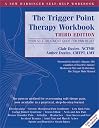

🎯 Unlock your body's hidden pain relief secrets with expert trigger point therapy!
The Trigger Point Therapy Workbook is a bestselling, medically-informed guide that empowers readers to self-treat muscle pain through targeted trigger point techniques. Updated in 2020, it combines clear instructions, detailed diagrams, and practical advice to help manage chronic aches without expensive therapy sessions. Highly rated by over 3,000 users, it’s a trusted resource for effective, drug-free pain relief.


| Best Sellers Rank | #13,716 in Books ( See Top 100 in Books ) #6 in Acupuncture & Acupressure (Books) #7 in Massage (Books) #22 in Pain Management (Books) |
| Customer Reviews | 4.7 out of 5 stars 3,006 Reviews |
E**A
Found relief for neck and back pain
Being in a place right now of not having ability to get physical therapy or massages, this book helped my daughter find much relief for neck and back pain she was experiencing daily. In her case, the explanations in the book helped her to use tennis balls against the wall (or applied by a helper sometimes) to reach trigger points, which has been helping her very much. This book has a lot of helpful and interesting information, diagrams and examples of people's pain and how they were helped.
H**X
Back pain? Feet pain? Muscle aches? This SAVED ME. Six years of updates! *UPDATED JAN 2020*
I was ALWAYS a very fit woman even in my 40's. Nothing extreme, just always moving & energetic, great diet, etc. Until I turned 41 - my back started giving me trouble. Fast forward to me going to PT to get my back in better shape in Fall 2012. Then late Dec 2012 - PT is great until one rushed day when she stretched my right leg too far too fast. Didn't feel like anything until 2 hrs later, OMG, the pain in the sole of my right foot & low back! I couldn't walk without a limp. I had never had foot pain before, ever. I couldn't sit on anything soft because of the pain it would cause my low back. It got worse. I had an MRI (slight disc bulge, but nothing that would cause such pain). I tried everything over the next few months - acupuncture, chiropractor, spine drs, orthopedist, physiatrist, neurologist, steroid shot, supplements, stretching, walking through the pain, ice, heat, epsom salt baths 3+ times a day, etc etc. My life became a nightmare of pain - unable to ambulate properly, I had to crawl around my house. I could barely drive. I was given a temp handicap parking placard and told to get a cane. I used to run, bike 40 miles a week, garden, now I was reduced to a cane and suggestions of back surgery in less than a couple of months of being in great shape and NO pain?? My sole of my foot and my back was on fire; other parts of me was starting to deteriorate as a result. I am a big reviewer on here because I believe in the power of the truth and word of mouth to help others. I also depend on it as well to help me. So I was going through a review of what, I do not remember, maybe a supplement that might alleviate pain, and it mentions looking into trigger point therapy. I am so glad I followed the trail to this book. By the time I got to this book, it was November 2013. Not quite a year into my hell. My family was suffering, watching me suffer. I would lay around and try not to wince or cry out when I had to get up, knowing my kids were watching. I shuffled around. I missed so many of my kid's activities. Anyway, I got the Kindle version, and I look in this book as fast as I can for how to manage pain for the sole of my foot. Imagine my surprise - THAT pain originates in my CALF? So I look for the tender spot it tells me to and OUCH! THERE IT IS! Painful, in the meat of my calf. I start to gently work on it. It was painful and would get sore with massage, but I worked through it. This was the Saturday before Thanksgiving. Monday before Thanksgiving - TONS to do. Cleaning for family, shopping, etc. I tell my husband I am going out to get groceries at a couple of different stores, he looks worried. How can you handle it, he asks. He knows I usually can only do about a half hour out then come home and rest. I insist, tired of being so disabled. I go to one, two, three stores. I am out for over 2 hrs. And...THERE IS NO PAIN IN MY FOOT. NONE. I am stunned. No pain from driving, which usually exacerbates it. No limping. Normal gait for the most part, though not perfect due to almost a year of altered gait/limp. UNBELIEVABLE! I come home and my husband comes out to help me, worried that I am going to be in a bad place pain wise. Neither of us can believe how well I was doing considering where I was only a few days before. Now, I have to get to work on all the other trigger points that have cropped up due to my altered walk, excessive crawling, and poor sleep posture to work around pain, as well as my low back issues. It took some time. It took work. I ordered the actual book so I can highlight and dog ear pages. For low back pain, your glutes carry some heavy duty trigger points. If you sit a lot, you probably have trigger points. My foot pain is 100% gone, but after a bike ride I can feel it creep back in. I just pull out my lacrosse ball & roll it out, done. The book warns this can happen, so knowing what to expect and then managing it is most of the battle. Low back pain has cleared up around 80 - 90%. TPs have a tendency to return esp in a cold environment (I'm in Boston) and esp if they've been there a while. So it can be a bit of work but very worth it. I have lost a lot of muscle so there is a weakness there, I am working on regaining all the strength I lost. What I cannot understand is why all the specialists I saw in Boston - the land of great doctors! - NONE of them thought of this? Even the PHYSIATRIST? Isn't this supposed to be their specialty, muscle and soft tissue pain mgt & recovery? I told my neuro about TrP and she said "it makes sense". It's is some work to keep up with all the trigger points that crop up but I do it while watching TV or listening to music. If you have soft tissue pain that nothing else seems to help, you have NOTHING to lose here. You can also Google your pain symptom and 'trigger point therapy' and find some solutions. There are also great YouTube videos on it. BTW, if you stretch a tired or cold muscle too fast/too hard it can set off a trigger point. That's what happened with my PT that day. If I had known about trigger point therapy, I could have saved myself from a year of hell on me and my family, as well as the bills. I recommend a cleaner diet, exercise, fresh air and constant movement versus just sitting. Excessive sitting and lying around make soft tissue pain worse. Stand for half of your tv show. Micro breaks from your laptop. Move around more, get blood flowing, blood flow to an injured area is healing. I love Tiger Balm for night time stiffness or to help get your circulation going on a painful spot. There are also some good videos and a Ted Talk on the science of pain in the brain that are worth watching. If you have been in pain for a long time, your brain actually can become hypersensitive to even tiny pain stimulus. An exaggerated response. It is important to retrain the brain not to overreact to small incidents. I took a nasty fall on my bike last week and was totally panicked, as I have not fully recovered from this past year's trauma. I was hurting that day pretty bad but it didn't turn into anything more than sore arms & shoulders for a couple of days. I had to keep telling myself not every boo boo turns into a year's worth of pain. It helps! Please get in touch if you have more questions or input. *UPDATE June 1, 2014* I keep learning from this book. One thing I think has helped keep pain/discomfort at bay is the use of a SMALL KID BALL in addition to the lacrosse ball. I got into the habit of using the lacrosse ball and it works well, but I started to get more pain in the hips & tightness in lower back. Over the last 2 weeks I started using the small ball and it really got into the tight, deep muscle tissue that needed attention, that even the lacrosse ball couldn't reach. I am finding new relief now, just in time for summer activities. The knowledge I have gained from this book has absolutely made a difference in my back pain. Give it a try, it may well be the most affordable & most effective solution you come across. *Update* Sept 6, 2014 I am still finding great relief with TrP therapy. Not only through this book but online. YouTube has many instructional videos on how to work out TrP if the book is too technical or if you need a visual. I am finding that I need to work on the QL TrPs. I found a great set of TrP balls in all the sizes I was missing,from tiny to lacrosse ball size, I just received them and they work very well. [...] They are only $20 for the set plus about $6 to ship. I have no connection to this company, FYI. They should have an Amazon listing but they don't I wonder why? I would also like to remind anyone starting out the process of working on their TrPs NOT to go overboard. It is very easy to do. You start out, it feels SO good to work out the knots, you are feeling better and better. Then you assume that MORE is BETTER. Maybe you start rolling the TrPs too hard or too much each day or too much in one session. This is where you might set off excess soreness. You have to be careful with the QL muscles (most of us have TrPs there but don't know it until you get in there with a small TrP ball) or you might cause back spasms. I had a chiropractor overwork my QL's and set off a horrific week of spasms before I discovered TrP therapy. So go slow and careful, it will pay off. *UPDATE* Feb 11, 2015 I am still finding great relief with TrP therapy. I joined a gym for the 1st time in a decade to get me through this hard Boston winter and was surprised how many people at the gym were ending their workouts with trigger point therapy methods - rolling out on balls or foam rollers, trainers using them on clients, etc. It has caught on as a medicine free, effective way to manage your muscle aches. I have also found that I need a truly functional space to do my TrP sessions. I have put holes in several walls in my house, so now only the basement cement wall will do. Fortunately, I have the perfect space. A cement wall a few feet from a pool table. I can put a small TrP ball against the wall in my glute area, grab hold of the pool table for leverage, then manipulate the ball into some of the hardest to reach spots by bending over slightly and pushing myself into the ball. (Does this sound perverted? Sorry, this is how it has to be done to find relief! I wouldn't want a massage therapist to try and dig around there to work them.)I have found great pain release from working these hard to reach glute points. For back pain that is not getting better despite best efforts, the glute and hip flexor points are key. Keeping up with my TrPs a few times a week really helps. Women in perimenopause should note that because of our changing hormone levels, your body is PRONE to trigger points as well as random aches & pains that cannot be found on any tests other than a series of hormone test through out your cycle. For some women in major hormone flux it can be severe enough for you to be diagnosed with chronic fatigue syndrome or fibromyalgia. Yes there are some true cases of those diseases that are not related to hormones or trigger points, but there are also women being misdiagnosed & sent home with RX's for anti-depressants & way too strong pain meds. Do your research. A balanced - KEY WORD IS BALANCED - hormone therapy (like bio hormone replacements) as well as exercise, diet, TrP, and improved digestion (which diminished greatly around 40-45 in women) will make a difference in your pain levels.I am working with a gifted endocrinologist who tests my blood 2x a month so we can get the best picture how to manage my perimenopause. I do not have CFS or fibromyalgia, but I do notice that trigger points crop up more often now that my blood tests reveal I am primenopausal. *UPDATE* September 29, 2015 Still loving TrP therapy. I travel with 2 sizes of balls when I fly so that I can roll out those knots that can happen after being cramped on a plane. Still find that most of my knots originate in my glutes. I no longer have any foot pain. I try and tell others about it without sounding too "gushy" and most people just "mm-hmm" me and then forget about it. I don't want to sound like trigger point therapy is the unicorn that will take away everyone's aches and pains, but too many are missing out on medication-free pain relief because doctors or physical therapists aren't offering it as an option. *UPDATE* August 31, 2016 I am still actively and successfully using TrP therapy to manage my low back, as well as misc aches and pains that crop up. Now that I'm 46, parts of me gets achy when I overwork it or sleep in an odd position. About 3 times a week I spend a half hour or more with my super bounce rubber ball and a concrete wall. The relief! I think some wonder why I haven't been "cured" of low back pain if I am so enthusiastic about TrP. I ruptured my L4-L5 disc in my late 20's, which puts my low back at a higher risk for aches and pain when I sit too long on something soft, or work too hard in the garden. Before I found this therapy, I used to get so tight, manage my aches with Advil, and wait for it to pass, usually a few days. Now that I am middle aged, my body doesn't bounce back quite like that anymore. I still travel with the rubber ball. There are times when I can throw my back out and it gets inflamed - trigger point therapy does not help that. Then I reach for Advil. Otherwise, this is still my favorite go to muscle and joint soother. *UPDATE* March 19, 2017 Still love it, still providing me great relief. I joined a gym this winter & it has the most perfect spot for me to "roll out" after I exercise. I listen to a podcast and get to work. Well built walls - no holes yet! Occasionally, that same pain will creep into my right foot after various activities. Now that I know what to do, I roll out my calf trigger points right away & find relief within a day. I wish physical therapists would introduce a home regimen of TrP in addition to the exercise plan for recovery and relief. Just an interesting anecdote - JK Rowling (author of Harry Potter series for the handful of those that might not know) has tweeted this year about having back pain that feels better when she digs into it with the corner of her sofa. She has trigger points too, apparently! *UPDATE* April 30, 2018 I still use Trigger Point Therapy on a weekly basis. Still my go to relief for the aches and pains that come with being active and middle aged. I have woken up in the middle of the night with a painful knot in my glutes that I rolled right out in a few minutes. Give it a try, you have nothing to lose. *UPDATE* APRIL 24, 2019 I still find that rolling out with a little ball is some of the best therapy for achy, aging muscles & joints. I go to a gym, I see people rolling out all the time. The word is officially out & I feel so *validated*. However - I noticed this review has been "filtered for content sensitivity". ??? What? Why? This is a positive review with nothing but praises, Someone explain the algorithm to me, please! *UPDATE* JAN 30, 2020 I still roll out my knots almost daily, esp since I’m working full time and end up sitting more than I used to. In the past few years TRPT has really caught on, even my son’s sports group coach asked the kids to bring in their own lacrosse balls for an after practice cool down roll out. There are so many affordable tools available now plus how-to videos/articles/charts that everyone can access. I’m loving the hand held roller balls that glide easily and can even be put in freezer for extra pain relief. Also makes it easier to roll out my husband’s back, who is *just now* starting to need it. I have also fixed all the holes (3) I put in my walls from rolling. Plaster walls are not great for the heavy duty glute work! Always remember that are certain areas that should not be rolled out aggressively because of arteries, on the neck and behind the knee. Look it up for specifics so you can avoid but still work therapeutically in those areas. Also, I’ve probably noted before, it can be easy to overdo it at first, esp when you start to feel relief. I have dug in too deep sometimes and ended up more sore than I should have. Go easy at first as you find your true sweet spot. Happy rolling!
N**A
It's body and mind connection...no, not a new age hack, but based on neurosciene
This is a gold mine. I have been using this manual since 2009. Trigger points came to my attention when I developed a tennis elbow I couldn't get rid of for nearly two years of various therapies and treatments. I learned about TPs from the coach of the British Olympic sprint team. My search lead me through multiple websites and eventually I got rid of the point in a minute. It was so amazing that I though it was some sort of placebo effect. Then I attended to a rotator cuff problem I had developed when a ski boarder pulled my arm when she couldn't control herself at very high speed. That was also gone in less than an hour. Multiple points had to be resolved and when I was done I was dancing on the ceiling. But, again I felt it was a fluke and didn't dare trying other TPs as I was afraid of losing my new religions if it stopped working. Needless to say, it never did. Last year I discussed my years of experience with a neuroscientist who does cutting edge research at University of London. I told him that in my view TPs don't get resolved because evolution has not provided us with the mechanism. They are recorded in our minds and the mind has no way of knowing where the points are. Yes, our mind doesn't know where each part of our body is. If you don't believe that, try to feel where your middle toe is without wriggling it or touching it somewhere. Worse, try to feel the extent of your heart or stomach, in fact, any of the hundreds of muscle in your body. You can't, unless you flex them or touch them. If you don't know, it means you mind doesn't either. It can send signals to their address, but doesn't know exactly where they are. It doesn't need to and that is the problem with fixing precise pain locations. When we press a trigger point we are showing our minds the location that needs to be repaired and that there is no reason for the location to remain taught. The body knows how to release the knot, but doesn't know where it is. We have to show it and it is done. That simple. The memory of the trauma is wiped and the point is released. My neuroscientist friend felt it was a revelation. Now he like me uses this manual to locate trigger points for the mind and show it that there is no reason to keep them going. BTW, we don't have an automatic system of resolving such points because evolution is very economical, it doesn't develop a system unless it is crucial to our reproductive success. As trigger points don't show up much until we are over the typical reproductive age, there I no reason to resolve them automatically at very high energy and social cost. But we have brains and we have found how this muscle saving mechanism results in TPs and how we can tell our minds to resolve them. A great solution that only humans have developed. I will be happy to share more about my experiences. Enough to say that at 67 I have managed to keep my muscle supple enough to reach the platinum level ski racing in NASTAR. I am more supple than when I was 40. This is very real in terms of science of the brain and evolution. Anecdotes: Early in May '17 I stood in line to get some food at JFK on my way to work somewhere south. Suddenly I had a feeling that my heart was palpitating with sparks of pain and tension. What comes to mind first? 911 and a heart attack! Well, if you read the next anecdote you will know that I don't think medical help as my first resort. But this was serious and the pain very unfamiliar. I still didn't believe it would be a heart attack although the symptoms were nearly exactly what you read and hear about. I started to breath deeply in an attempt to get enough oxygen, etc. Soon I felt like a fool, succumbing to old tales of wow and panic. I took our my massage ball with which I entertain myself on flights, and found a half dozen TPs in the surface muscles around where my heart usually is. Within minutes all the pulls, pushes, and bursts of pain and fear had gone. To test, I went up and down a couple of floor in the airport, it was smiles. My apologies to any paramedics I didn't employ that day. Diverticulitis: In Jan 2004 after having sat for over a month in front of a computer trying to deliver a project suddenly I felt a serious pain in my gut. I felt bloated and if you excuse me, the efforts in the bathroom didn't relieve or reduce the feeling. Soon the pain was worse than I could imagine being shot by Jack Ruby would be like. I was hunched over. I rushed to B&W hospital in Boston and was treated very diligently by doctors and nurses through my primary's position as the head of this and that department at Harvard Medical School. I had a perforated large intestine due to broken diverticula sacks. Very scary but OK after four days. I was told that I would need surgery to avoid any future attacks. I refused. I was told if I traveled anywhere in the third world I would die if there was to be an attack. About ten years later I was awakened by the same Jack Ruby searing pain. I made it to the bathroom, which seems to be the first point of refuge for stomach pains, and was about to call 911. But before that I stuck a thermometer in my mouth and soon it read 96.5 F. Well, knowing that the only pain would be from infected sacks, I was comforted. The pain was suddenly less fearful. So, I returned to bed, cracked open my TP Therapy notebook and soon had resolved a series of TPs in the back of my abdominal space. Four or five painful TPs were gone and with them the searing pain. Now I wonder if TPs don't actually contribute to causing diverticula as they certainly interfere with the normal dynamics of the intestines, keeping them from developing the very special muscles that push digested food forward and kneed it for absorption. Hernia: Gone. Muscles in my inner thigh, in my abdomen, and even the base of my abdomen contributed to a minor hernia that was more of a nuisance than threat are now happily wiped out of my mind. If they come back, they will be wiped again. Back ache: I never had the nice camber in my back that most good athletes exhibit. I would watch my shadow while skiing to get clues as to my proper position. In 2014 I made it a project to see what muscles were preventing the proper camber, which at my age is more essential in preserving the disks in my spine than anything else. Good news? You bet. I can stand like a ballet dance, sort of like being hung from a string in the middle of my head. All forces flow down to my feet properly and there are no pressure point. Rolling feet: I used to be quite supinated, and so was my son. Releasing TP's on the inside and outside or our calves have let us use our shoes for much longer! They wear perfectly uniformly. Osteo of big toe: Massaged the TPs of muscles in front of my shin to extinction. I used to be proud that they were so powerful that I could ski in a semi seated 1970's style of skiing for hours. They were powerful but they pulled on the joints of my big toe and crushed the cartilage there and caused osteoarthritis that is now healing itself slowly. X-rays show it receding, and doctors wonder why. They can't believe the bio-mechanical reason can be so simple. So, if you are in your twenties or thirties, get going with TP massage and this book is a gold-mine of info and techniques.
C**R
Extremely useful book for managing your soft tissue pain
I have found this book to be an invaluable resource in managing soft tissue injuries and pain in my feet, ankles, hip, shoulders and neck areas. Especially during COVID when it has been more difficult to see a physical therapist. It is particularly useful in identifying areas needing massage that are not directly located where you feel pain. You might not realize that the pain in your arm is really coming from your shoulder blade, for instance. I don't know what to make of some people's claims that trigger points aren't real, since working this points properly can make a huge difference in your pain and mobility. The book can be a little complicated for some to navigate. It can also be difficult sometimes to find the correct spot to work on from the illustrations. It can also be hard for some to apply the massage on themselves, especially without tools such as the recommended Thera-cane (https://www.amazon.com/Thera-Cane-No-Model-Massager/dp/B00NH0XG7E/ref=asc_df_B00NH0XG7E/?tag=hyprod-20&linkCode=df0&hvadid=198066620630&hvpos=&hvnetw=g&hvrand=3192262066261376424&hvpone=&hvptwo=&hvqmt=&hvdev=c&hvdvcmdl=&hvlocint=&hvlocphy=9001992&hvtargid=pla-377954966862&psc=1). I still recommend that people see a good physical therapist for these type of injuries, and that will actually help you understand some of the massage techniques better.
M**E
It would be impossible to recommend this book highly enough
It would be impossible to recommend this book highly enough. When I was younger I destroyed my body with impressive dedication, and have suffered most of the soft tissue injuries that are possible - hip, shoulder, back, neck, knees, elbows, wrists... you name it. I've had surgery recommended to me by a few MDs and DOs, and have been a regular with chiropractors and acupuncturists since my early teens. This book is a literal miracle that has revolutionized my life and allowed me to return to all the sports I thought were long behind me. Claire Davies first provides a great groundwork for people who are unfamiliar with anatomy, and then touches a bit on physiology to the extent that research will support it in the realm of trigger points. The real highlights of this book are the diagrams, the chapter organization and the case studies that accompany many of the major problem-muscles. Readers can easily find treatment options by their symptoms, the offending muscle (if known) or the region of the body presenting pain. Every chapter (shoulders, neck, upper back, hip/sacrum, etc.) starts with an illustration of the body region and each muscle, along with the trigger points and referred pain pattern. It is incredibly straightforward to open the book to the chapter representing the area where you hurt, find the trigger points and go to work. Many of the case studies reinforce the almost magic-like efficacy of treating trigger points, as they so often contain descriptions of the exact symptoms the reader is experiencing (at least in my case, and for those I have recommended the book to). As anatomy is intimately inter-related and the human body must function as a whole, it has been my experience that just knowing a few of the worst trigger points won't make pain or instability or dysfunction go away for very long; it's important to really dig in to the book and practice body awareness, so that you can follow your symptoms and identify how other muscle groups have been impacted by your 'worst offenders'. However, I can confidently say that if you are diligent and use the guidance and knowledge that this book offers, you may find yourself feeling and moving better than you ever expected possible. Claire Davies is a genius and deserves a nobel prize for this work of mastery. Please consider this book first and foremost if you have ever been recommended for surgery; it very well may profoundly change the course of your life for the better, and save you from undue expense as well as a lifetime of pain and suffering.
K**Z
The best $10 or $20 you can spend for pain relief. A must have.
At 35 years old, I began having a ton of shoulder / upper back pain that was related to my day job as a graphic designer... So naturally I went to multiple massage therapists, all of whom practice trigger point therapy themselves! And while I was getting relief, I’d end up right back in pain the day I got back to my desk and knew we were not getting to the core issue. Enter a rabbit hole of YouTube videos on myofascial release techniques, trigger points, stretches, and a recommendation for this book. $10 for the kindle version? I spend more than that on pain relief cream! One of the first things it has you look at for shoulder / upper back pain are trigger points in the neck. I wasn’t having neck pain, but after 5 minutes of following the guide I found THE spot that radiated intense pain to all the areas in my upper body that had been ailing me for months. It was not easy to get to, so I ended up having to get my massage therapist to work it out. I am super hopeful for the first time in a while that I’m not doomed to a life of chronic pain unless I switch careers. the relief I’ve gotten already is very promising. PRO TIPS 1. Get the kindle version and download the companion PDF with printable charts. The kindle version of this book is actually very handy and easy to navigate. It helps to guide you to the possible areas through hyperlinks and the illustrations are helpful to show you the points and how to get to the more tricky ones. There is also a link to the website that has you download a printable version of the trigger point illustrations so you don’t have to hunch over a device to reference them. 2. Use with a back body or other similar massage tool to get to hard to reach spots. 3. Use in conjunction with seeing a massage therapist. A good one who knows about trigger points will appreciate your self investigation and can help to release hard to reach spots. 4. For especially painful trigger points, it might take a few tries. And the next day might still be very tender. Keep at it, but give your body a few days to heal. Thank you to Clair Davies for a well researched map to our bodies. Thank you. Thank you. Thank you.
Y**L
Relieving pain in multiple problem areas!!
This book is in one short word, AWESOME!!!! If you haven't had trauma (such as impact from a fall or some other object making painful contact) to a joint that is causing you problems, i.e. pain, then most likely it's a trigger point issue, and even if you have had such trauma like I did (more below), you can still use this book to help. I recommend this book to all my friends who have joint problems. I've helped my wife with her problems as well. My background: I play badminton 2~3 times a week. Though it's only recreational, I play hard. I started to develop pain in my shoulder. I have pains in other joints too (in medial epicondyle of both elbows, knees, and lower back). I really didn't want this pain to become chronic, so I started looking hard for remedies. Then another Amazon reviewer on a different item recommended this book. It was only about $12 for the Kindle version, and I didn't have anything to lose. It took me a while to find the trigger point (pain felt like it was deep in the shoulder socket area), but ever since I've been massaging multiple trigger points around the shoulder area, I haven't had a problem since, and it's been about 2 years now. I've also had medial epicondylitis in both elbows for the past 17 years now. When I think about it, it probably started back in college, so add another 5 years to that. The pain was a level 3 or 4, but it started to escalate to a level 5 or 6. I went to two different physical therapists on two different occasions. The pain abated somewhat, but it wasn't enough. After fixing my shoulder, I started to go after my elbow. Well, trigger points affecting my elbows were EVERYWHERE. I found them in my forearms, in my latissimus dorsi muscle (who would have thought?!), in my pectorals, and in my triceps! I can say now that my pain is a level 2 on most days and a level 1 after doing the massages. The problem started more than 20 years ago, and I'm still finding new trigger points affecting this one area. But so far, it's been effective considering I really work my arm when playing badminton. Back when I was about 6 or 7, I slipped off a sidewalk and ended falling on the edge of the sidewalk with the brunt taken by my right lower back. I had some pain, but xrays showed nothing, and while I could always feel it a bit ever since, it was a level 1 pain on a scale of 0~10 where 10 is debilitating pain. Fast forward to the tender age of 22. I slept on the home sofa bed (done it before), but this time, the same area became very sore, around a level 4 or 5. Went to play basketball (yes, young and dumb), and the pain escalated to 8.5~9. I missed 2 weeks worth of classes. The pain went away eventually, to a level 1~2, so it was manageable. Fast forward again to ~35. I went to the gym and was doing some shoulder exercises (reverse butterfly) and strained the same area. This time, the pain was 7~8. For this, I went to the spine doctor several times. MRI revealed slightly bulging discs and was given cortisone shots. The pains subsided to 3~4, but I could not sustain any activity w/o the pain moving up in scale. I couldn't even do dishes for 10 minutes because the pain would build up again. Driving a car was unpleasant. Finally went to a physical therapist who started giving me massages to the buttocks area and gave me different strengthening exercises. It helped a bit, but it wasn't enough. In the meantime, I started going to the gym for the hot tub and then stretch the buttock/hamstring areas. This started to help. Long story short, I still do my stretching and use a foam roller on trigger points in the buttock area. Most days, the pain is a level 0.5~1. In this case, even TP therapy can help relieve pain caused directly or indirectly by trauma. Get the book and it will explain. It has to do with other muscles over compensating for the injured area, and thus leads to straining of the otherwise healthy muscles. I also have knee pain/soreness due to badminton. But after playing each time, I massage the trigger points in the thigh area. The next day, my knees are about a level 0.5. If I don't, it's a level 1.5~2. Recently, I let up on the therapy, and the pain started to creep up to 1.5. Pros: - Extremely effective in relieving pain - Cost of the book, tennis/lacrosse ball, foam roller, massage stick (can substitute with forearm bone for thigh muscle TPs) <<<< multiple trips to the doctor for scans, shots, therapy - Excellent guide to a pain free life - You can do this while watching TV Cons: - It's a lifelong exercise. You can't stop doing this therapy. My theory as to why older folks (who otherwise have no bone/muscle diseases) really slow down is that pain from TP's cause them to exercise less. I believe this makes the pain problems worse, and it results in a vicious cycle of pain leading to less exercise to more pain to even less exercise. - It takes time to find certain trigger points and to find results. For my shoulder, it took weeks before I found the correct TP's, same for my elbows. Get this book now.
Z**K
Avoided surgery, fixed "carpel tunnel" for me.
If you have pain and are willing to work, buy this book. Learning the knowledge, working trigger points (can be painful), and being consistent are not easy things. If you are willing to do this, I recommend this book. Removing pain can be a life changer and this book can help you fix the issue! I had "carpel tunnel". I took a break from using computers for a month. When I came back, after 5 minutes of using a mouse, I was in tears. Doctors gave me muscle relaxers, I tried physical therapy, I even had an EKG done. Doctors offered surgery for "carpel tunnel" as the next option. Surgery involves cutting the wrist band and placing the nerve outside the wrist band, closer to the skin. In the new location, the nerve is more likely to be agitated by anything touching the skin, as opposed to deeper muscle tissue. I feel bad for anyone who selected the surgery and didn't know about this book. Through this book I learned how to fix the problem, and why the problem was happening. This book explained what doctors couldn't tell me. The cause and effect between miofascial tissue layers (that thin layer of skin surrounding a muscle), how it shapes a muscle, and how it can effect the overall body structure. This book is structured so that the first few introduction chapters are worth reading, then it gives an index that allows the reader to select where their pain is. It then gives a list of muscles and page locations on how to alleviate the pain. Reading a book and applying it isn't as easy as popping a pill. For that reason I don't give this book to everyone complaining about pain. Anyone who is seriously struggling with pain, or anyone who doesn't like pills; will find this book a huge asset. This book has a textbook's worth of knowledge for users. If it were $120, I'd still have bought it twice. One to lend out, one for me. As is, this is my 4th copy of the book, and I'll likely buy more in the future. Teaching someone how to remove their pain is the best gift you can give someone. 1'st Edition has hand drawn pictures to depict muscle/trigger point locations. 2'd Edition is computer drawn, there are a few page #'s wrong in the index, but nothing a couple pages of flipping and a pen can't solve. 3'd Edition expands on many concepts of the 2nd edition, but changes the text format. It offer's more knowledge about available tools in the market and better explains some things about muscle interactions. If your eyesight is poor, 2nd edition is the best.
Trustpilot
2 months ago
2 days ago