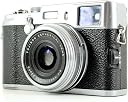
📷 Capture timeless moments with a camera that’s as stylish as your lifestyle.
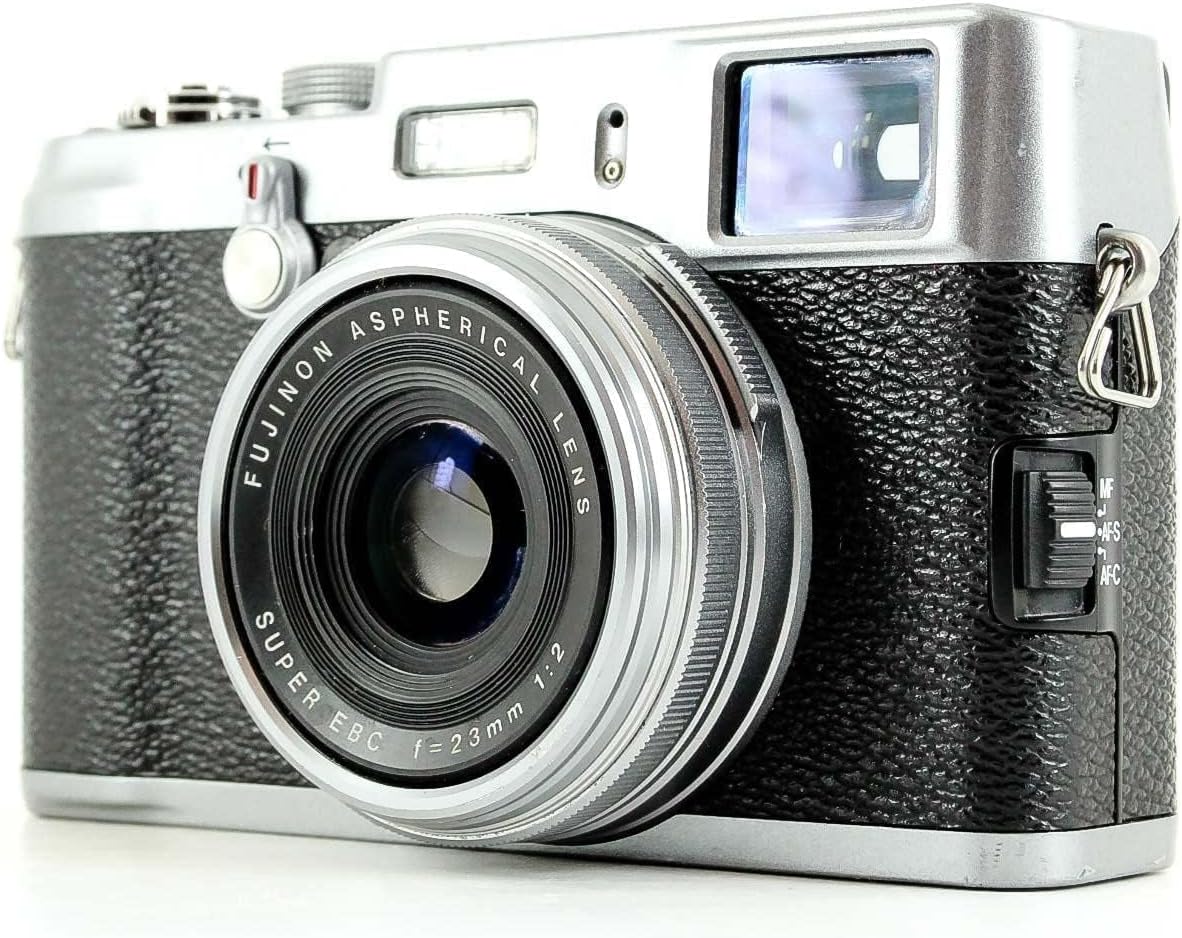
The Fujifilm FinePix X100 is a premium compact digital camera featuring a 12.3MP APS-C CMOS EXR sensor and a fixed 23mm F2 Fujinon lens. It offers a unique hybrid viewfinder combining optical and electronic systems, a 2.8-inch LCD, and HD 720p video recording. Designed for enthusiasts and professionals alike, it delivers exceptional image quality with manual controls in a sleek, retro-inspired body—ideal for street and travel photography.
| ASIN | B004LWZ88W |
| Age Range Description | All Ages |
| Aperture modes | Aperture Priority |
| Are Batteries Included? | Yes |
| Aspect Ratio | 16:9 |
| Aspect ratio | 16:9 |
| Auto Focus Technology | Hybrid Autofocus (HA) |
| Autofocus | Yes |
| Autofocus Points | 49 |
| Available Memory Slots | 1 |
| Best Sellers Rank | 164,355 in Electronics & Photo ( See Top 100 in Electronics & Photo ) 2,629 in All-in-One Digital Cameras |
| Bit Depth | 14 Bit |
| Box Contents | Camera Body & Lens |
| Brand Name | Fujifilm |
| Camera Flash Type | no flash |
| Camera Lens | Macro Lens |
| Colour | Black |
| Compatible Devices | Fujifilm |
| Compatible Flash Memory Type | SD, microSD |
| Compatible Mountings | Fujifilm X |
| Compatible mountings | Fujifilm X |
| Continuous Shooting Speed | 20 FPS |
| Country of Origin | United Kingdom |
| Crop Mode | 16:9 |
| Customer Reviews | 4.0 out of 5 stars 99 Reviews |
| Digital Scene Transition | false |
| Digital Zoom | 1 |
| Digital-Still | Yes |
| Display Fixture Type | Fixed |
| Display Maximum Resolution | 460,000 pixels |
| Display Type | LCD |
| Dots Per Screen | 291,112 dots per square inch |
| Effective Still Resolution | 12.3 MP |
| Expanded ISO Minimum | 100 |
| Exposure Control | Manual, Program, Aperture Priority, Shutter Priority |
| File Format | [MULTI] |
| Flash Memory Bus Interface Type | SD |
| Flash Memory Speed Class | Klasse 10 oder höher |
| Flash Memory Type | SD |
| Flash Memory UHS Speed Class | U3 |
| Flash Memory Video Speed Class | U3 |
| Flash Modes Description | Auto, On, Off, Slow Synch, Rear Curtain Synch |
| Flash Sync Speed | 1/250 |
| Focus Features | continuous servo autofocus |
| Focus Mode | Continuous-Servo AF (AF-C) |
| Focus Type | Auto Focus |
| Form Factor | Compact |
| Generation | Generation 1 |
| Global Trade Identification Number | 04547410151831 |
| HDMI Type | Type C Mini HDMI |
| Hardware Interface | HDMI, USB |
| Has Color Screen | Yes |
| Image Capture Type | Stills & Video |
| Image Stabilization Type | no |
| Image stabilisation | no |
| Item Part Number | 12616 |
| Item Weight | 445 Grams |
| JPEG Quality Level | Normal |
| Lens Construction | 8 elements in 6 groups |
| Lens Correction Type | aspherical |
| Lens Type | 23 millimeters |
| Manufacturer | Fujifilm |
| Manufacturer Part Number | 4004097 |
| Maximum Display Resolution | 12 MP |
| Maximum Focal Length | 23 Millimeters |
| Maximum Image Size | 3500 Pixels |
| Maximum Shutter Speed | 30 Seconds |
| Maximum focal length | 23 Millimeters |
| Memory Storage Capacity | 20 MB |
| Metering Methods | 3D Color Matrix |
| Minimum Focal Length | 23 Millimeters |
| Minimum Shutter Speed | 1/4000 Seconds |
| Model Name | FinePix |
| Model Number | FinePix X100 |
| Model Series | FinePix |
| Movie Mode | Yes |
| Network Connectivity Technology | HDMI, USB |
| Night vision | No |
| Number of Diaphragm Blades | 9 |
| Optical Zoom | 1 |
| Photo Sensor Size | APS-C |
| Photo sensor technology | CMOS |
| Product Features | Video Recording |
| Real Angle Of View | 57 Degrees |
| Rear Webcam Resolution | 12.3 MP |
| Remote Included | No |
| Screen Size | 2.8 Inches |
| Self Timer | 0.5 Seconds |
| Sensor Type | CMOS |
| Series Number | 4004097 |
| Shooting Modes | Automatic, Landscape, Macro, Manual, Movie, Portrait, Sports |
| Skill Level | Professional |
| Specific Uses For Product | [INF] Outdoor photography, Event coverage, Travel, Vlogging |
| Supported Image Format | JPEG |
| Supported file format | [MULTI] |
| Total Still Resolution | 12.3 MP |
| Total USB 2.0 Ports | 1 |
| Total USB Ports | 1 |
| Total Video Out Ports | 1 |
| Unit Count | 1.0 count |
| Video Capture Format | MP4 |
| Video Capture Resolution | HD 720p |
| Video Output | HDMI |
| Viewfinder Magnification | 0.5x |
| Viewfinder Type | Electronic |
| White Balance Settings | Auto |
| Write Speed | ausreichend für Voll-HD-Video und Serienbildaufnahmen |
| Zoom | Optical and Digital Zoom |
I**R
Over-hyped??
Like everyone else with a keen interest in photography I was fascinated with the x100 as soon as it was announced. During the "Focus on Imaging" show at the NEC I, like thousands of others, handled the camera and was intrigued by its retro design and host of modern functions. However I couldn't decide if it was really for me, or where I would fit it within my existing camera gear (I mainly shoot with the Nikon D700 full frame) as I was already the owner of a Leica x1. Nonetheless I was seduced by all the media hype and bought one when they finally arrived in the UK. There are people more clever than me who have written about the technical aspects of this camera, and you can find numerous reviews via Google - I just wanted to express my overall impression of this camera. Bluntly I think it has been over-hyped and is over-rated. There, I said it. I don't deny that image quality is good, which is one of the stated key features of the x100, but in reality you can achieve similar quality with a camera that costs half the price and doesn't come with the emotional baggage. At this point I will repeat I own the Leica x1, and yes, you could argue that it is also over-priced. However image quality is absolutely superb! My Leica is also an easier camera to pick up and use, whereas the Fuji feels too laborious to set up and get running. No, I don't compare it with a Point-and-Shoot (I have the Canon Powershot S95 for this) but I've found I'm not using my Fuji on a regular basis as, well, I can't be bothered... Every review I've read about this camera takes great care to mention the hybrid viewfinder and what an innovation this is - I agree it's rather clever, but I've come to the conclusion it's no more than a gimmick whose fascination will soon wear thin. The OVF is excellent and I use nothing else. I realise the above will sound quite negative, but shouldn't detract from the fact this is a very good camera. I do wonder however if the novelty will soon wear off and we will see a major drop in the selling price - or alternatively the big boys (Canon, Nikon etc) will launch a similar type of product at half the Fuji price. From my side, I intend to persevere with this camera for a while, but in the back of my mind I suspect that it will be on eBay sooner rather than later! Update 13 September 2011 Since writing the above, I have sold this camera. With every camera I've ever owned, I either immediately get a "feel" for it, or I don't. This is of course an intangible quantity and not at all scientific - I just didn't get the "feel" with this camera. Hopefully someone else can love it the way I couldn't... It's undoubtedly a very good camera but I do think the novelty value will wear off very quickly and prices will subsequently drop considerably - I see it's currently around £100 cheaper already. Anyone wishing to buy this camera may well be advised to hold off as I shouldn't be too surprised to see it at around the £500-600 level by Christmas. Update 15 July 2012 OK, so sometimes you just have to eat your words... I bought this camera when it was first introduced last year and paid top dollar (around £1000) as soon as I could get my hands on it. As you may see from my initial review above I was disappointed with the camera and eventually sold it last September. However on reflection I began to realise that there was in fact nothing wrong with the camera - it was my own ineptitude and lack of real understanding of how a complex (relatively anyway) camera works. Over the past year I have tried to understand exactly how cameras do work and the effects of metering, focus points, WB, shutter speeds etc. Now I have a working but not extensive knowledge of these variables and then started to realise that I had in effect really only been using the X100 as a glorified "point and shoot" camera. I (wrongly) expected this camera to read my mind and work out the optimal settings and give me perfect images every time. Very wrong. Anyway. I recently decided to investigate this camera a little further and spoke to a few in-the-know people and a couple of professionals to gauge their opinion of this Fuji. Without exception they all sang its praises unreservedly, so I decided, with my new-found camera skills (sort of) that I would again buy this model. I ordered it from Amazon on a Friday afternoon and it was delivered Saturday morning - excellent service! I earlier predicted that the price would eventually drop and it's now priced at a reasonable £650. I spent most of Saturday afternoon familiarising myself with all the controls, although this was quite straightforward as I already own the also excellent Fujifilm X10 and the menu systems are almost identical. As I said at the start of this update I must eat my earlier words and completely retract my earlier criticism of this camera. It is truly outstanding, particularly in image quality and whereas before I found the setting up of the camera to be a little daunting, I now know exactly what I want it to do and I can make whatever shooting adjustments I may want. Read the various other reviews online and they will enlighten you on more technical aspects on this camera - I only wish to convey my own thoughts on just what a quality product the X100 is, although I would still say it's not for the faint-hearted moving up from a basic P&S model. You can of course just set it to Auto control, but this to me seems contrary to what you may be able to achieve with a little work playing with the controls. I also took the precaution of checking the Fuji website for any firmware updates and yesterday updated to version 1.3. I then spent most of Sunday out experimenting and running around looking for something to capture. I had no preconceived thoughts on landscape, architecture or portrait options, but I do have a liking for street photography and this camera feels tailor-made for this type of action. I have recently invested in some prime lenses for my DSLR and using these lenses has taught me to move closer to my subject rather then to only rely on using a zoom lens. This camera forces you to move yourself closer to the subject and think about framing the image. Wow, I almost feel like a real photographer! I also decided to buy the genuine Fuji leather case for the X100 - at £70+ it's not cheap, but I think it's a little incongruous to spend a large wedge of cash on a real quality item then package it with a less than premium case. That said I have ordered a non-Fuji lens hood and filter adapter (!) which probably punctures my last point... Walking around today then with my new toy in the quality leader case over my shoulder I felt like a 1950's tourist (if that makes sense) as I remember my Dad many years ago had a camera he carried around in the same way. Lastly I see Fuji has now announced a new wide angle option for the X100, although this isn't commercially available yet. I can't leave this review without making a couple of negative points; well not really negative. I would have liked to see an option to shoot 1:1 rather than the standard 4:3 or 16:9. Yesterday I dropped the lens cap on to a metal manhole cover which resulted in a chip in the paint of the cap. However neither this nor the lack of 1:1 will detract me from my expected fun using this camera. So, on the strength of all the above I now give this camera a fully deserved 5 stars.
S**.
One for the traditionalist
As I am now (according to my offspring and as Alan Bennett would say) far gone in age and decripitude, I have been waiting for a small digital camera which I can manually control with a 'proper' aperture ring and shutter speed dial, without having to resort to loads of tiny buttons....... with the inevitable outcome of occasionally hitting the wrong one which throws my neuronal circuits (and the camera's) into a state of confusion......and always just as I am about to take that shot of a lifetime!!!! The X100 certainly scores highly with regard to easy manual control and, with its f2 lens, it produces stunning low light pictures which are every bit as good as my Nikon D90 .... and without the bulk! The ISO setting is also readily accessible by pressing the FN button on top of the camera, which is a bonus. The viewfinder is excellent and the camera controls (at least the ones I need) well positioned. The processor produces very good colour rendition. Again every bit as good as my Nikon. The reason why I don't give the full five star rating is that there are a few little niggles. The Menu/OK button at the centre of the command dial feels cheap and nasty and doesn't always react positively when it is depressed. Similarly the connector cover on the side of the camera is very flimsy. Otherwise this is an excellent 'solid' camera. Contrary to that I have read in reviews elsewhere, I have had no problem with the manual focus, including in Macro mode..... but I can generally judge distance by eye accurately so don't need to rely on the screen image resolution. The distance indicator which appears on the screen in manual mode seems to be accurately calibrated. In any event, the autofocus is excellent, even in very low light. The Fine/RAW image quality allows post exposure magnification and cropping, with better resolution than many 4x optical zoom lenses. The packaged RAW processing software seems fine and the Owner's Manual easy to read and sufficiently comprehensive in its scope. I am sure there are quite enough bells and whistles on board to satisfy the gadget mad younger generation but for those of us who still miss the feel of a 'proper' camera it equally fits the bill. Postscript: prior to splashing out on the X100, I bought a cheap 'previously loved', fixed focus Sigma DP1S to see how well I would manage without the Nikon's seductively lazy zoom. The Sigma camera has a large processor and some of the pictures, particularly skies and big open landscapes are astounding for the camera's size...... so if you want something small without the X100's price tag it would be worth a look.
S**T
Great camera - once you get the hang of it.
As an impatient and very amateur photographer I cannot always be bothered to "fool around" for too long before I take photos and like a camera easy to handle. I did read some of the reviews on Amazon which did warn that this was not an easy option for those perhaps less knowledgeable about cameras. I decided to take the plunge anyway and with the price being very affordable and at least £200 cheaper than of recent times, it was a "no brainer" option and being the camera of the year 2011, it was subsequently bought. I had considered the Leica X1 but the price was "lottery winner" territory. My first reaction when taking the camera out of the box was that it had weight and felt "good" to hold. I have had the camera a few weeks now and it has to be said that for a while I was wondering why I had decided to buy it as I was having trouble getting this to work the way I wanted and because I am the occasional photographer I had forgotten most things by the time I came to use it again. I bought the kindle version of the book which shows you how to do it all, but this is where being impatient comes into play and I have very little tolerance to guides; I am very much hands on. I need to press the buttons and turn the dials. Recognising my faults I cannot criticise the camera for these and once mastered (almost) the proof then must be in the "eating". Thus far I have not been disappointed and I have had the opportunity to use the camera in both blue sky and sunny options, grey rainy days and also within environments of available light (Cathedral churches)where the results have been very satisfactory indeed, especially the HD movie mode which has produced fantastic results. I am now getting used to it after about two months and look forward to an opportunity to be be more creative and use all the modes available. Getting used to the options and what buttons do what is the first test. I envy those more serious photographers who are able to pick up a camera and understand it all straight away. But dont be faint hearted if you're like me. The results are worth the wait and the fiddling around with knobs and buttons.
S**O
Camera OK but Fuji UK customer service terrible
I bought X100 early (June 2011). I had to wait until late Spring 2012 for the firmware to be upgraded to anything that can be regarded as half-decent - it was apalling until then. With hindsight, I should have waited with this purchase until now. The camera developed a fault a couple of months ago when it was still under warranty. Fuji UK repaired the camera but lost my original proof of purchase. (Unfortunately I did not have time to photocopy that document). Now I can't exercise my extended warranty because I haven't got the original proof of purchase. Fuji UK refused to rectify their mistake and did not even apologise.
D**N
So near, yet so very far.
Back in March 2011 I saw an advert for the Fuji X100 and my heart skipped a beat. I just HAD to own this camera. It looked absolutely beautiful, had an optical viewfinder and manual controls (basically my dream wish list). The moment I took it out of it's plush box was magnificent. It felt as good in the hand as I'd hoped. Great, solid feel, lovely build quality. Pretty much perfect... until I started to use it. So much has been commented on with regards to the focusing - and for a damn good reason. Autofocus is painfully slow, even in daylight. When it came to low light photography (I took mine to gigs) that red 'sorry, can't focus' square drove me mad. Not to worry, I'll use the manual focus instead. Turning the focus wheel is a s-l-o-w and literally grinding process (feels like there's grit inside the focus ring). The 'zone focus' aid would be useful if it was accurate too. So, last month, I decided to get rid of my X100 before prices plummeted even further. Luckily I sold it without losing too much money and invested wisely in the Sony NEX 5n. Yes, it's an ugly looking camera but, good lord, it trounces the X100 in almost every department. Easily on par in terms of high ISO performance. The autofocusing is almost twice as fast, but it's the manual focusing that really shines. The focus peaking mode on the 5N is genius and makes manual focusing a pleasure. The focus ring on the Sony lenses are super smooth in comparison, plus they don't require 30 rotations to get from one end to the other of the focal range. By the way, despite the thousands of complaints from X100 users, the Fuji people still refuse to address the woeful focusing problems. I really don't know who would benefit from the X100. I would still recommend it over the Leica X1 but, for a lot less money and a willingness to overlook it's cosmetic flaws, the Sony NEX 5N is a no-brainer purchase. Plus, you can invest in second hand Leica/Voigtlander/Zeiss lenses for the NEX cameras that will take the camera to a new level. Sorry Fuji X100 - I really really wanted to love you and I guess this is why I felt so disappointed. Definitely a case of form over function.
C**O
One of my favourite all time cameras
I have been a long time DSLR shooter, and still am. Currently owning a Canon 5D mk3 and a huge assortment of lighting equipment. Prior to the X100 I owned the also brilliant Fuji X10, as I required a walk around camera as I want to use the 5D just for professional work and wanted something smaller. Having sold the X10 for the X100, I was hugely impressed with the looks and build quality, but quickly got frustrated with the camera's autofocus system. This is not a DSLR, it work in a totally different way. I had to learn and remember that every time I used it, but once you do, your results will be simply stunning. The image quality is nothing short of stellar. I find that it doesn't just capture the moment, but it created memories. It's hard to convey in words, but the images have a special quality about them. I suggest switching to black and white JPG, getting in close, stopping the lens to 2.8 or 4, and shooting away. The inbuilt flash is also very usable, as it doesn't create a white mess on your subject. My tips for focus: Use the focus area selector, and make it one bigger than the smallest setting. Only focus on a flat surface, so none of it includes items at different distances. So if focusing on a person, make sure your little focusing box is fully on their eye, with no part being on the background. In low light, switch to AF-C (continuous), it does a much better job than S (single). I keep it on single in the day time. Get a fast memory card. It boots up much quicker that way. Cost aside, in a house-fire I would be hard pressed to choose between this and the 5D mk3. Honestly. I would of course take the canon as it costs many times more, but I would even put my neck out and say that the image quality is comparable! I know, big claim, but I can honestly not ask for anything more in that regard. The lens is a touch soft at F2 around the edges, but that CAN add some magic to the shot as it creates a dreamy feel to it. The price has come down nicely that it would make a great 1st or 2nd camera for any serious photographer. This is not a fancy point and shoot. Do not buy this just because you have a lot of money and want "the best camera out there". You will be frustrated as it takes a lot of skill to be able to use it. Do not let it's small size make you feel like you can put it in auto everything and shoot away. If you are a DSLR shooter and want something lighter to carry around, or even as a 2nd body for an event (seriously), then this is a great addition.
K**H
Back to the future
This is not going to be a long review as most of it has been said before, but this is a great little camera that one day will become a classic and it has taken me back to the sixties and seventies when I used a leica M4 and a Nikon F shooting Tri-X at 400asa or even 800asa and higher, I have taken pictures at 800iso on the Fujifilm X100 and can only say how pleased I am with them, to me this camera has the best of both worlds with the ease of digital photography (no longer hours spent in the darkroom breathing in developer and fixer fumes, although I do miss that a bit) and the camera controls are where they should be with the aperature ring mounted on the lens and the shutter speed dial on top of the camera, if you are used to the old film cameras then it wont take you long to get used to this little gem. Yes as others have said the focus ring needs to be turned a lot which lets this camera down (hence only 4 stars) and some say the auto focus is a bit slow, but it works fine for me, some also say there is no anti-shake on this camera but do you really need that on a 35mm lens? I'm getting on in years and don't have the steadiest of hands and had good results at 1/60th sec and with this cameras performance at 800iso who needs it, and the viewfinder is just a dream. I was a little hesitant about buying this camera after reading some reviews but I am now glad I took the plunge and now use this camera mainly as a street camera, my main camera is a Nikon D90 which is good but you don't always want to carry it around in places that it would be noticed and possibly stolen. My Tri-X days seem to be back UPDATE: Ten months down the line and this camera developed a fault, namely a loose connection inside the camera which meant it would not always turn on, so I sent it back to Amazon for a refund as I had lost confidence in its reliability.
I**Y
A Purely Emotional Response. Now updated
Others have described this technically to perfection - this is viewing it from the other side - is this the camera I will choose to use as my primary 'companion'- to go everywhere with me? My ideal - probably the Leica M series - but current prices for modern digital equivalents are more than I could ever justify (several times over!). My promise to myself was that if anyone produced a digital camera at anything like a sensible price that had a good lens and the rugged simplicy of an old style rangefinder - I would buy it. So - A viewfinder with a dioptre adjustment, easy to use shutter and aperture controls, an autofocussing system that focusses on what you want and just the right size - brilliant. I admit to owning a Hexar which is referenced in several reviews of the X-100 and cost in real terms about the same, but is actually less easy to use (due to digital style controls!)but produces images to die for. Yes the X100 does not have interchangeable lenses - but if they are needed - for wildlife, sport or a wedding you would use your usual slr kit, this is for a different kind of photography - purely for my enjoyment. It is early days yet, but with most of the never used functionality stripped out the only thing between me and decent photographs is my competence - I have nothing else to blame. Nearly two years on I have bought a second, the black version since it is now affordable. Having had brilliant performance from the first I decided to buy a back-up in case something ever happens to the first. Still very happy with it as a camera and have bought other X series models as well - all great camera designs.
O**Z
petite bombe a ne pas mettre entre toutes les mains
Les défauts de jeunesse ayant disparu, je me suis lancé dans l'achat d'un X100. Pour les connaisseurs, le sérial est en 21LXXXX...et avec 10 000 photos au compteur je n'ai aucun souci. Je suppose donc que les nouveaux blocs optiques sont montés en usine maintenant. Passons sur l''anecdote et revenons à ce boitier, best-seller mondial. OUI...ce n'est pas le plus rapide en streetphoto, oui il est moins réactif qu'un DSLR, mais quel pied! Ce petit x100 à une âme, en mains on se prend d'une nervosité inexplicable, on ne tient plus en place, il n'y qu'une seule solution : sortir et shooter! Car elle là est sa force : le vrai plaisir de faire de vraies belles photos. Il a son petite caractère de cochon : toutes les vitesses ne sont pas dispo à toutes les ouvertures, ce qui peut gêner pour contrôler la profondeur de champs à grand ouverture...du coup il faudra utiliser le filtre ND numérique intégrer! Il y a aussi (encore )parfois une latence au déclenchement bien que les mises à jour du firmaware (1.30) aient pas mal aidé. Il reste encore un marge MrFuji pour améliorer la réactivité même si on loin de la lenteur d'origine (mettez à jour le firmware !!). On est loin du monde reflex et certains risquent de se sentir perdus, au début. Mais son viseur optique IMPECCABLE laisse le temps d'anticiper la compo, le champ de vision débordant du cadre. On est dans une philosophie "rangefinder" ici...ne pensez pas temps de pose/ouverture comme sur un reflex, mais pensez distance de mise au point! Car le secret pour bien maîtriser la bête est là : ANTICIPER! Surtout en streetphoto. Mais n'est ce pas ce qu'on attend d'un bon photographe au fond? C'est sur, on perdra quelques prises par excès de lenteur, mais lorsqu'on réussit, c'est à chaque fois qu'on se prend une belle claque en contemplant le résultat final, la pureté de l'image, la richesse des détails dus à la qualité optique mais surtout au 23mm de champs de vision qui brassent large! Un aspirateur à détails!! Il faudra guetter l'instant, pré composer en fonction de la lumière et de la couleur. C'est toute une gymnastique personnelle qu'il faudra apprendre (mais le plaisir est là justement). Oubliez la mise au point manuelle en direct, la bague tournant à l'infini : il faudra pré régler en utilisant la barre de zone de mise au point (géniale!) et vous approcher du sujet, l'équivalent 35mm vous donnera un champ suffisamment grand pour ne pas rater la prise de vue, et ce même à la volée. Avec le X100 il faut shooter de près, de très près! En mise au point manuelle, pensez à prérégler le temps de pose en mesurant de temps en temps : ça vous évitera une latence trop longue au déclenchement car en priorité diaph, il a tendance à re-mesurer l'expo au déclenchement. Du coup si les conditions lumineuses ont trop changé depuis la précédente photo, et en fonction de l'ouverture choisie, vous risquerez d'avoir une latence plus ou moins gênante. Rien de dramatique, mais parfois ça fait la différence. Inutile de revenir sur la qualité de l'image déjà évoquée, mais on retrouve le plaisir de l'argentique. Bref c'est un superbe joujou, complémentaire au Xpro1. L'objectif fixe sera un excellent exercice pour apprendre à gérer un sujet en déplacement. A conseiller à l'amateur averti, et au débutant réellement motivé! C'est vraiment à mon sens ce dernier qui apprendra un max de ce boitier! Il apprendra bien plus qu'avec un reflex!!!Ah oui...la simulation de films fuji est juste délicieuse, en particulier sur les bleus. J'ai des photos qui ressemblent à des estampes japonaises...c'est cool de shooter du Hokusai ;) lol. En attendant peut être une nouvelle mise à jour venant booster encore un peu l'AF, ou un X200 plus rapide pour 2013 je dis merci Fuji ! Merci!
L**A
Fotocamera eccellente, ma non per tutti
Fujifilm Finepix X100 è un'ottima fotocamera, i cui molti pregi superano ampiamente i pochi difetti. Il corpo è leggero e robusto e ha un design estremamente affascinante, specie per chi era abituato a scattare con le vecchie camere analogiche. La resa dell'immagine è molto buona, grazie a una lente e un sensore di qualità, che sono stati ottimizzati in maniera impeccabile. Il mirino ibrido è una novità realizzata molto bene ed è ampiamente adattabile alle proprie esigenze. I controlli sono comodi, funzionali e c'è anche la possibilità di personalizzare alcuni pulsanti in base alle proprie esigenze (per esempio ho associato il tasto Fn al filtro ND per averlo comodamente a portata di mano). X100 richiede del tempo per imparare a utilizzarla al meglio, bisogna avere le idee chiare su cosa si vuole fare e come lo si vuole fare, poiché non ha una modalità "verde" come ormai ogni compatta e reflex, che permette a chiunque di poter scattare buone foto, almeno dal punto di vista della qualità dell'immagine, delegando tutte le impostazioni alla macchina. Scatto esclusivamente in RAW, che sviluppo poi con Lightroom, usando il mirino ottico e personalizzato (con esposimetro e istogramma), ma ci sono moltissime opzioni da poter visualizzare e la possibilità di sviluppare già in camera i file. Ottimi anche i JPEG e le moltissime opzioni ad essi legati. Comodo e ben fatto il bracketing, mentre molte funzioni, come quella macro, video, creazione panorami o stampa non le ho provate o le ho utilizzate poco perché non mi interessano. Per concludere, X100 è bella da vedere e piacevole da usare, molto più comoda e meno invadente di una reflex di pari sensore, ma almeno altrettanto valida come resa. È meno immediata di altri prodotti, ma più la si conosce e più viene voglia di usarla. L'ottica fissa è meno versatile di una zoom e intercambiabile, però offre una qualità nettamente superiore. PRO Obiettivo Fujinon e sensore APS-C entrambi di alta qualità Ottimi materiali (lega di magnesio, ecopelle, ecc.) Innovativo e pratico mirino ibrido Rumore contenuto anche ad alti ISO e non particolarmente fastidioso quando presente, perché simile a quello su pellicola Bello sfuocato Impostazioni professionali e personalizzabili Silenziosissima (se si disabilitano i suoni pre impostati) Eccellente flash incorporato per riempimento Bilanciamento automatico del bianco estremamente efficace Continui miglioramenti del firmware da parte di Fuji Numerosi accessori originali e di terze parti CONTRO Tempi di scrittura non velocissimi se non si una una scheda classe 10 Dimensione dei file RAW alquanto ingombrante (20 MB circa) Fuoco manuale preciso ma non particolarmente veloce
M**W
シリーズ通して日本が誇れる名機
これは購入しておらず、X100Tユーザーなのですが、レビュー依頼が来たのでX100全般について書きます。コンデジに分類されますが、極めて所有者の趣味と所有欲に振った機種と考えられます。優秀なフジノンレンズで準標準画角が1本あれば良い人にとってミラーレス一眼の高級機と同レベルの性能が保証される本機は貴重な存在です。シリーズを追ってモデルが変わるたびにその時点で最新のX-Tモデルと同じセンサーとエンジンを搭載するポリシーが歴代で維持されており、性能に置いて対抗馬と言える他社の高級コンデジとは全く異なる位置に存在すると考えられます。手に入れるならできるだけ最新モデルに近いものが良いのですが、昨今の事情から現行機種は断続的に予約受注販売に近く、中古は歴代モデルいずれも高価で品薄なのが難しいところです。
M**5
Der zweite Versuch - oder: Liebe auf den zweiten Blick
Ich hatte die X100 bereits einmal kurz im Mai 2011, allerdings hat sie mir neben meiner damaligen Olympus Pen und Pentax K-5 mit der ursprünglichen Firmware zu wenig Mehrwert geboten. Zwischenzeitlich hat sich meine Ausrüstung verändert, ich habe in erster Linie eine Ricoh GRD4 als "Immerdabeikamera", dazu das Ricoh GXR System (mit den Modulen A12 28+50mm & S10) und noch zwei weitere Systemkameras (Canon 40D und Samsung NX10) und war auf der Suche nach einer Kamera mit einem optischem Sucher der mehr als das aufgenommene Bild anzeigt (ich habe mir auch einen optionalen Aufsteckucher für GRD4 oder GXR A12 28mm Modul überlegt). "Zwangsläufig" bin ich wieder bei den mir eh schon bekannten Varianten gelandet: diverse digitale Messsucherkameras (Epson RD-1, Leica M...), die Fuji X-Pro1 und schließlich wieder die X100, mit der ich beim ersten Versuch vor gut eineinhalb Jahren nicht richtig glücklich gewesen bin. Von der optischen Aufstecksuchervariante für eine der Ricohs bin ich schließlich wieder abgekommen und mich schließlich nach längerer Recherche wieder für die X100 entschieden, da sie von allen Optionen die handlichste ist. Bei meinen Recherchen habe ich auch festgestellt, dass Fuji schon relativ bald nach Erscheinen der Kamera eine Funktion zur parallaxenkorrigierten Anzeige des Autofokusrahmens im OVF-Modus per Firmware-Update nachgeliefert hat (das war eines meiner größten Probleme mit der Ur-Version der X100 bei Fokusdistanzen zwischen etwa 1 bis 3 Meter: angezeigter AF-Rahmen und die Stelle auf die scharfgestellt wurde, sind systembedingt abgewichen und ich hatte relativ hohen Ausschuss). Weiters fand ich auch ein paar interessante Hinweise auf eine deutlich erhöhte Trefferquote im AF-S bei "Action" Motiven, wenn der Auslöser komplett durchgedrückt wird. Zumindest "am Papier" sollte die X100 also meinen Anforderungen entsprechen, doch wie sieht es nun in der Praxis aus? Ende November 2012 habe ich die Fuji bestellt, die Lieferung erfolgte - wie von Amazon gewohnt - prompt und problemlos. Ein Grund, die Kamera bei Amazon zu kaufen war sicherlich auch der unkomplizierte Rücksendeprozess, nur für den Fall, dass auch mein zweiter Versuch mit der X100 wider nicht zufriedenstellend sein sollte... Gleich nach Erhalt der Kamera habe ich die aktuellste Firmware aufgespielt, die Kamera konfiguriert (u. a. OS Stromsparmodus: Aus, Schnellstart: An, Fn-Taste: ISO, RAW-Taste: ND-Filter) und in den ersten zwei Tagen RAW+JPEG fotografiert (Dynamikbereich DR100%). Solcherart aufgenommene RAW-Dateien lassen sich mit Lightroom sehr gut entwickeln und haben auch noch mehr Reserven als die entsprechenden JPEGs. Die AE/AF-Lock Taste ist so konfiguriert, dass nur die Belichtung gespeichert wird. Auch bei derartiger Konfiguration fungiert sie aber dennoch auch als Fokustaste im MF-Modus (praktisch für Zonenfokussierung, Mitzieher, ...). Die ISO-Automatik habe ich standardmäßig so konfiguriert, dass die längste Zeit, ab der zur nächsten ISO-Stufe gewechselt wird 1/80s ist. In den darauffolgenden Tagen habe ich dann JPEGs und RAWs mit der Option "Dynamikbereich: Auto" ausprobiert wobei die Kamera die Dynamikeinstellung selbst auf Grund der Belichtungsparameter wählt. Bei Bildern, bei denen dann von der Kamera z. B. DR400% gewählt wird, kann Lightroom offenbar die RAW-Dateien nicht so ganz richtig interpretieren und die JPEGs sehen durchgewegs schon direkt aus der Kamera sehr gefällig aus - und zumeist auch besser als die aus den parallel aufgenommenen und per LR entwickelten RAWs. Mit "mittel-niedriger" Rauschreduzierung und "mitttel-weichen" Kontrasteinstellungen lassen sich die JPEGs auch noch gut nachbearbeiten (z. B. S/W Umwandlung, Anwendung diverser Presets in LR etc.). Ich werde bei der X100 also wohl zumeist "nur" JPEGs aufnehmen und dabei die "Dynamikbereich:Auto" Einstellungen wählen oder aber nur RAW und DR100%. Die ISO-Werte, die die Kamera bei "Auto" wählt, hätte ich zwar wohl zumeist selbst deutlich niedriger angesetzt und hängt wohl mit den internen Maßnahmen zur Ausnutzung eines möglichst weiten Belichtungsspielraums zusammen, aber wenn dafür am Ende ein "druckfertiges" Foto dabei herauskommt, soll's mir recht sein. Der parallaxenkorrigierte AF-Rahmen für Aufnahmen im Nahbereich hat meine ursprünglichen Probleme beim Fokussieren auf Objekte in Entfernungen von etwa ein bis drei Metern brauchbar gelöst. Der auch aus den Tiefen des Internet ausgegrabene "Trick", beim Fokussieren auf sich bewegende Objekte einfach den Auslöser komplett durchzudrücken, funktioniert auch erstaunlich gut. Ein weiteres Feature, das mir schon an meiner ersten X100 gut gefallen hat, ist die Blitzbelichtungssteuerung mit dem integrierten Blitz. Egal ob beim Aufhellen bei Gegenlicht oder beim tatsächlichen "Ausleuchten" bei wenig Licht, die Bilder wirken für "direkt" geblitzte Aufnahmen sehr harmonisch. Auch der automatische Weißabgleich sorgt für sehr realitätsnahe Aufnahmen, selbst bei Mischlicht. Das sonstige Bedienkonzept hat mir auch schon von Anfang an gut gefallen, alles ist dort, wo man's braucht (nur das Rad zur Belichtungskorrektur könnte meinetwegen gerne noch etwas mehr "Widerstand" gegen versehentliches Verstellen leisten). Ich fotografiere mit der X100 nun fast ausschließlich über den optischen Sucher, übers Display oder den EVF eigentlich nur im Makro-Modus und habe eine sehr gute "Ausbeute" an brauchbaren Bildern. Bei hauptsächlicher OVF-Verwendung, wenig Blitzeinsatz (etwa 5 - 10 %) und JPEG-Speicherung kam ich mit einer Akkuladung auf rund 450 Bilder. Nun zu den Dingen, die meiner Meinung nach noch verbesserungswürdig wären: 1) Die ISO-Automatik sollte sich mit einem Knopfdruck ein oder ausschalten lassen 2) Der Makro-Modus sollte sich mit einem Knopfdruck ein oder ausschalten lassen 3) Der AF-C Modus ist unbrauchbar. Mir wäre z. B. lieber, man könnte diesen optional umkonfigurieren und stattessen einen "abgestuften" MF-Modus implementieren, bei dem über den Navigationshebel drei oder vier definierbare Entferungseinstellungen gewählt werden können (Feinjustierung dann über Fokusring), das wäre für Zonenfokussierung (Stichwort "Street-Photograpyh") sehr hilfreich (ich bin hier allerdings etwas durch meine Ricohs verwöhnt) 4) Das Stativgewinde sollte auf der optischen Achse liegen. Aber alles in allem hat sich die X100 seit meiner ersten Begegnung mit ihr im Mai 2011 zu einer sehr alltagstauglichen Reportagekamera entwickelt, sie ist für mich die ideale Ergänzung zu meiner "Immerdabei" Ricoh GRD4 und "Fast-Immerdabei" Ricoh GXR. Der Akkutyp scheint übrigens derselbe wie bei der GXR zu sein (ohne Gewähr! aber bis dato hatte ich keine Probleme bei Verwendung der GXR Akkus in der X100 feststellen können) und wird vermutlich das Ricoh GXR A12 28mm Modul komplett ersetzen. Derzeit ist sie auch meine Kamera mit der besten "High-ISO" Performance, ich lasse der ISO-Automatik freies Spiel bis ISO 3200. Ich werde sie u. a. auch für Reportagen einsetzen, wo ich relativ schnell "druckreife" Bilder benötige, dafür scheint mir die X100 die richtige Wahl zu sein (bei höchster JPEG-Qualitätsstufe und Aufnahmeformat 3:2 passen rund 1500 Bilder auf eine 8GB Speicherkarte). Das für mich herausragende Ausstattungsmerkmal der X100 ist jedoch der Hybridsucher, in dem ich - im Gegensatz zu rein elektronischen Suchervarianten - das Bild in "Echtzeit" sehe und im Gegensatz zu DSLRs auch bei geöffnetem Verschluss sehe, was sich gerade im Bildfeld - und auch ein wenig drumherum (!) abspielt (z. B. bei etwas längeren Belichtungszeiten beim Mitziehen oder Blitz-Experimenten).
T**U
de la vraie photo
pour ceux qui aiment controler facilement ouverture et vitesse ,c'est (presque) l'idéal,photos avec un excellent piqué.Quelques erreurs d'expo en automatique.Mais un peu cher meme si la qualité de l'ensemble est bonne.Mais il faut se contenter d'un objectif fixe...et d'une focale fixe...j'attends la sortie du meme appareil avec un zoom, equivalent 27/80,meme s'il est fixe,à condition qu'il ne soit pas plus cher.
Trustpilot
3 weeks ago
5 days ago