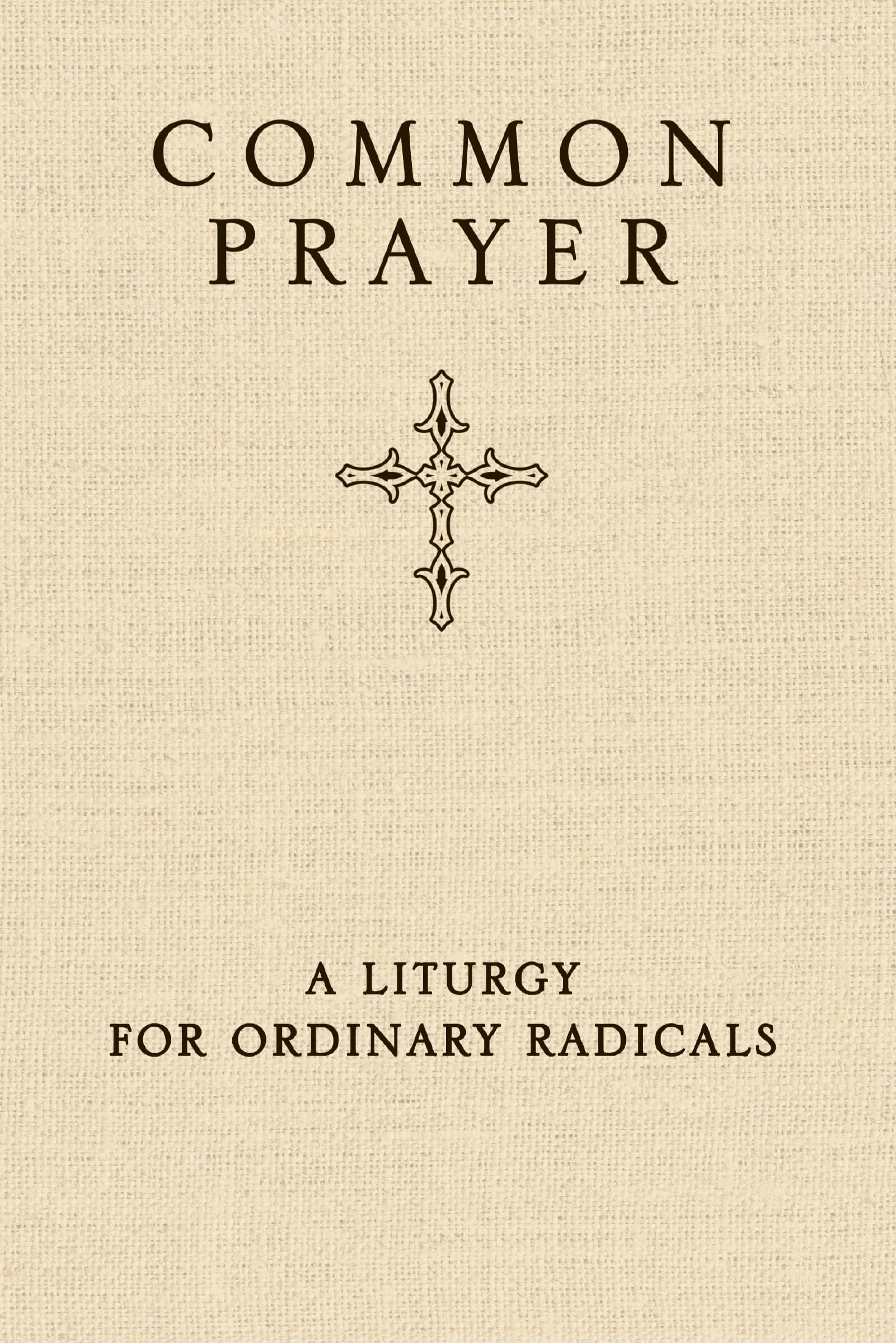
Common Prayer: A Liturgy for Ordinary Radicals
Product ID: 5629510
Desertcart purchases this item on your behalf and handles shipping, customs, and support to Peru.
Experience a deeper prayer life through this fresh take on ancient liturgy for believers today. Designed to help individuals, families, and congregations pray together across denominations, this book of common prayer will help you and your community join together each day with the same songs, scriptures, and prayers. Composed under an advisory team of liturgy experts, these three influential and inspiring authors have created Common Prayer-- a tapestry of prayer that will help the church be one as God is one. This universal prayer book allows readers to greet each day together, remembering significant dates and Christian heroes in church history, as well as important historic dates in the struggle for freedom and justice. There are morning prayers for each day of the year, evening prayers for each of the seven days of the week, a midday prayer to be repeated throughout the year, and prayers for special occasions. In addition, there are morning prayers for Holy Week. Common Prayer also includes a unique songbook composed of music and classic lyrics to more than fifty songs from various traditions, including African spirituals, traditional hymns, Mennonite gathering songs, and Taize chants. Tools for prayer are scattered throughout to aid those who are unfamiliar with liturgy and to deepen the prayer life of those who are familiar with liturgical prayer. Ultimately, Common Prayer makes liturgy dance, taking the best of the old and bringing new life to it with a fresh fingerprint for the contemporary renewal of the church. Review: Their best work yet - Both Claiborne and Wilson-Hartgrove are part of a growing stream of thought in the US and abroad that believe when Jesus said we should come follow him and take up our cross he really meant it. He is bidding us come, die and find resurrection, community in the Body, an economy of love, reconciliation, stability, hospitality, and an abundant life lived with Him here and in the hereafter. Finally we in the west can see what it means to follow Jesus without traveling to the Majority World. They and their communities, of course, are not the only ones doing this, but they have, through their writings, caught our attention and ignited our prophetic imagination in an uncommon way. Common Prayer is definitely the most ambitious book these three authors have published. The third author is Enuma Okoro, the author of Reluctant Pilgrim(2010). Clearly, they have looked to those who have gone before them. Common Prayer offers us a spirituality that grounds us squarely in the story of God and invites us to pray the prayers of the saints and angels that have been prayed for thousands of years in some cases. Common prayer books are not a new idea. Communal prayer liturgies started with the early church. Most high church denominations have common prayer books. This book is unique though in that it invites us in to the New Monastic tradition. The prayers are based on the church calendar and the marks of the New Monasticism. So while talking about Advent, Good Friday, and Easter Common Prayer explores what it means to care for the earth, love your enemy, share your things, invite strangers to your dinner table and be grounded in the traditions and prayers that have enabled the Church to be the Church. The book is also ecumenical. So Catholics, Baptists, Quakers, Pentecostals, Americans(North, Latin and South), Europeans as well as Africans can all use it. It is multi-cultural and multi-racial. For the above reasons the book is really a marvelous accomplishment in my opinion. The book is split in to five parts: Evening Prayers, Morning Prayers, Mid-Day Prayer, Occasional Prayers and a song book. CP offers an evening prayer for every night of the week. They are each very similar with confession, two beautiful songs, a declaration of faith, and a song from scripture. There is a morning prayer for every day of the year with special prayers for the unique times like Holy Week. They are all similar in format with a song, scripture reading from the Psalms and the Old and New Testament, and a short quote from a unique Christian(such as Jean Vanier), activist, missionary, early church father or sometimes a scripture. Each month is centered around a mark from the New Monasticism. The marks tend to follow important dates such as "living in the abandoned places of empire" is in December when we celebrate Christ's incarnation, the truest model for this mark. February is "racial reconciliation". There is only one midday prayer consequently it's the most beautiful prayer of the entire book. It consists of St. Francis' prayer, the Anima Christi( a very beautiful Catholic prayer), a recitation of the Beatitudes, a time of silence and a few smaller prayers. CP then has a section for occasional prayers and finally a song book for songs sung during morning prayers. I was excited to began praying these prayers. I have to admit though, when I finally got the book I was, at first...well...perplexed mixed with disappointment. The ideas and readings felt alien. I felt like I was entering in to a foreign world of prayer. There were also prayers we simply didn't like, but we decided to stick with the book and maybe do some innovation. We proposed changing certain prayers. I think we've realized that the struggle for us was two fold. First, CP has a robust spirituality with plenty of scripture reading, thoughts from true practitioners, invitations to remember God (and not us) as the Source, prayers and readings that ask for the gift of empathy and action, and confession. The book, if taken seriously, like all true spirituality leads us down the road of self-denial and in to a counter-cultural way of living. Second, CP is repetitive. It can feel confining if you're used to being the director of your own faith journey. In a culture that is always looking for that new spiritual in ingredient to make faith work it feels like maybe our authors weren't imaginative enough. It helped when we researched the prayers and we discovered that they were, in fact, deep and well thought out and some of them have been prayed ardently for well over a thousand or more years in some cases. The authors are inviting us in to a spirituality so robust and old that there's less need for imagination and more need for research, relationships with those who have been praying these prayers most of their lives, faithfulness to the unknown and the willingness to share with us what has deeply inspired them. Lo and behold, God's path is simple and narrow. For that reason we decided to learn to love them. In most cases it has worked. Now we find ourselves humming the tunes and saying the prayers throughout the day. I'm also sharing songs from CP I've learned when I lead worship on Sundays. So if you are part of an intentional community, live alone, go to a big church or a small one, enjoy high church or no church this book will interest you. Well done Claiborne, Wilson-Hartgrove, Okoro and the many others involved. This is your best yet. Go to to get a glimpse of what you'll find in the book. Review: An excellent book of prayer for those looking for an interdenominational liturgy - I received my copy right before the first day in the book (December 1st) so I've been praying with this book daily since then. I am loving it! As an individual who loves liturgy and common prayer but would not consider himself to be Anglican/Episcopalian nor necessarily a part of any of the classic liturgical denominations, I find this prayer book to be a refreshing look at the 'style' - if you will. As a youth pastor, this has been a good way for me to introduce a form daily and communal prayer and Scripture study to some of my more dedicated kids without having to throw extra explicitly denominational traditions/ideas/concepts on them that they may not be familiar with nor do they necessarily need. Although it does mention this 'New Monasticism' stuff, it's more of a "hey check this out if you want to" and not shoved down your throat at every turn. I enjoy the Morning, Mid-day, and Evening setup. It allows you to start your day with good prayer, good Word, and some thoughts to roll over in your mind for the day that stem from a multitude of traditions. I've been pleased to read quotes from Church Fathers all the way to modern missionaries. I've found that taking the Mid-day prayer at my lunch break has made my workday much more (only word I can think of to put here is 'beautiful'). And the Evening prayer helps me to go to bed on a good note no matter what. I also enjoy the 'Becoming the Answer to Our Prayers' ideas at the end of each month with ways to put the faith into practice. I like the inclusion of the Occasional Prayers, especially the adoption prayer. My only concern is the Songbook doesn't include complete lyrics. This does make the song section of the morning prayer difficult if someone you are praying with (or you yourself) does not know the song which, considering the wide variety of traditions they pulled from, isn't too hard to fathom. I'm attempting to compile a complete set but some songs are difficult to find (or cost money to get the lyrics to, such as 'Freedom Train'). Although I disagree with other reviewers that a complete set of source references is needed, I do think the Songbook should be fleshed out. I also disagree with those complaining that this isn't THE Book of Common Prayer and that Thomas Cranmer isn't mentioned. First, the description shows that it is not and even a quick flip in the bookstore would show it. Finally, the subtitle should be a major clue. Beyond that, it is not meant to be the classic denominational handbook but a guide for praying and reading together no matter what your community looks like. To summarize: If it's going to hurt your feelings that this isn't the 'official' Book of Common Prayer with Thomas Cranmer's touch . . . get over it and enjoy it for what it IS. For everyone else, pick up this neat little liturgy for the rest of us today. It will open your eyes and help you to focus in your prayer time.







| Best Sellers Rank | #64,152 in Books ( See Top 100 in Books ) #9 in Christian Ecumenism #94 in Christian Rites & Ceremonies Books #192 in Christian Prayer Books (Books) |
| Customer Reviews | 4.6 out of 5 stars 893 Reviews |
D**Y
Their best work yet
Both Claiborne and Wilson-Hartgrove are part of a growing stream of thought in the US and abroad that believe when Jesus said we should come follow him and take up our cross he really meant it. He is bidding us come, die and find resurrection, community in the Body, an economy of love, reconciliation, stability, hospitality, and an abundant life lived with Him here and in the hereafter. Finally we in the west can see what it means to follow Jesus without traveling to the Majority World. They and their communities, of course, are not the only ones doing this, but they have, through their writings, caught our attention and ignited our prophetic imagination in an uncommon way. Common Prayer is definitely the most ambitious book these three authors have published. The third author is Enuma Okoro, the author of Reluctant Pilgrim(2010). Clearly, they have looked to those who have gone before them. Common Prayer offers us a spirituality that grounds us squarely in the story of God and invites us to pray the prayers of the saints and angels that have been prayed for thousands of years in some cases. Common prayer books are not a new idea. Communal prayer liturgies started with the early church. Most high church denominations have common prayer books. This book is unique though in that it invites us in to the New Monastic tradition. The prayers are based on the church calendar and the marks of the New Monasticism. So while talking about Advent, Good Friday, and Easter Common Prayer explores what it means to care for the earth, love your enemy, share your things, invite strangers to your dinner table and be grounded in the traditions and prayers that have enabled the Church to be the Church. The book is also ecumenical. So Catholics, Baptists, Quakers, Pentecostals, Americans(North, Latin and South), Europeans as well as Africans can all use it. It is multi-cultural and multi-racial. For the above reasons the book is really a marvelous accomplishment in my opinion. The book is split in to five parts: Evening Prayers, Morning Prayers, Mid-Day Prayer, Occasional Prayers and a song book. CP offers an evening prayer for every night of the week. They are each very similar with confession, two beautiful songs, a declaration of faith, and a song from scripture. There is a morning prayer for every day of the year with special prayers for the unique times like Holy Week. They are all similar in format with a song, scripture reading from the Psalms and the Old and New Testament, and a short quote from a unique Christian(such as Jean Vanier), activist, missionary, early church father or sometimes a scripture. Each month is centered around a mark from the New Monasticism. The marks tend to follow important dates such as "living in the abandoned places of empire" is in December when we celebrate Christ's incarnation, the truest model for this mark. February is "racial reconciliation". There is only one midday prayer consequently it's the most beautiful prayer of the entire book. It consists of St. Francis' prayer, the Anima Christi( a very beautiful Catholic prayer), a recitation of the Beatitudes, a time of silence and a few smaller prayers. CP then has a section for occasional prayers and finally a song book for songs sung during morning prayers. I was excited to began praying these prayers. I have to admit though, when I finally got the book I was, at first...well...perplexed mixed with disappointment. The ideas and readings felt alien. I felt like I was entering in to a foreign world of prayer. There were also prayers we simply didn't like, but we decided to stick with the book and maybe do some innovation. We proposed changing certain prayers. I think we've realized that the struggle for us was two fold. First, CP has a robust spirituality with plenty of scripture reading, thoughts from true practitioners, invitations to remember God (and not us) as the Source, prayers and readings that ask for the gift of empathy and action, and confession. The book, if taken seriously, like all true spirituality leads us down the road of self-denial and in to a counter-cultural way of living. Second, CP is repetitive. It can feel confining if you're used to being the director of your own faith journey. In a culture that is always looking for that new spiritual in ingredient to make faith work it feels like maybe our authors weren't imaginative enough. It helped when we researched the prayers and we discovered that they were, in fact, deep and well thought out and some of them have been prayed ardently for well over a thousand or more years in some cases. The authors are inviting us in to a spirituality so robust and old that there's less need for imagination and more need for research, relationships with those who have been praying these prayers most of their lives, faithfulness to the unknown and the willingness to share with us what has deeply inspired them. Lo and behold, God's path is simple and narrow. For that reason we decided to learn to love them. In most cases it has worked. Now we find ourselves humming the tunes and saying the prayers throughout the day. I'm also sharing songs from CP I've learned when I lead worship on Sundays. So if you are part of an intentional community, live alone, go to a big church or a small one, enjoy high church or no church this book will interest you. Well done Claiborne, Wilson-Hartgrove, Okoro and the many others involved. This is your best yet. Go to to get a glimpse of what you'll find in the book.
W**L
An excellent book of prayer for those looking for an interdenominational liturgy
I received my copy right before the first day in the book (December 1st) so I've been praying with this book daily since then. I am loving it! As an individual who loves liturgy and common prayer but would not consider himself to be Anglican/Episcopalian nor necessarily a part of any of the classic liturgical denominations, I find this prayer book to be a refreshing look at the 'style' - if you will. As a youth pastor, this has been a good way for me to introduce a form daily and communal prayer and Scripture study to some of my more dedicated kids without having to throw extra explicitly denominational traditions/ideas/concepts on them that they may not be familiar with nor do they necessarily need. Although it does mention this 'New Monasticism' stuff, it's more of a "hey check this out if you want to" and not shoved down your throat at every turn. I enjoy the Morning, Mid-day, and Evening setup. It allows you to start your day with good prayer, good Word, and some thoughts to roll over in your mind for the day that stem from a multitude of traditions. I've been pleased to read quotes from Church Fathers all the way to modern missionaries. I've found that taking the Mid-day prayer at my lunch break has made my workday much more (only word I can think of to put here is 'beautiful'). And the Evening prayer helps me to go to bed on a good note no matter what. I also enjoy the 'Becoming the Answer to Our Prayers' ideas at the end of each month with ways to put the faith into practice. I like the inclusion of the Occasional Prayers, especially the adoption prayer. My only concern is the Songbook doesn't include complete lyrics. This does make the song section of the morning prayer difficult if someone you are praying with (or you yourself) does not know the song which, considering the wide variety of traditions they pulled from, isn't too hard to fathom. I'm attempting to compile a complete set but some songs are difficult to find (or cost money to get the lyrics to, such as 'Freedom Train'). Although I disagree with other reviewers that a complete set of source references is needed, I do think the Songbook should be fleshed out. I also disagree with those complaining that this isn't THE Book of Common Prayer and that Thomas Cranmer isn't mentioned. First, the description shows that it is not and even a quick flip in the bookstore would show it. Finally, the subtitle should be a major clue. Beyond that, it is not meant to be the classic denominational handbook but a guide for praying and reading together no matter what your community looks like. To summarize: If it's going to hurt your feelings that this isn't the 'official' Book of Common Prayer with Thomas Cranmer's touch . . . get over it and enjoy it for what it IS. For everyone else, pick up this neat little liturgy for the rest of us today. It will open your eyes and help you to focus in your prayer time.
R**S
this starts my day off right!
I haven't ever done a regular morning devotion before, but somehow I got started on this one and am really enjoying it. What I like the most about it is that is very diverse, drawing material from Roman Catholic, mainstream protestant and evangelical sources. I also like that it makes a lot of references to the social justice tradition of Christianity: Martin Luther King, Dorothy Day, etc. This book contains many resources: a short collection of songs, and occassional prayers: blessings for homes, workplaces, major life transitions, meal times, and other special occassions. The heart of the book is a set of prayer services for morning, mid-day and evening. These incorporate Scripture, historic prayers and repetitive elements and can be done individually, as a community or a family. There is just one mid-day prayer liturgy, which is short enough that it could be memorized and repeated at lunch or on a coffee break. There are separate evening prayer services for each day of the week, which I found got a little repetitive after a few weeks. I have been using the morning prayer services most consistently, as there is a new one for each day of the year. There are some repetitive elements that open ("O Lord, let me soul rise up to meet you as the day rises to meet the sun." ) and close ("May the peace of the Lord Christ go with you...") each day. Then there are unique elements which change every day: a selection from the psalms, Old Testament and New Testament, a quotation and a prayer. There is also space for personal prayers for others. Occassionally there are short descriptions of important anniversaries of important events in the history of the church or the social justice movement. Each month there is a introduction to a theme of the "new monasticism" which are not just for people who are part of that movement, but taken as a whole are a good introduction to practices most Christians share - this is why the book is called "Common Prayer" - it is a good effort at developing a set of resources that Christians from many traditions could share. The whole book is really well written with lots of great resources. On the practical side, it is pretty heavy to carry a Bible and this book when I travel, so I ended up buying a copy for my Kindle, and I am enjoying using that.
B**N
Meticulously Crafted, Refreshing, Interesting, but not enough Explanation of where the prayers come from.
After a few years of exploring Christianity, having been introduced to Christianity by Mennonites and Evangelicals, pretending to be a Presbyterian for a while, flirting a little with Orthodoxy and even less with Catholicism, I finally found a church home with the Anglicans last year and have since been confirmed as an Anglican. One of the beautiful things about Anglicanism is The Book of Common Prayer which I have fallen in love with and use for personal daily prayer. As other reviewers have noted (somewhat angrily) this book is not The Book of Common Prayer. Anyone who has read the product description, though, is already aware of this. It has many characteristics of The Book of Common Prayer though. There are outlines for Evening and Noonday prayer, but rather than having a simple rubric for Morning Prayer the book is filled with individual devotionals for each day of the year. So, for those who are familiar with both the Anglican Book of Common Prayer and those evangelical devotionals with a thought/meditation/prayer/reading/all-or-some-of-the-above, it might be helpful to think of this as something in between. Perhaps it is not fair of me to write this review as I have certainly not read the entirety of the book (and I probably won't be done until a year from now--that's how the book works), but I will do my best to provide a review of what I have read of it. The introduction is pretty good. It won't provide the depth of history behind liturgy that people who have already fallen in love with, studied, and practice liturgy would like. It is exactly what it claims to be--an introduction and nothing more. It seems that the intended audience is more those that are unfamiliar with liturgy than those who are familiar with it. It is what you would expect from the New Monastics in its critical attitude toward government and the idea of serving the Kingdom of God being mutually exclusive of serving the nations of this world. The point of being ecumenical is stressed over and over. It doesn't give a very complete history of liturgical prayer. Rather it just stresses that liturgy is a big part of the church's history. As the unhappy Anglican/Episcopal reviewers have mentioned, Thomas Cranmer is not even mentioned. The Morning Prayers are pretty sweet. For those of you who are used to a tradition that uses liturgy, you'll either feel comfortable because of the way it seems sort of like what you use or you'll feel a bit uneasy about how it seems almost like it but not quite. I swung back and forth between those feelings reading the first nine days of morning prayers to get caught up. Aside from the liturgical aspect, the stories and quotes inserted about saints/heroes of Christianity are awesome. Great short little stories about amazing people. I really like this about this book. One criticism I have about the liturgy in this book is that there's no reference made to where the material came from. I recognize a lot of it from my beloved Book of Common Prayer and a lot is straight out of the Bible, while other bits sound vaguely familiar. I've been to a lot of different kinds of churches and read a lot of liturgy, but I'm no expert so I can't pinpoint where it all came from. I wish there were a bunch of footnotes saying where all the material came from. That would be helpful in understanding what we're saying. Also, it's kind of difficult to appreciate another culture/tradition/time period's contribution when it's not even given credit. These people have clearly mined through so much material; I just wish I could have a map of where they've gone to get all of this. The Occasional Prayers section is pretty helpful. A lot of these are comparable to some of the prayers in the Book of Common Prayer with a few notable ones that have no parallel prayer in the Book of Common Prayer. Two that really stood out to me are A Litany to Honor Women and Death of Someone Killed in the Neighborhood. I specifically like these two because these are things I've actually tried to pray about and felt unable to find the words. Scripted prayers provide words to pray when you don't know how to put words to your thoughts and feelings. In conclusion, I wish this book were more thoroughly annotated to provide a richer understanding of where the prayers come from, but aside from that I'm really liking it. As far as the criticism made by a couple of my disgruntled fellow Anglicans that it's not The Book of Common Prayer, they're absolutely right, so if you're looking for that just buy that. It's a pretty sweet book too. It's definitely got the leanings of the New Monastics. It's got their subversive pacifist fingerprints all over it (and I like that). It's different from any prayer book you've seen and hopefully will make everyone feel a little bit welcome and a little bit displaced, which is good because we've got a lot to learn from trying out other folks' ways of doing things. I'm sure I'll find more I like and dislike about it as the year goes on and this review is certainly not my final take on it, but hopefully some of you can benefit from my thoughts from the first few readings. Grace and Peace to all of you.
W**S
Invaluable addition to my life
One of the best purchases I've ever spent. This is a rich, prayerful, ecumenical, truly Christian prayer book that I couldn't put down as soon as I opened it. Thank you to the authors and everyone involved for this beautiful work of art!
A**Y
Book Review
I have enjoyed this prayer book and have implementing it into my daily liturgy. As a Camaldolese oblate, I use a Benedictine prayer book for the bulk of daily prayers. I use Common Prayer at least for one of my daily offices. I love the variety and freshness of the prayers. Highly recommend Common Prayer if you desiring to start daily liturgical prayer.
D**S
Great Book of Prayer - even on Kindle
I'm a newbie to books of Prayer but I love this book - Don't consistently read it but when I get to it during periods of my life (months/weeks), it is so so so helpful in refocusing myself on what is most important to me. This book of common prayer is refreshing in its orientation around social action (as opposed to the exclusive application of religion to the 'spiritual' realm as most devotionals tend to do). I particularly appreciate the historical sketches in the morning pieces -- very inspirational and thoughtful bits. Thanks!!! I would agree with others that the kindle version can be a bit cumbersome to navigate vs. a paper version (I only have kindle). However, the convenience of having it on multiple devices is worth it to me.
S**D
Common Prayer: A Liturgy for Ordinary Radicals
Five stars! The use of this text 'centers' our day as we use it every morning and often at night. We gave a copy to each member of our Worship, Music and the Arts Committee. As a group, we try to stay connected and present to God and one another by the discipline of daily common prayer. We find it very meaningful and the prayers very immediate. One difficulty is some of the male language for God. No one tampers with the "Glory be to the Father. . . " I guess, except the Carmelite nuns who use "Glory to You, Source of All Being, Eternal Word, and Holy Spirit" (People's Companion to the Breviary) which expands the imagery for God. We use this language instead. And today, in the Songbook section, we came upon "Precious is the blood that makes me white as snow. . . ," a racial reference to "purity." These might seem minor, but our language reveals who we believe God and ourselves to be. In our family, we simply make the changes and move on. Thanks to Claiborne, Wilson-Hartgrove and Okoro for this meaningful guide to daily prayer that remains with us all day.
A**O
Excellent, apart from the dent
Excellent text, the only small flaw was due to the seller or dispatcher - there was a small dent on the cover and I would have appreciated to recieive a copy in a better state
S**H
Common prayer for the common Jesus follower
Really enjoying making my way through this daily. Also grateful for the guides through out! A must for Pastors!
T**H
A very good resource for Christian prayer for all denominations
I fully agree with the other two reviewers of this book, James and A Grey in their very positive comments on this book. I am sorry though that, as witnessed by some of the tags that some have added for this book, (which are totally unwarranted, suggesting that this book is heretical and representing a false Christianity), some very strongly disagree. These tags are very mistaken and misleading. On the other hand they may lead some to take more of an interest in this book instead and benefit from what they find ! I understand though, that some are unfortunately objecting to this book and getting very hot under the collar because they see the title, "Common Prayer" and see it as somehow trying to usurp the position of the Anglican "Book of Common Prayer", often shortened to "Common Prayer". I am quite sure that the authors of this book never had the slightest intentions of doing this. In fact, if only those who get upset will note, the full title of this book is, "Common Prayer: A Liturgy for Ordinary Radicals", their objections ought to be, at least to some extent, resolved. Just as the original "Book of Common Prayer" formed a more concise version of previous ecumenical liturgies for the people of the time, which its successors still do, I believe that "Common Prayer: A Liturgy for Ordinary Radicals" does a similar job for our time. I cannot speak for the authors of this book, but it looks to me as if they had the intention of actually honouring the original "Book of Common Prayer" in using its shortened name as part of the title of this book. As such, and as I have already said, I am sure that they did not have any intention of trying to propose this book as a replacement. Those with experience of the Liturgy of the Hours and similar forms for daily prayer, will recognise this as a very valid and useful resource for prayer and reflection. It includes elements from a number of different Christian traditions and so can be very useful towards helping Christians of all denominations feel at home and to come together in prayer. A small criticism of this book might be in the way that it separates the material for morning prayer from evening prayer. At the same time, bearing in mind that morning prayer is more or less the same for each day of the week, and evening prayer has material for each day of the Christian year, I can see that, in the end, it makes sense. On the other hand, those wanting to bring more variety into their morning could easily make use of the seasonal material as well. It is worth noting here that some liturgical books can be even more difficult for newcomers to find their way around, so this one is very easy by comparison). For those wishing that this book included Night Prayer, as I did, on first looking at it, it is worth noting that, as with the "Book of Common Prayer", Evening and Night Prayer have been combined into one service. If anyone wanted to keep to a separate Night Prayer, they could quite easily simply omit the Nunc Dimittis - The Canticle of Simeon from Evening Prayer and adapt the form for Evening Prayer, including the Nunc Dimittis and perhaps some other suitable prayers for Night Prayer. I note though, that the forthcoming shortened Pocket Version Common Prayer: A Liturgy for Ordinary Radicals will include a separate form of Night Prayer, as well as other material not included in this full edition, as mentioned in an email the publishers have sent to me, as follows:- "Common Prayer Pocket Edition helps individuals and today's diverse church pray together across traditions and denominations. With an ear to the particulars of various liturgical prayer traditions, and using an advisory team of liturgy experts, the authors have created a tapestry of prayer that celebrates the best of each tradition. This convenient and portable book also includes tools for prayer scattered throughout to aid those unfamiliar with liturgy and deepen the prayer life of those already familiar with liturgical prayer". "Common Prayer Pocket Edition adds new prayers for Compline (late evening) and for individual use, such as prayers for travel, protection, and various blessings. It includes a table of days and readings for the morning prayers as well as an annotated list of saints and days to remember". I have the Pocket Edition on pre-order already, because as well as supplementing the big book, it will evidently be very useful for traveling as well. As one who mainly uses other forms of the Liturgy of the Hours, I find this book provides good additional and alternative material to help me in my prayer life. I also believe that this book will be helpful for those who would find the more formal church books of prayer less attractive. Likewise those who might want to begin with something that is easier to use, even if they may later on want to make use of the formal denominational ones, such as used by Anglicans, Lutherans or Roman Catholics etc. Oh yes! I nearly forgot to mention, as well as providing the words of hymns and songs, the music and chords are also helpfully provided. As a saying goes, "Those who sing, pray twice". A lot of careful thought and artistry has gone into the production of this book and I recommend it.
L**Z
Perfect prayer book
I have been using this prayer book almost every morning for a few months now, and it has been very helpful for me. It draws me in to my prayer time, helps me to focus and centre myself, and then leaves a space to pray from the heart for as long as I want. The written prayers have both poetry and depth of theology. It is clearly trinitarian and speaks to both the human and divine natures of Jesus Christ. It relates our personal prayer time to the world around us and to the communion of saints that came before us and still surrounds us. I'm young and strong, but some may find the physical book itself heavy and cumbersome. Otherwise, I think it's the perfect prayer book.
F**K
Used as a source of prayer
Used everyday.
Trustpilot
1 month ago
1 week ago