
Desertcart purchases this item on your behalf and handles shipping, customs, and support to Peru.
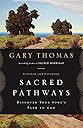
Sacred Pathways reveals nine distinct spiritual temperaments--and their strengths, weaknesses, and tendencies--to help you improve your spiritual life and deepen your personal walk with God. It's time to strip away the frustration of a one-size-fits-all spirituality and discover a path of worship that frees you to be you. Experienced spiritual directors, pastors, and church leaders recognize that all of us engage with God differently, and it's about time we do too. In this updated and expanded edition of Sacred Pathways, Gary Thomas details nine spiritual temperaments and--like the Enneagram and other tools do with personality--encourages you to investigate the ways you most naturally express yourself in your relationship with God. He encourages you to dig into the traits, strengths, and pitfalls in your devotional approach so you can eliminate the barriers that keep you locked into rigid methods of worship and praise. Plus, as you begin to identify and understand your own temperament, you'll soon learn about the temperaments that arenโt necessarily "you" but that may help you understand the spiritual tendencies of friends, family, and others around you. Whatever temperament or blend of temperaments best describes you, rest assured it's not by accident. It's by the design of a Creator who knew what he was doing when he made you according to his own unique intentions. If your spiritual walk is not what you'd like it to be, you can change that, starting here. Sacred Pathways will show you the route you were made to travel, marked by growth and filled with the riches of a close walk with God. Review: Book Review - Sacred Pathways - To be honest, I was a little skeptical when a good friend recommended that I read Sacred Pathways , by Gary Thomas. I agreed to give it a look, purchased the book and left it on the shelf for the next couple of years until I could "get around to reading it." I've always been told, never judge a book by its cover, or in this case, by its title; but that's exactly what I did. Sacred Pathways... It sounded meditative, mystical, and slightly New Age-ish. However, when I finally "got around to reading it," I was pleasantly surprised. I'd never read anything by Gary Thomas before, and found him engaging and easy to follow. Sacred Pathways captured and held my interest right from the start. In Sacred Pathways, Gary Thomas identifies and examines nine different spiritual paths. What exactly does this mean? Each of us have different approaches as to how we relate easiest with God. Each of us grow spiritually in different ways. Gary Thomas leads us through nine major categories, showing us the strengths and weakness of each one. And after each of them, he offers a few questions, to help identify if that particular pathway is one of the reader's stronger characteristics. I found this rating system especially helpful, and quite surprising. I thought I knew how I best deepened my spiritual relationship with God, but found out that I may have strengths in areas that have remained unrealized in my life. More on that and how I grow later. Here are the nine pathways, with a quick synopsis of each one: Naturalists: Loving God Out of Doors The naturalist sounds like exactly what it is: someone who prefers to leave everything behind and head into the great outdoors to connect with God. A walk beside the river or through the woods is more worshipful than reading a book or listening to a sermon. Naturalists are moved by God's creation. A view from a mountaintop connects them closer to God than a classical cathedral ever will. Naturalists seek God by surrounding themselves with all that he has made. Sensates: Loving God With The Senses Sensates love to be lost in the awe and wonder of God. Sights, sounds, and scents add to the worship experience. A sensate desires to connect with God through the senses, and the more overwhelming, the better. Experiencing God though the five senses is a most effective inroad into the heart of the sensate. Traditionalists: Loving God Through Ritual And Symbol Traditionalists are fed by the classic and historic dimensions of the faith: ritual, liturgy, sacraments, and symbols. The traditionalist have a desire for worship to have a ritual and structure; without these, he feels disconnected from God. Traditionalists tend to be very disciplined and organized in their faith. Ascetics: Loving God in Solitude And Simplicity The ascetic would love nothing more than to spend every waking hour alone in prayer. The ascetic needs none of the symbols and structure of faith; anything along those lines would simply be a distraction. Ascetics tend to isolate themselves from others and any organized structure. Frequently seen as introspective, leaving everything behind in his quest for God is no trouble for the ascetic. Activist: Loving God Through Confrontation Activists love to set things right, even if that means confronting someone or something head on. The activist is quick to jump into a cause, or several of them, if it helps wage the war against injustice. The activist feels closest to God when she is standing against evil and calling sinners to repentance. Caregivers: Loving God By Loving Others The caregiver is a servant. Serving another is the quickest way for this person to connect to God. The caregiver sees Christ in those who are needy, poor and downtrodden. The caregiver's faith is built by serving others. Caregivers often display the deepest compassion, seeing the needs of others and identifying practical ways to meet those needs. Enthusiasts: Loving God With Mystery And Celebration The enthusiast loves the excitement and mystery of worship. Joyful celebration is crucial to the growing faith of this type of person. God moves by moving their hearts. If they don't feel moved during their worship, they wonder if they've experienced God at all. With some similarities to the sensate, the enthusiast doesn't want to just know concepts, he wants to experience them to the fullest. Contemplatives: Loving God Through Adoration A contemplative would refer to God as their lover. The idea of a loving Father or Bridegroom depicts their relationship with God very accurately. The person who is a contemplative seeks to love God with his entire being: his heart, soul, mind and strength. The contemplative is a very humble person, seeking nothing else than to sit at the feet of the Savior. Intellectuals: Loving God With The Mind Intellectuals live in the world of concepts. Studying and learning are a prime way that this type of person experiences God to the fullest. Understanding doctrine and other key points about Christianity and the faith is the best type of connection for this person. The intellectual gets fed when they learn or grasp something new about God or their faith. There they are, the nine pathways to God that Gary Thomas identified. Is this list exhaustive? Probably not. It is fairly descriptive of several general approaches to complete worship? I think it is. There is a lot to be learned from Sacred Pathways. As I read, my mind was opened to possibilities for me to experience God in ways that I've never even thought of before. And, as I mentioned above, I came to realize that I may have strengths in areas that I never guessed I had, or even guessed could have in my life. Here are my top four categories, as scored in the self-evaluations supplied at the end of each chapter. Naturalist I scored 27 out of a possible 30 here. This is no surprise to me. I love the outdoors. In fact, some of my favorite moments have been when I escaped to the river, or a secluded campsite, with nothing more than my Bible and journal, and maybe a book or two. I love to hike and float. I figured that I would display strong naturalist tendencies. Intellectual My score here was 22 out of 30. Again, no real surprise. I love to read and study. When I learn something new about God, it reinforces my connection to him in the realm of my faith. Ascetic This one scored a 21 out of 30. Once again, I wasn't surprised by this characteristic. I love to get away and enjoy solitude. This goes hand in hand with my naturalist leaning. Enthusiast Here, I scored 21 out of 30, tieing with my ascetic score. This one caught me rather off-guard. I've always been someone who views faith through the lens of reason, and not as much emotion. Here I discovered that I may be more experiential in my connection with God than I have ever realized. I've always been excited, almost to the point of tears, when I see God moving dramatically. I just never have identified that as one of my strengths. And so I have a challenge: to learn to recognize and improve my growth through this pathway. Being aware of it may be the first step in allowing its potential life-change to happen. And I'm excited to see just how God might use this tendency, now that I'm more aware of it. And, for your information, I scored lowest as an activist. No surprise there. I've always hated confrontation, even when it's beneficial... All in all, I really gained some incredible insights from reading Sacred Pathways. I definitely would recommend this as material for anyone trying to identify their best spiritual growth opportunities. If you wonder why you don't grow as much as you feel you should, it could be because you aren't working within your strongest strengths. Give this book a read, and you might be as surprised as I was. Review: A must-read! - This book absolutely revolutionized my relationship with God. Gary Thomas summarizes nine different "types" of ways that people can connect with God, identifying ideas, strengths, and weaknesses of each one, and a short "quiz" to help you identify your main spiritual temperament. I have had such a difficult time over the past several years connecting with God. I have felt like I was supposed to spend time with Him following one particular formula, and I couldn't help dreading what I felt was my dry and disappointing duty. What a joy to read this book and recognize there are so many other ways I can have a "quiet time!" I identified with several and was presented with so very many ideas to try, it has actually made me excited to spend time with God every day. I feel like I never need to get "bored" with my faith again! I can love the Lord with my heart, my mind, my soul, and my strength, and Gary Thomas helps to understand what each of those can look like. Having been brought up in and exposed to pretty much one Christian tradition, it was so enlightening to see what other Christians throughout the centuries have done to connect with God and express their faith. Plus, this book sticks very close to orthodox Christian doctrine. There was nothing shady in it; where it could have veered into sketchy territory, it was very clear where the balance should be. What a beautiful, freeing book! It has a permanent place on my bookshelf, and I have recommended it to virtually everyone I know.
| Best Sellers Rank | #195,166 in Books ( See Top 100 in Books ) #367 in Christian Rites & Ceremonies Books #3,183 in Christian Personal Growth #3,282 in Christian Self Help |
| Customer Reviews | 4.5 out of 5 stars 749 Reviews |
J**N
Book Review - Sacred Pathways
To be honest, I was a little skeptical when a good friend recommended that I read Sacred Pathways , by Gary Thomas. I agreed to give it a look, purchased the book and left it on the shelf for the next couple of years until I could "get around to reading it." I've always been told, never judge a book by its cover, or in this case, by its title; but that's exactly what I did. Sacred Pathways... It sounded meditative, mystical, and slightly New Age-ish. However, when I finally "got around to reading it," I was pleasantly surprised. I'd never read anything by Gary Thomas before, and found him engaging and easy to follow. Sacred Pathways captured and held my interest right from the start. In Sacred Pathways, Gary Thomas identifies and examines nine different spiritual paths. What exactly does this mean? Each of us have different approaches as to how we relate easiest with God. Each of us grow spiritually in different ways. Gary Thomas leads us through nine major categories, showing us the strengths and weakness of each one. And after each of them, he offers a few questions, to help identify if that particular pathway is one of the reader's stronger characteristics. I found this rating system especially helpful, and quite surprising. I thought I knew how I best deepened my spiritual relationship with God, but found out that I may have strengths in areas that have remained unrealized in my life. More on that and how I grow later. Here are the nine pathways, with a quick synopsis of each one: Naturalists: Loving God Out of Doors The naturalist sounds like exactly what it is: someone who prefers to leave everything behind and head into the great outdoors to connect with God. A walk beside the river or through the woods is more worshipful than reading a book or listening to a sermon. Naturalists are moved by God's creation. A view from a mountaintop connects them closer to God than a classical cathedral ever will. Naturalists seek God by surrounding themselves with all that he has made. Sensates: Loving God With The Senses Sensates love to be lost in the awe and wonder of God. Sights, sounds, and scents add to the worship experience. A sensate desires to connect with God through the senses, and the more overwhelming, the better. Experiencing God though the five senses is a most effective inroad into the heart of the sensate. Traditionalists: Loving God Through Ritual And Symbol Traditionalists are fed by the classic and historic dimensions of the faith: ritual, liturgy, sacraments, and symbols. The traditionalist have a desire for worship to have a ritual and structure; without these, he feels disconnected from God. Traditionalists tend to be very disciplined and organized in their faith. Ascetics: Loving God in Solitude And Simplicity The ascetic would love nothing more than to spend every waking hour alone in prayer. The ascetic needs none of the symbols and structure of faith; anything along those lines would simply be a distraction. Ascetics tend to isolate themselves from others and any organized structure. Frequently seen as introspective, leaving everything behind in his quest for God is no trouble for the ascetic. Activist: Loving God Through Confrontation Activists love to set things right, even if that means confronting someone or something head on. The activist is quick to jump into a cause, or several of them, if it helps wage the war against injustice. The activist feels closest to God when she is standing against evil and calling sinners to repentance. Caregivers: Loving God By Loving Others The caregiver is a servant. Serving another is the quickest way for this person to connect to God. The caregiver sees Christ in those who are needy, poor and downtrodden. The caregiver's faith is built by serving others. Caregivers often display the deepest compassion, seeing the needs of others and identifying practical ways to meet those needs. Enthusiasts: Loving God With Mystery And Celebration The enthusiast loves the excitement and mystery of worship. Joyful celebration is crucial to the growing faith of this type of person. God moves by moving their hearts. If they don't feel moved during their worship, they wonder if they've experienced God at all. With some similarities to the sensate, the enthusiast doesn't want to just know concepts, he wants to experience them to the fullest. Contemplatives: Loving God Through Adoration A contemplative would refer to God as their lover. The idea of a loving Father or Bridegroom depicts their relationship with God very accurately. The person who is a contemplative seeks to love God with his entire being: his heart, soul, mind and strength. The contemplative is a very humble person, seeking nothing else than to sit at the feet of the Savior. Intellectuals: Loving God With The Mind Intellectuals live in the world of concepts. Studying and learning are a prime way that this type of person experiences God to the fullest. Understanding doctrine and other key points about Christianity and the faith is the best type of connection for this person. The intellectual gets fed when they learn or grasp something new about God or their faith. There they are, the nine pathways to God that Gary Thomas identified. Is this list exhaustive? Probably not. It is fairly descriptive of several general approaches to complete worship? I think it is. There is a lot to be learned from Sacred Pathways. As I read, my mind was opened to possibilities for me to experience God in ways that I've never even thought of before. And, as I mentioned above, I came to realize that I may have strengths in areas that I never guessed I had, or even guessed could have in my life. Here are my top four categories, as scored in the self-evaluations supplied at the end of each chapter. Naturalist I scored 27 out of a possible 30 here. This is no surprise to me. I love the outdoors. In fact, some of my favorite moments have been when I escaped to the river, or a secluded campsite, with nothing more than my Bible and journal, and maybe a book or two. I love to hike and float. I figured that I would display strong naturalist tendencies. Intellectual My score here was 22 out of 30. Again, no real surprise. I love to read and study. When I learn something new about God, it reinforces my connection to him in the realm of my faith. Ascetic This one scored a 21 out of 30. Once again, I wasn't surprised by this characteristic. I love to get away and enjoy solitude. This goes hand in hand with my naturalist leaning. Enthusiast Here, I scored 21 out of 30, tieing with my ascetic score. This one caught me rather off-guard. I've always been someone who views faith through the lens of reason, and not as much emotion. Here I discovered that I may be more experiential in my connection with God than I have ever realized. I've always been excited, almost to the point of tears, when I see God moving dramatically. I just never have identified that as one of my strengths. And so I have a challenge: to learn to recognize and improve my growth through this pathway. Being aware of it may be the first step in allowing its potential life-change to happen. And I'm excited to see just how God might use this tendency, now that I'm more aware of it. And, for your information, I scored lowest as an activist. No surprise there. I've always hated confrontation, even when it's beneficial... All in all, I really gained some incredible insights from reading Sacred Pathways. I definitely would recommend this as material for anyone trying to identify their best spiritual growth opportunities. If you wonder why you don't grow as much as you feel you should, it could be because you aren't working within your strongest strengths. Give this book a read, and you might be as surprised as I was.
E**L
A must-read!
This book absolutely revolutionized my relationship with God. Gary Thomas summarizes nine different "types" of ways that people can connect with God, identifying ideas, strengths, and weaknesses of each one, and a short "quiz" to help you identify your main spiritual temperament. I have had such a difficult time over the past several years connecting with God. I have felt like I was supposed to spend time with Him following one particular formula, and I couldn't help dreading what I felt was my dry and disappointing duty. What a joy to read this book and recognize there are so many other ways I can have a "quiet time!" I identified with several and was presented with so very many ideas to try, it has actually made me excited to spend time with God every day. I feel like I never need to get "bored" with my faith again! I can love the Lord with my heart, my mind, my soul, and my strength, and Gary Thomas helps to understand what each of those can look like. Having been brought up in and exposed to pretty much one Christian tradition, it was so enlightening to see what other Christians throughout the centuries have done to connect with God and express their faith. Plus, this book sticks very close to orthodox Christian doctrine. There was nothing shady in it; where it could have veered into sketchy territory, it was very clear where the balance should be. What a beautiful, freeing book! It has a permanent place on my bookshelf, and I have recommended it to virtually everyone I know.
D**S
Good intro.
Overall, this was a good introductory book to different spiritual โtemperamentsโ or pathways. It doesnโt have as much depth into each as it perhaps could, but if youโre looking for an introduction, this fits the bill well. There are only a few minor issues with this book I think. The main one is that at times there seemed to be a self imposed pressure to keep these pathways distinct from each other and almost force differences between them that arenโt necessarily there. Another issue, is more of a personal pet peeve is that there are a couple of times where he throws in percentages that have no reference point. The point was made with out it, and it just seemed unnecessary. The final one is with the rating system he has to try and help the reader determine what their temperament is. He says 15 and above may be an indication of it applying to you, but with 6 questions each, you can meet that with responses of 2 and 3 on half of the questions. It seems like you should need to answer 3 or above on most of the questions for it to really be an indication that you might have that temperament so maybe a better number to meet or exceed would be 18.
T**G
This is an excellent aid to any Christian's spiritual growth by helping one ...
This is an excellent aid to any Christian's spiritual growth by helping one to identify his or her dominant "spiritual temperament". The underlying principle is that people relate to God in varied ways and so a one-size-fits-all spirtuality will not do. Too often churches try to force believers into a particular mould of spirtuality (e.g. by defining quiet-time in very rigid ways) or are intolerant to varying expressions of devotion. This book serves as a much needed remedy by broadening our horizons to the many sacred pathways tread by godly men and women of the Bible and throughout church history. The author identifies nine main spiritual temperaments: naturalist, sensate, traditionalist, ascetic, activist, caregiver, enthusiast, contemplative, intellectual. Readers are not only introduced to these temperaments but also guided to point-score their affinity to each in order to discover the overall, composite profile of their soul's path to God by the end of the book. This would make especially helpful reading for pastors and church leaders, or anyone playing a guiding role to fellow believers in their spiritual lives.
J**E
Highly Recommended!
For certain types of thinkers, frameworks like the one presented in this book help us interpret ourselves and others. It's sort of a spiritual Myers-Briggs or enneagram tool. It has helped me own my own spiritual path and embrace the things that might move me along further, faster in spiritual development. It also has helped me recognize the spiritual paths of others and, in the case that they are seeking advice, I can give it to them. I would have them start with one of the many on-line tests available, to develop interest, and then get them the book. Maybe you'd like to start that way yourself? Just search "sacred pathways test." Great stuff! Don't pass it up.
S**E
Awesome book!
If you love MBTI, Enneagram, and similar personality typing systems, you'll love this book! It explores how different temperaments of Christians may have different preferences how they feel closest to God and worship Him. Two things I especially loved about this book: 1. The author roots everything in scripture. Each sacred pathway is linked back to one or more characters in the bible and how they primarily displayed their worship of God. There are many bible passages included as cross references. His opinions are not shared in isolation from God's Word. 2. The author emphasizes more than once the possible pitfalls of each type, and - perhaps more importantly - the fact that the mature Christian will display all 9 types. The action-oriented Activist is not excused from sitting at the feet of Jesus like the Contemplative, and the Caregiver is not meant to go out serving people without spending time studying God's Word like the Intellectual. Overall, a well researched and well written book that I am now using to lead a summer bible study where each week we are worshipping God in one of the 9 Sacred Pathways!
T**N
I am not sure...
I purchased all of the books by Gary Thomas after listening to him give a presentation on marriage. I am not exactly sure what I think about his first book that I just finished reading. This book lists the many different "pathways" that people have with regards to worshiping the one true god. It is NOT a book about many different pathways to god... He does have some good information in this book but for me this was presented with entirely too many non-biblical ideas and ideas taken from psychology which is not what I was looking to read about. Yes we are all different and we all have different ideas and capacities for worship. Not sure I would have purchased this book for my collection if I had really known what it was really about. Bottom line...I personally do not think this book is worth the money or the time to read. My opinion.
A**R
Great book!!!
We are all moved spiritually in different ways. This book will help us all see our ways and see how others are lead too. It would be a great bible study book. It may help derail possible problems in your church. I guess that's why there are many different churches and many different ways of spreading the Word. One of our challenges is to find the church that best fits what moves us spiritually. What's good for me might not be so good for you. That doesn't mean that either of us are wrong, just different. We both want the same thing and may receive it in a different way. Hope all of your days are blessed and wonderful!!!
M**K
Pick it up!
Let me start with how much I hate reading... now that you have that information, I think you should buy this book. I had to read it for a course I was taking in school. It's a fantastic book that explains how you connect with God, and allows you to understand what refreshes you spiritually. I was reading through the nature chapter and the entire time I was going... "Oh my word! This was written for me!". Once you find the chapter on your pathway, you'll start to realize there are specific reasons for why you feel the way you do when you are in certain environments. If you don't want to read, there is also an audio book.
B**N
Four Stars
Helped me to discover & understand how I relate to God
M**R
Highly recommend. Easy to read.
If you are struggling to connect with God, this book is really helpful in helping you to work out your own personal way of connect back to the father. Read this myself and then used it within small group. It had transformed a lot of lives.
C**N
Great read
Excellent book, clearly written in easy English, bite size chapters and very thought provoking
M**Y
Great read!
Such a neat book. I've enjoyed the examples and stories and have learned better who I al and how I bet worship the Lord. 5 stars!
Trustpilot
2 months ago
1 month ago