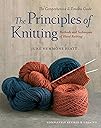
The Principles of Knitting
Product ID: 3914679
Desertcart purchases this item on your behalf and handles shipping, customs, and support to Peru.
Now featuring new instructions, new illustrations, and new information, The Principles of Knitting— beloved by knitters everywhere and one of the most requested out-of-print books for years—finally gets the revision that fans have been clamoring for! A treasured guide beloved by knitters everywhere, the classic book The Principles of Knitting is finally available again in a fully revised and updated edition. This is the definitive book on knitting techniques, with valuable information for everyone from beginners to experienced knitters. June Hiatt presents not only a thorough, thoughtful approach to the craft, but also a passion for carrying on the art of knitting to future generations. She has repeatedly tested the various techniques and presents them with clear, easy-to-follow instructions—as well as an explanation of what each one can contribute to your knitting. Informed by decades of experience and thousands of hours of practice, this comprehensive resource offers a variety of ways to approach every skill and technique and offers solutions that can help solve the most challenging aspects of any knitting project. The Principles of Knitting has been totally rewritten—new instructions, new illustrations, and new information. While the basics of knitting have not changed much, June’s understanding of the material has deepened over the last twenty-five years, and she’s eager to share what she has learned with the knitting world. In addition, the book has been reorganized to make it easier to use and has a gorgeous new design. Reading The Principles of Knitting is like having a knitting mentor by your side who can answer any knitting question you have in an honest, intelligent, informed manner. Review: Comprehensive and Worth the Wait - I have been eyeing very expensive used copies of this classic of knitting technique for years. I was overjoyed to learn that it was going to be re-issued and immediately pre-ordered this item. I was stunned when the book arrived. Complete and comprehensive doesn't even begin to describe the contents of this book it is that overwhelming. Beginning with self-teaching methods and all of the different cast-ons and knitting techniques it progresses to stitch patterns, decreases, increases, making adjustments in fit and design based on stitch patterns, finishing techniques - just everything. Circular knitting, knitting with beads, double-knitting, making allowances for patterns with a slant or an unusual shape are just a few of the techniques and problems surveyed. Solving problems to knitting in general and specific techniques is a part of each section. Color knitting is extensively covered, not only the usual stranded and intarsia knitting but all of the different Nordic and other methods of color knitting. It is all here and more. Lavishly illustrated in clear line drawings that demonstrate the techniques this book encompasses a lifetime of knitting expertise. For every knitter who has struggled to master a new technique or fix a seemingly insoluble problem or who has created a garment or item that bore no resemblance to the photograph on the pattern, this book shows you how to troubleshoot and fix. Principles of Knitting covers all of the technical information without which the finished product is not what was intended or envisioned. Other books cover patterns, projects and stitches, this book ensures that the patterns are completed as intended. Other books show the knitter inspriational photos of lovely garments and items, this book ensures that those projects become a reality. A must for any knitter's library and a wonderful gift for the novice knitter. Highest possible recommendation. Review: Knitters Rejoice! - Those of us who are "dyed in the wool" knitters have been offered a treasure trove of spectacular books within the last 12 months, but this one, "The Principles of Knitting" tops my list of must-have volumes. Here's my take on June Hemmons Hiat's revised foundational volume: PROS: 1. "Principles" starts at the beginning (e.g., how-tos, including knitting methods, cast-on, cast-off, selvages, and more basics) and proceeds to the most complex. She has included all the basics every knitter needs to understand. 2. Many knitting writers stress the importance of starting each project with a gauge swatch, but this volume includes a series of photos of swatches made with different yarns and weights. We know (from being told so often) we should always make the swatch, but often we are so ready to get going that we skip this most important step with sometimes sorry results. Now you can see why you must do this before plunging right into your pattern. What was news to me is simple common sense that I have been woefully lacking - dress the swatch. Of course! It makes perfect sense that your swatch should reflect the same finishing that you'll apply to the finished garment. And that would explain why, sometimes, my garments do not exactly mirror my swatches. 3. I've recently had a bear of a time picking up stitches to finish a hemmed neckline and hemmed armholes. My problem? Getting the picked up stitches exactly even on each side. Now I can do it with ease by picking up all stitches and decreasing as necessary - perfect! Why didn't I think of that before. 4. Not everyone becomes an avid knitter, but, for those who do, the time inevitably arrives when they want to knit their own original designs. The Principles of Knitting is the definitive resource for designing your own knits without hiding the final product or having the neighborhood gather to giggle at your results. For example, consider the discussion on designing a sleeve cap (pp. 495-96 - available for you to read in the "look inside the book" section above). Here's a clear discussion on how to fit the sleeve cap so the results look professional rather than disastrous. Think about it. Shouldn't handmade knits look great (better than off-the-rack) as well as being heart-felt creations? This is the resource you need to make that happen. 5. There's a ton of information in this book that I may never get around to using, but that's ok. There's so much to do differently in the techniques I already use, that I will be busy from now on - and my results will be even better. But if I ever get bored . . . CONS: 1. This is a HUGE volume, so it is understandable that certain cost-cutting efforts were applied to reduce the final size and expense. However, the paper used is light-weight, and the print sometimes shows through the back of the page, making it a bit difficult to read. I consider this book an important tool, just the same as my hard-wood needles, so I would have preferred a heavier paper even if it increased the cost of the book. After all, the cost of the best tools usually pays off in the best results! 2. A question: What's with the Kindle edition of this book costing 51% more than the print edition? How can that be reasonable? About the only advantage I can imagine is that you could receive instant delivery, but is that worth paying so much more? OVERALL: I pre-ordered this massive volume on September 1, 2011, and waited almost six months to read it. It was worth the wait. If I could own only two knitting books, this would be one of the two. The other? "Finishing School." With these two books, you'll have the answer to any "knotty" problem you might encounter. Knitters rejoice! This is the mother lode!
| Best Sellers Rank | #77,073 in Books ( See Top 100 in Books ) #94 in Knitting (Books) |
| Customer Reviews | 4.7 out of 5 stars 635 Reviews |
A**N
Comprehensive and Worth the Wait
I have been eyeing very expensive used copies of this classic of knitting technique for years. I was overjoyed to learn that it was going to be re-issued and immediately pre-ordered this item. I was stunned when the book arrived. Complete and comprehensive doesn't even begin to describe the contents of this book it is that overwhelming. Beginning with self-teaching methods and all of the different cast-ons and knitting techniques it progresses to stitch patterns, decreases, increases, making adjustments in fit and design based on stitch patterns, finishing techniques - just everything. Circular knitting, knitting with beads, double-knitting, making allowances for patterns with a slant or an unusual shape are just a few of the techniques and problems surveyed. Solving problems to knitting in general and specific techniques is a part of each section. Color knitting is extensively covered, not only the usual stranded and intarsia knitting but all of the different Nordic and other methods of color knitting. It is all here and more. Lavishly illustrated in clear line drawings that demonstrate the techniques this book encompasses a lifetime of knitting expertise. For every knitter who has struggled to master a new technique or fix a seemingly insoluble problem or who has created a garment or item that bore no resemblance to the photograph on the pattern, this book shows you how to troubleshoot and fix. Principles of Knitting covers all of the technical information without which the finished product is not what was intended or envisioned. Other books cover patterns, projects and stitches, this book ensures that the patterns are completed as intended. Other books show the knitter inspriational photos of lovely garments and items, this book ensures that those projects become a reality. A must for any knitter's library and a wonderful gift for the novice knitter. Highest possible recommendation.
P**F
Knitters Rejoice!
Those of us who are "dyed in the wool" knitters have been offered a treasure trove of spectacular books within the last 12 months, but this one, "The Principles of Knitting" tops my list of must-have volumes. Here's my take on June Hemmons Hiat's revised foundational volume: PROS: 1. "Principles" starts at the beginning (e.g., how-tos, including knitting methods, cast-on, cast-off, selvages, and more basics) and proceeds to the most complex. She has included all the basics every knitter needs to understand. 2. Many knitting writers stress the importance of starting each project with a gauge swatch, but this volume includes a series of photos of swatches made with different yarns and weights. We know (from being told so often) we should always make the swatch, but often we are so ready to get going that we skip this most important step with sometimes sorry results. Now you can see why you must do this before plunging right into your pattern. What was news to me is simple common sense that I have been woefully lacking - dress the swatch. Of course! It makes perfect sense that your swatch should reflect the same finishing that you'll apply to the finished garment. And that would explain why, sometimes, my garments do not exactly mirror my swatches. 3. I've recently had a bear of a time picking up stitches to finish a hemmed neckline and hemmed armholes. My problem? Getting the picked up stitches exactly even on each side. Now I can do it with ease by picking up all stitches and decreasing as necessary - perfect! Why didn't I think of that before. 4. Not everyone becomes an avid knitter, but, for those who do, the time inevitably arrives when they want to knit their own original designs. The Principles of Knitting is the definitive resource for designing your own knits without hiding the final product or having the neighborhood gather to giggle at your results. For example, consider the discussion on designing a sleeve cap (pp. 495-96 - available for you to read in the "look inside the book" section above). Here's a clear discussion on how to fit the sleeve cap so the results look professional rather than disastrous. Think about it. Shouldn't handmade knits look great (better than off-the-rack) as well as being heart-felt creations? This is the resource you need to make that happen. 5. There's a ton of information in this book that I may never get around to using, but that's ok. There's so much to do differently in the techniques I already use, that I will be busy from now on - and my results will be even better. But if I ever get bored . . . CONS: 1. This is a HUGE volume, so it is understandable that certain cost-cutting efforts were applied to reduce the final size and expense. However, the paper used is light-weight, and the print sometimes shows through the back of the page, making it a bit difficult to read. I consider this book an important tool, just the same as my hard-wood needles, so I would have preferred a heavier paper even if it increased the cost of the book. After all, the cost of the best tools usually pays off in the best results! 2. A question: What's with the Kindle edition of this book costing 51% more than the print edition? How can that be reasonable? About the only advantage I can imagine is that you could receive instant delivery, but is that worth paying so much more? OVERALL: I pre-ordered this massive volume on September 1, 2011, and waited almost six months to read it. It was worth the wait. If I could own only two knitting books, this would be one of the two. The other? "Finishing School." With these two books, you'll have the answer to any "knotty" problem you might encounter. Knitters rejoice! This is the mother lode!
J**E
A treasure trove of knitting knowledge
This book sat on my wish list for a while. I figured it would be more of the same information I already have in my other references. So I was probably going to pass...but when I saw an interview with the author, I learned that the she has an academic background and had worked on the original for like eight years, then another 10 years on this 2nd edition. This is more than a typical knitting reference; It is really what the title says: the principles. (Duh, I should have known.) This is a scholarly, exhaustive work. She says in the interview that she was trying to include everything about hand knitting. (Not so much the history/background, though there is a little of that too, but the methods, techniques, tools, etc.) She said she wanted to write a book that explains the 'why'. So I ordered the book and I am delighted! This is a deep dive, offering explanations and refinements rarely seen in typical how-to books. The book is beautiful! I am reading it from cover to cover and I like the font and color of the pages a lot. The illustrations and photos are not in color but they are nice and clear and it's easy to see what's happening. I would highly recommend this book to begginers and experts alike. I think I am a pretty good intermediate knitter and I am learning things in chapter one right now.
G**L
Love this book!
This book is like a college text book for knitting. All the pieces, parts and techniques that you need for knitting and then some. It's not only a how-to book, it's a why book. Which, by the way, she tells you that she actually tested all the techniques to discover the how-to and why for herself and didn't just gather information for reprint. The book has been criticizied in another review for not telling you how to knit a sweater on your own. That's not what this book is intended to do AT ALL. This is not a project book, it's FOR your project. In reference to the criticizim to the phrasing contained in the book, make sure you read the front of the book and learn why she used some of the phrasing that she chose, which is different than a standard pattern book. Her goal is to avoid using the same phrase for 2 totally different things and to maintain some consistency throughout the book. This book is for someone that has been knitting a while and wants to learn new techniques, why one cast-on is better than another cast-on in different situations and the same for a bind off, and thousands of other things. Sure, a lot of these things you can find covered on different websites, blogs, and YouTube. However, in those places you don't or will you ever get anywhere near the information about each technique, the actual why or why not. You never knew that there was so much to know about knitting until you look at this book. It's not really a book to learn to knit from (although that's included too) it's a book for the next 50 years that will help you remember techniques, learn new ones, and solve issues as you knit, and just make your projects better over all. And then, when your knitting days are done, you can pass it down to your daughter or more likely your granddaughter.
Q**M
Strap in! This is a monster tome about knitting *for readers*. More word than image.
I am not only a 50+ year knitter but I love *reading about knitting* as well. The is a word heavy book and you are going to need to love to read about knitting and technique. There are photos ( almost all black and white) and charts are explained. There’s a ton of technique info which is enormously enlightening especially if you learned your cast on from your grandmother (in my case, she only knew one). I think this book could be problematic for people who get more out of images than written descriptions. There are a tremendous number of things I’ve never read elsewhere, like twined knitting. It’s the kind of book I pick up and just read; I always walk away with insight into my own knitting. Minor quibble....I really think clear color photos would have enhanced this book a lot. The black and white photos are often fuzzy; it dates the book. Also, on my scale this weighs 6# which is quite a challenge if you have compromised hands. I’m super tempted to buy this again in the Kindle format. I like it that much but it’s a book for a certain kind of learner.
J**Y
ESSENTIAL in every knitters library
The essential knitters bible for all beginner to experienced knitters. If you wish to own only one knitting reference book to help you understand knitting techniques and knowhow, this is the one! It explains very clearly, everything you ever need to know. What is not covered by this book, is not worth knowing. Do yourself a favour and have it in your library. A gently peruse on a cold wet day in front of the fire and you will be motivated to start some new technique right away.
M**E
Highly Recommend
The original edition of "The Principles of Knitting" had been the most useful and understandable knitting guide that I ever found. I checked it out of the library several times (when I lived in a town where the library had a copy). I've been wanting my own copy of the book for something like 15 years, but used copies have been *very* expensive. Now not only is this great book back in print, it's an updated 2nd edition. If you haven't seen the first edition: What you should know is that it's a big, thorough reference book (check out the Amazon "Look Inside" preview, where you can see the table of contents) with clear instructions and good drawings and photographs (there are 900+ illustrations, mostly fairly small). The photographs are black-and-white, and the drawings are black-and-white or black-and-white with added detail in a third tone (rust). It doesn't have the stunning color pictures that a lot of knitting books have, but aside from having an experienced knitter show you a technique in person, it's the best knitting help I've found. If you're familiar with the first edition, here's what's different: The author (as she tells in the introduction) rewrote and refined the content throughout the book and also added new material. The book is 100 pages longer than before. There's some show-through of the printing on the opposite sides of the pages---it's not especially distracting but it's not ideal. I don't have the first edition to compare it to, so I can't say whether the paper quality is actually worse. The binding of my copy seems fine, by the way. (I noticed another reviewer said that theirs didn't appear to be very sturdy.) I've never posted a review before, but I had to for this book because I think it's so outstanding.
Z**N
Great updates!
Wonderfully updated! I'll still keep my older one, too, though. It took years to find it, so I ordered the new edition as soon as I saw it.
L**F
10 Stars
The sheer volume of information in this book is stunning - it could easily be 3x the price. There is something for every knitter - from beginner to expert. Knitters everywhere owe a debt of gratitude to this author - the amount of energy she must have put into this work defies the imagination. If you are a knitter, or thinking of becoming one, or know one, there is no question - you should have this treasure in your collection.
C**S
Väldigt omfattande stick-lexikon
Fylld av tekniker och teorier. Den har dock liten text och svartvita foton, vilket kanske kan störa en del läsare, om det varit tjockare papper och större text hade den dock varit tung som ett kassaskåp. All kunskap inom pärmarna är definitivt värt sitt pris.
N**W
excellent livre
c'est le plus complet et le mieux expliqué que j'ai trouvé. Pour débutants ou confirmé. il faut bien parler anglais. L'auteure utilise des termes un peu mais on s'y fait vite et il y a un glossaire qui explique ces termes. Le Bmol : son poids, c'est gros livre très épais, plus large que le format A4. Contents : Part One: Learning and Methods Chapter 1: Knitting Methods Chapter 2: Circular and Flat Knitting Part Two: Constructing a Fabric Chapter 3: Casting On Chapter 4: Selvedges and Steeks Chapter 5: Casting Off Chapter 6: Shaping a Fabric Chapter 7: Picking Up Stitches Chapter 8: Openings Chapter 9: Hems, Facings, Pleats, and Tucks Part Three: Decorative Techniques Chapter 10: The Stitches Chapter 11: Increase and Decrease Techniques Chapter 12: Increase and Decrease Stitch Patterns Chapter 13: Color Techniques Chapter 14: Surface Decoration Part Four: Special Fabrics Chapter 15: Double-Fabrics Chapter 16: Inlay Chapter 17: Twined Knit Chapter 18: Felting and Fulling Chapter 19: Uncommon Shapes Part Five: Stitch and Color Patterns Chapter 20: Written Stitch Patterns Chapter 21: Charted Stitch Patterns Chapter 22: Charted Color Patterns Part Six: Pattern Design Chapter 23: Stitch Gauge Chapter 24: Measurements and Schematics Chapter 25: Calculations for Pattern Design Chapter 26: Charted Garment Patterns Part Seven: Materials Chapter 27: Fibers Chapter 28: Yarns Chapter 29: Tools Part Eight: Working a Project Chapter 30: Working a Project Chapter 31: Written Garment Patterns Chapter 32: Cleaning and Dressing a Knit Chapter 33: Finishing Techniques Appendix Glossary Bibliography Index
S**R
Great reference book
Great and exhaustive reference book, but visually not easy to navigate.
C**C
Full of interesting information and inspiration.
Excellent book, full of wonderful information. Not much knitting knowledge not in this beautiful book. Very pleased.
Trustpilot
3 weeks ago
4 days ago