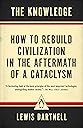
The Knowledge: How to Rebuild Civilization in the Aftermath of a Cataclysm
Product ID: 14489033
Desertcart purchases this item on your behalf and handles shipping, customs, and support to Peru.
How would you go about rebuilding a technological society from scratch? If our technological society collapsed tomorrow what would be the one book you would want to press into the hands of the postapocalyptic survivors? What crucial knowledge would they need to survive in the immediate aftermath and to rebuild civilization as quickly as possible? Human knowledge is collective, distributed across the population. It has built on itself for centuries, becoming vast and increasingly specialized. Most of us are ignorant about the fundamental principles of the civilization that supports us, happily utilizing the latest—or even the most basic—technology without having the slightest idea of why it works or how it came to be. If you had to go back to absolute basics, like some sort of postcataclysmic Robinson Crusoe, would you know how to re-create an internal combustion engine, put together a microscope, get metals out of rock, or even how to produce food for yourself? Lewis Dartnell proposes that the key to preserving civilization in an apocalyptic scenario is to provide a quickstart guide, adapted to cataclysmic circumstances. The Knowledge describes many of the modern technologies we employ, but first it explains the fundamentals upon which they are built. Every piece of technology rests on an enormous support network of other technologies, all interlinked and mutually dependent. You can’t hope to build a radio, for example, without understanding how to acquire the raw materials it requires, as well as generate the electricity needed to run it. But Dartnell doesn’t just provide specific information for starting over; he also reveals the greatest invention of them all—the phenomenal knowledge-generating machine that is the scientific method itself. The Knowledge is a brilliantly original guide to the fundamentals of science and how it built our modern world. Review: An excellent roadmap with wonderful references - Lewis Dartnell has written this book to describe how to rebuild the infrastructure of civilization from scratch. It is NOT a book on basic survival skills, but a roadmap on how science and technology was built and can be rebuilt. He writes: "This is a survivors' guidebook. Not one just concerned with keeping people alive in the weeks after the Fall -- plenty of handbooks have been written on survival skills -- but one that teaches how to orchestrate the rebuilding of a technologically advanced civilization." - from page 2 of INTRODUCTION He describes some of the knowledge and processes needed to "reboot" civilization by rebuilding technology and touches briefly on the basics of shelter, water, food, fuel, medicine and off-grid electric power. He suggests that with a good knowledge of the history of science and technology, it is possible to streamline that process and "leapfrog" some sections that were not needed to reach later points in the timeline. He goes into a little more depth in describing AGRICULTURE in Chapter 3 and FOOD AND CLOTHING in Chapter 4. The most interesting part of the book begins with Chapter 5 on Substances. He describes the importance of using thermal energy beyond that of a simple fire in the processes of: smelting, forging, casting, glass working, making salt, burning lime, firing bricks and more. He describes the extraction of calcium carbonate from limestone and burning it in a hot kiln to create calcium oxide which is in turn combined with water to make hydrated lime (calcium hydroxide). These steps form a foundation for later chemical processes that involve making soap, ammonia, glue, gunpowder and plastics. The chapter continues to describe the chemistry of wood pyrolisis, which involves collecting vapor from baked wood to make methanol, acetone and tars or drive a combustion engine. The chapter is completed with a brief discussion of acids. MATERIALS is the topic of Chapter 6 and it builds nicely on the previous discussion with sections on clay, lime mortars, metals and glass. Crude clay can be fired at high temperature to make ceramics which turn out to be very useful with both chemistry and later electronics, in both cases because it mostly stays not involved with process changes. Clay is a primary source for aluminum. Lime mortar led to cement which had a huge impact on building technology. Ceramics, cement and clay are instrumental in making high temperature kilns and furnaces. It is possible to melt salvaged aluminum, like soda cans, in a small furnace and using a sand casting process, produce simple parts to make a working metal lathe. The metal lathe can reproduce itself as well as make more complex metal working machines like the milling machine. This project is thoroughly documented in a small 7-book series called, "Build Your Own Metal Working Shop From Scrap" by David and Vincent Gingery. This is great example of Dartnell's concept of accelerating development by leapfrogging. The book continues with chapters on MEDICINE, POWER, TRANSPORT, COMMUNICATION, ADVANCED CHEMISTRY and one titled TIME AND PLACE which deals with timekeeping, clocks and navigation. The final chapter, THE GREATEST INVENTION, is about the scientific method and its application. In order for this book to really accomplish what it suggests, it would need to be much larger. There are missing pieces that would be needed to complete the rebuilding of advanced technology. For instance: in order to recreate modern electronics, we need advanced lenses and optics, photographic emulsion chemistry (which is covered in this book), more on electrolysis and plating, modern electronics and more advanced knowledge. Maybe this is reason for Dartnell to consider a "part two" book. But this book is a great start and should be considered a must for any complete survival library or collection on the history of science and technology. It is also extremely well annotated and referenced and from a knowledge management viewpoint is work the price of the book just for the knowledge map it provides to other sources. To be fair, there is some missing detail in some areas, but in most cases, it seems like the detail is available in the referenced material. A perfect example is the section on building your own metal shop. Dartnell cannot cover all the material in the small seven book series he references, but he does cover enough of the overall idea to make it clear what great potential is there and then references the source to make it available to the reader. Review: A book I've been hoping for! - The most visible technology we use daily is just the tip of a vast iceberg – not only in the sense that it's based on a great manufacturing and organizational network that supports production, but also because it represents the heritage of a long history of advances and developments. The iceberg extends unseen through both space and time. -- From The Knowledge by Lewis Dartnell ***** Anyone who thinks civilization is indestructible doesn't get out much. The past is heaped in ruin. The future harbors the chance of natural and/or man-made cataclysm. Our present appears more than a little shaky. Like our bodies, it's quite possible that something vital will one day give 'way. The system-as-a-whole clutches its collective chest and expires, gasping. Is crushed by falling rock. Or brought low by hurled, nuclear-tipped spear. What then? The Knowledge by Lewis Dartnell goes a long way toward answering that question. He provides an over-view of means by which that our world might re-boot itself from little more than scratch. A tool-kit of core, synergetic technologies with which industrial society has been achieved. Yet it is not prescriptive; this Knowledge empowers the future but leaves it to find its own way. Along the way, Dartnell provides a fascinating tour through the 'engine-room' of our industrial world. He illuminates its essential functions, interdependencies and history. Cataclysm or no, his book will have you looking with new eyes at the ubiquitous, taken-for-granted substances and artifacts permeating our lives. Should cataclysm befall us... well... it's a magnificently conceived gift to the future. The Knowledge is a tour de force which should appeal, not just to Doomers such as myself, but to any who yet feel the Renaissance passion for the Knowledge of our own times. That lauded and once valued Jack-or-Jill-of-all trades-kind of Knowledge that deepens our appreciation for our world, and extends our reach within it. Wonderful book, and I mean full of wonders! I return to its pages time and again, as seeds it has sown bloom within me. The Knowledge initiates a magnificent and, I believe, vital project. To my mind, it succeeds where many have failed to strike that narrow balance between too much and too little. It accepts its limitations and goes a long way toward persuading those who may be so moved, that a 'stitch in time' is a worthy goal. Where it is, perhaps, improvable has more to do with presentation than content; the not trivial task of speaking effectively to persons not yet born, and who inhabit a world homo sapiens has never seen. For them, the great torch of technology – from fire to the Clovis point to the germ theory – handed from generation to generation may well have been dropped. Lewis Dartnell has taken up the part of Prometheus, offering fire to the future. Godspeed! ***** As with technology, The Knowledge is but the tip of an iceberg. Visit The-Knowledge.org to participate in re-booting the future.
| Best Sellers Rank | #13,866 in Books ( See Top 100 in Books ) #5 in Disaster Relief (Books) #7 in Science Essays & Commentary (Books) #13 in Survival & Emergency Preparedness |
| Customer Reviews | 4.4 out of 5 stars 1,706 Reviews |
O**K
An excellent roadmap with wonderful references
Lewis Dartnell has written this book to describe how to rebuild the infrastructure of civilization from scratch. It is NOT a book on basic survival skills, but a roadmap on how science and technology was built and can be rebuilt. He writes: "This is a survivors' guidebook. Not one just concerned with keeping people alive in the weeks after the Fall -- plenty of handbooks have been written on survival skills -- but one that teaches how to orchestrate the rebuilding of a technologically advanced civilization." - from page 2 of INTRODUCTION He describes some of the knowledge and processes needed to "reboot" civilization by rebuilding technology and touches briefly on the basics of shelter, water, food, fuel, medicine and off-grid electric power. He suggests that with a good knowledge of the history of science and technology, it is possible to streamline that process and "leapfrog" some sections that were not needed to reach later points in the timeline. He goes into a little more depth in describing AGRICULTURE in Chapter 3 and FOOD AND CLOTHING in Chapter 4. The most interesting part of the book begins with Chapter 5 on Substances. He describes the importance of using thermal energy beyond that of a simple fire in the processes of: smelting, forging, casting, glass working, making salt, burning lime, firing bricks and more. He describes the extraction of calcium carbonate from limestone and burning it in a hot kiln to create calcium oxide which is in turn combined with water to make hydrated lime (calcium hydroxide). These steps form a foundation for later chemical processes that involve making soap, ammonia, glue, gunpowder and plastics. The chapter continues to describe the chemistry of wood pyrolisis, which involves collecting vapor from baked wood to make methanol, acetone and tars or drive a combustion engine. The chapter is completed with a brief discussion of acids. MATERIALS is the topic of Chapter 6 and it builds nicely on the previous discussion with sections on clay, lime mortars, metals and glass. Crude clay can be fired at high temperature to make ceramics which turn out to be very useful with both chemistry and later electronics, in both cases because it mostly stays not involved with process changes. Clay is a primary source for aluminum. Lime mortar led to cement which had a huge impact on building technology. Ceramics, cement and clay are instrumental in making high temperature kilns and furnaces. It is possible to melt salvaged aluminum, like soda cans, in a small furnace and using a sand casting process, produce simple parts to make a working metal lathe. The metal lathe can reproduce itself as well as make more complex metal working machines like the milling machine. This project is thoroughly documented in a small 7-book series called, "Build Your Own Metal Working Shop From Scrap" by David and Vincent Gingery. This is great example of Dartnell's concept of accelerating development by leapfrogging. The book continues with chapters on MEDICINE, POWER, TRANSPORT, COMMUNICATION, ADVANCED CHEMISTRY and one titled TIME AND PLACE which deals with timekeeping, clocks and navigation. The final chapter, THE GREATEST INVENTION, is about the scientific method and its application. In order for this book to really accomplish what it suggests, it would need to be much larger. There are missing pieces that would be needed to complete the rebuilding of advanced technology. For instance: in order to recreate modern electronics, we need advanced lenses and optics, photographic emulsion chemistry (which is covered in this book), more on electrolysis and plating, modern electronics and more advanced knowledge. Maybe this is reason for Dartnell to consider a "part two" book. But this book is a great start and should be considered a must for any complete survival library or collection on the history of science and technology. It is also extremely well annotated and referenced and from a knowledge management viewpoint is work the price of the book just for the knowledge map it provides to other sources. To be fair, there is some missing detail in some areas, but in most cases, it seems like the detail is available in the referenced material. A perfect example is the section on building your own metal shop. Dartnell cannot cover all the material in the small seven book series he references, but he does cover enough of the overall idea to make it clear what great potential is there and then references the source to make it available to the reader.
D**Z
A book I've been hoping for!
The most visible technology we use daily is just the tip of a vast iceberg – not only in the sense that it's based on a great manufacturing and organizational network that supports production, but also because it represents the heritage of a long history of advances and developments. The iceberg extends unseen through both space and time. -- From The Knowledge by Lewis Dartnell ***** Anyone who thinks civilization is indestructible doesn't get out much. The past is heaped in ruin. The future harbors the chance of natural and/or man-made cataclysm. Our present appears more than a little shaky. Like our bodies, it's quite possible that something vital will one day give 'way. The system-as-a-whole clutches its collective chest and expires, gasping. Is crushed by falling rock. Or brought low by hurled, nuclear-tipped spear. What then? The Knowledge by Lewis Dartnell goes a long way toward answering that question. He provides an over-view of means by which that our world might re-boot itself from little more than scratch. A tool-kit of core, synergetic technologies with which industrial society has been achieved. Yet it is not prescriptive; this Knowledge empowers the future but leaves it to find its own way. Along the way, Dartnell provides a fascinating tour through the 'engine-room' of our industrial world. He illuminates its essential functions, interdependencies and history. Cataclysm or no, his book will have you looking with new eyes at the ubiquitous, taken-for-granted substances and artifacts permeating our lives. Should cataclysm befall us... well... it's a magnificently conceived gift to the future. The Knowledge is a tour de force which should appeal, not just to Doomers such as myself, but to any who yet feel the Renaissance passion for the Knowledge of our own times. That lauded and once valued Jack-or-Jill-of-all trades-kind of Knowledge that deepens our appreciation for our world, and extends our reach within it. Wonderful book, and I mean full of wonders! I return to its pages time and again, as seeds it has sown bloom within me. The Knowledge initiates a magnificent and, I believe, vital project. To my mind, it succeeds where many have failed to strike that narrow balance between too much and too little. It accepts its limitations and goes a long way toward persuading those who may be so moved, that a 'stitch in time' is a worthy goal. Where it is, perhaps, improvable has more to do with presentation than content; the not trivial task of speaking effectively to persons not yet born, and who inhabit a world homo sapiens has never seen. For them, the great torch of technology – from fire to the Clovis point to the germ theory – handed from generation to generation may well have been dropped. Lewis Dartnell has taken up the part of Prometheus, offering fire to the future. Godspeed! ***** As with technology, The Knowledge is but the tip of an iceberg. Visit The-Knowledge.org to participate in re-booting the future.
S**N
Handy food for thought for "what if"
The instructions are basic; you would not be able to use this as your only guide on purifying water, milling grain, raising animals, etc. - but it gives lots of food for thought and a guideline on getting started on a rebuild. It also helps you realize what skill-sets and instruction books you may not have yet considered. More for the months and possibly years after an event, not really for the days after.
N**W
Excellent Book - Very Informative
This is a very informative book with a lot of fascinating detail. It is basically a thought experiment. If most of humanity was wiped out in the morning and a handful of people remained, could they survive and rebuild modern technology? To determine this, Dartnell looks how these technologies were originally developed and any possible short cuts which the survivors could take. The ‘apocalypse’ itself described in book was very clinical but this book is not meant to be a blow-by-blow instruction manual. I couldn’t see survivors sitting around it deciding what to do on Day 24. However, it does contain a lot of high level technological insight that a post-apocalyptic Edison or Pasteur might find useful and could spend years of their lives trying to leverage. The book is apolitical. Its focus is the technology. If you need advice on how to hang on to your post-apocalyptic fiefdom, consult Machiavelli, Sun Tzu and other experts in such matters. Oh, the book doesn’t cover killing zombies either. Some readers might find the advanced chemistry section a bit of a drudge, but I can’t see how Dartnell could avoid that, given leaving it out would undermine the book’s purpose. On the flip side, it provides useful context for any fledgling chemistry students. The footnotes throughout the book are consistently very interesting. I think any writer interested in world building would find the book very useful. One thing to note is that the book is shorter than it appears. About the last 20% is filled with references, including a useful list of relevant fiction. One final word of advice. If you want to tuck this away for the apocalypse, so you can amaze the other survivors with your scientific knowhow, remember to buy the paperback, not the ebook. Unless you’re really sure you can get those generators up and running.
G**I
Nice excercise
The book does not contain the whole HOWTO, is more a guide to think on what ifs, and has the pointers to where to find more information. It makes you think on the fragility of our world as we know it, coming from the last couple of centuries of high energy availability at low price, and how we depend on this for our life. We are proposed a scenario where this is not anymore available, with clues on how to recover, and pointers to where to find information to gather. Not for eager preppers, but for general public to understand the situation as it is. Does not cover in my opinion the danger from the removal of rational thinking, and how to grant the same level of freedom of thought we have today: remember Clarke's three laws <https://en.wikipedia.org/wiki/Clarke%27s_three_laws> and what religion has done in the past to undermine development. Project a couple of generation in this post apocalypse and you will see the danger for recovering "scientists" to be burned on pyres (again !).
S**E
Great Book for the Apocalypse
A great addition to any survivalist or homesteader that wants to expand their own skill base. I enjoyed the book and its chapters. I think it’s a great compliment to any library.
N**Q
Will be taking this book along during the Fall
The style is very conversational, which given the subject matter is a nice touch. Dartnell makes it clear from the beginning that this is not a manual and that he's not a Doomsday Prepper. It's more of a guide of what the quickest path would be. His conceptual distinction between structural damage and death toll, while gruesome, is quite interesting. I.e Coronal Mass Ejection, high damage but low mortality, while an asteroid impact, high damage, high mortality, compared to fast spreading pandemic, no damage, high mortality. Dartnell's breadth of knowledge of how modern civilization works is quite impressive. The value of the book is not in the specifics that it includes, although I found simple things like adding dirt into a jar of water, to figure out what's in it and in what proportions quite interesting. A thorough review of Wikipedia or most books on any particular subjects will provide just as much information, and in more depth. The value that Dartnell brings to the book is. His engaging style of sharing this information. The connections he makes between the various sciences and technologies. The interesting observations about technologies that Medieval Europeans had, but did not capitalize on, single technologies that the Romans had, but could not develop further. Technologies that did not become ubiquitous for various reasons, like the absorption refrigerator. Dartnell does a fairly comprehensive overview of apocalypse themed fiction, with a couple of glaring omissions. No mention at all of Jules Verne's Mysterious Island (in which our protagonists recreate the then modern technology from relative scratch, telegraph, railroad), to a lesser extent Jules Verne's Two Years Holiday (in which our protagonists also make do with limited resources in Family Robinson fashion).
M**.
As expected
As expected
G**S
Libro esencial
Recomendadísimo a cualquiera que aprecie el conocimiento y quiera estar preparado para casi todo.
C**N
ein wirklich interessantes Buch
ein wirklich interessantes Buch , egal ob man sich auf die Apokalypse vorbereitet oder nur gerne mal wissen möchte, was die grundlegenden technischen Errungenschaften de Menschheit sind , die wirklich einein Unterschied machen würden. Ich habe zum Beispiel nicht gewusst, wie viele chemische Grundsubstanzen unseres Alltags ursprünglich aus Holz gewonnen wurden. Es macht Spass zu lesen und ich kann es jedem weiter empfehlen.
C**H
Une idée géniale: conserver les bases de notre savoir
Lewis Dartnell fait partie de ces gens qui pensent que le monde va connaître un effondrement massif et que le savoir indispensable à notre survie confortable pourrait être inaccessible. Alors dans son livre, il se propose de faire le point sur toutes les bases minimales qu'on doit connaître. J'avais acheté ce livre en format audio mais c'était une bien mauvaise idée car c'est un livre de référence. Je l'ai donc racheté en format papier. L'idée de l'auteur, c'est que ce livre serve un peu comme une assurance si c'est la cata partout. En gros pour éviter tout simplement une chose qui s'est déjà produite: le Moyen-âge. Alors que trouve-t-on dans ce livre? _donner naissance quand ça passe pas tout seul _comment fabriquer des antibiotiques _comment fabriquer un moulin _les substances chimiques essentielles _les alliages _le transport _les communications _cultiver le sol sans engrais et pesticides ... Certaines pages marquées d'un triangle de danger signalent les pages qui contiennent les informations indispensables pour reconstruire après une catastrophe. Il est clair qu'un tel livre ne suffirait pas mais il donne de bonnes bases pour conserver les inventions et découvertes les plus utiles au quotidien. L'auteur est un chercheur universitaire, il espère que ce livre ne servira jamais à rien mais il pense que c'est une bonne chose d'avoir fait tout ce travail de compilation juste au cas où.
A**.
It is a fun book and really informative
It is a fun book and really informative.Also very must if the World ends.So keep it in your emergency backpack.:)
G**N
Great collection of human knowledge
Great collection of human knowledge
Trustpilot
3 weeks ago
1 week ago