We remain fully operational. Our teams are working around the clock to ensure your deliveries continue safely.

Descargar la aplicación


Servicios al cliente
Sobre nosotros
Copyright © 2025 Desertcart Holdings Limited
Descargar la aplicación
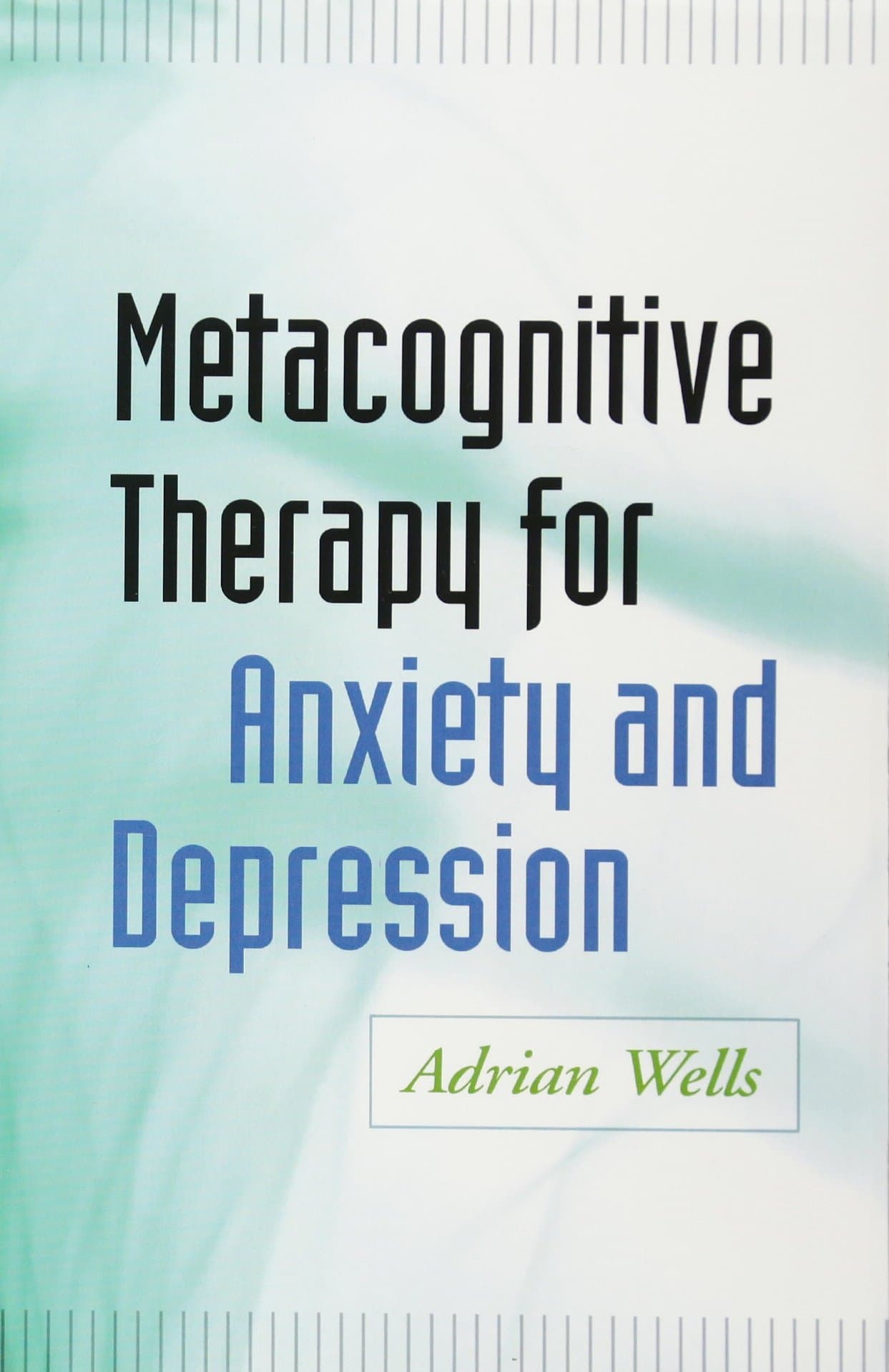

Metacognitive Therapy for Anxiety and Depression: 9781609184964: Medicine & Health Science Books @ desertcart.com Review: Metacognitive Therapy for Anxiety and Depression - I cannot say enough good things about Metacognitive Therapy for Anxiety and Depression. I saw many psychiatrists, psychologists and over 35 years in January 2009 I discovered Metacognitive Therapy and three months later I've reduced my anxiety to normal levels. It's not a miracle, it's a direct benefit of putting together the knowledge from this book and practicing the techniques described. I've contacted my friends with anxiety and/or depression as this is the best resource I've seen to overcome anxious and depressive conditions. I was intrigued with the book from page one, "Thoughts don't matter, but your response to them does: as everyone has negative thoughts but not everyone believes their negative thoughts and develops anxiety." I've read the book three times and I've phoned all my friends and family members with anxiety and/or depression to please read this book. Metacognitive therapy (MCT) does not question the reality of a person's individual thoughts and beliefs; it focuses on how to change a person's response to the thought. It cuts to the chase of the how to overcome anxious thinking and provides the tools to disengage from intrusive thoughts (called mental events) while providing a step by step method of how to reduce anxiety to normal levels. Before reading this book, I thought that my worry kept me safe, protected me from danger and I firmly believed it was impossible for me to stop worrying. I worried all day, everyday and half the night. I was existing, not living. Thanks to MCT I now experience anxious thoughts in metacognitive mode and view the thought as an event in the mind and as such, I do not have to pay attention to it resulting in no more worry! I cannot recommend this book highly enough. I hope that MCT becomes better known in the US (the author is from England) as it has the potential to help millions. Review: The source book of MCT - extremely comprehensive and detailed - This is a book that keeps on giving and giving with new insights and explanations. Adrian Wells explains the basic MCT model and goes through how to work with the main psychological problems. Besides the therapeutic work, Wells has developed a host of questionnaires that can be used to measure and gain insights and in the clients' thinking processes. These are included in the book. Examples of dialogue, techniques for in-session work and homework as well as session planning are part of the book. As a certified MCT practitioner, I still return to this book once in a while to get inspired.
| ASIN | 1609184963 |
| Best Sellers Rank | #346,158 in Books ( See Top 100 in Books ) #338 in Depression (Books) #411 in Popular Psychology Counseling #737 in Anxiety |
| Customer Reviews | 4.4 4.4 out of 5 stars (74) |
| Dimensions | 6.25 x 1 x 9.25 inches |
| Edition | Reprint |
| ISBN-10 | 9781609184964 |
| ISBN-13 | 978-1609184964 |
| Item Weight | 1 pounds |
| Language | English |
| Print length | 316 pages |
| Publication date | March 14, 2011 |
| Publisher | The Guilford Press |
I**E
Metacognitive Therapy for Anxiety and Depression
I cannot say enough good things about Metacognitive Therapy for Anxiety and Depression. I saw many psychiatrists, psychologists and over 35 years in January 2009 I discovered Metacognitive Therapy and three months later I've reduced my anxiety to normal levels. It's not a miracle, it's a direct benefit of putting together the knowledge from this book and practicing the techniques described. I've contacted my friends with anxiety and/or depression as this is the best resource I've seen to overcome anxious and depressive conditions. I was intrigued with the book from page one, "Thoughts don't matter, but your response to them does: as everyone has negative thoughts but not everyone believes their negative thoughts and develops anxiety." I've read the book three times and I've phoned all my friends and family members with anxiety and/or depression to please read this book. Metacognitive therapy (MCT) does not question the reality of a person's individual thoughts and beliefs; it focuses on how to change a person's response to the thought. It cuts to the chase of the how to overcome anxious thinking and provides the tools to disengage from intrusive thoughts (called mental events) while providing a step by step method of how to reduce anxiety to normal levels. Before reading this book, I thought that my worry kept me safe, protected me from danger and I firmly believed it was impossible for me to stop worrying. I worried all day, everyday and half the night. I was existing, not living. Thanks to MCT I now experience anxious thoughts in metacognitive mode and view the thought as an event in the mind and as such, I do not have to pay attention to it resulting in no more worry! I cannot recommend this book highly enough. I hope that MCT becomes better known in the US (the author is from England) as it has the potential to help millions.
K**E
The source book of MCT - extremely comprehensive and detailed
This is a book that keeps on giving and giving with new insights and explanations. Adrian Wells explains the basic MCT model and goes through how to work with the main psychological problems. Besides the therapeutic work, Wells has developed a host of questionnaires that can be used to measure and gain insights and in the clients' thinking processes. These are included in the book. Examples of dialogue, techniques for in-session work and homework as well as session planning are part of the book. As a certified MCT practitioner, I still return to this book once in a while to get inspired.
G**E
Effective for sufferers of clinical depression or anxiety
This book presents a therapeutic approach to depression and anxiety called Meta Cognitive Therapy. It targets therapists as its primary audience but, although I am not a therapist, it was recommended to me by a friend who was cured from depression by this therapy. It did help me to overcome a trauma that had developed into a depressive state. The idea behind the Meta Cognitive Therapy is that anxiety disorders and depression come from thought processes that persist long after a trauma or an initial fear as inadequate responses to it, and therefore perpetuate or even aggravate it into a dysfunctional state of clinical depression or anxiety. For example, the victim of a bank robbery suffering from post-traumatic stress disorder is caught in the thought process that he/she must constantly pay attention to danger in order to avoid being a crime victim again. Constant worry and accompanying rituals and ruminations paralyze him/her. The therapy consists in a cognitive dialogue with the therapist and practical cognitive techniques/exercises that help the patient to change his/her response to these thought processes. One technique, for example, is to learn how to put oneself into an observer role and view one's obsessive negative thoughts as what they are: thoughts than can pass. Another technique is an analytical dialogue in which the therapist helps the patient to uncover the reality of his/her thought processes: how they arise from wrong beliefs (for example 'I can prevent crime by constantly paying attention to my environment" or "I am defined by a past trauma", how they negatively affect the patient, etc. One ground principle is that one can prevent thoughts from escalating into negative obsessions by letting them pass, not by fighting them. The therapy can be relatively brief (8 weeks). Clinical trials have shown very positive results. Different chapters present a detailed therapy roadmap illustrated by clinical cases for each of the major forms of anxiety and depression including generalized anxiety, obsessive-compulsive disorder and posttraumatic stress disorder. I found that the general principles of the therapy related well to now popular philosophical approach of Mindfulness (see "The Power of Now" by Eckart Tolle and many Buddhist and non Buddhist Mindfulness writings). It was also interesting in its own right to learn more about depression and anxiety as they affect so many people. Two remarks: - the book overuses acronyms such as MCT, PTSD and many more. - it includes many figures that are not properly visualized on the Kindle
A**R
Good Insight
Expanding my knowledge and helpful steps to process the anxiety. Love spiral bound you can easily read and understand.
A**Y
Amazing resource and potential breakthrough for many mental disorders
I am very impressed with Dr. Wells methodic, thoughtful approach to psychological disorder treatment. His aim to create a holistic framework for general treatment is coherent. I’m excited for how his work will continue impacting his field. Treating metacognition gets to the real source of mental suffering and helps patients understand their disorder so they can play an active role in healing themselves.
B**L
Highly Recommended
Fantastic book describing the theories, interventions and treatment plans for anxiety and depression using a metacognitive model. Highly recommended to any healthcare professional who is seeking a metacognitive understanding of anxiety or depression, or a guideline on how to treat these disorders using a metacognitive approach.
A**Y
good book
Good book. Good info for my practice. Another way of thinking to promote critical thinking skills when CBT therapy is not concrete enough especially for anxious adolescents still developing executive functioning. shipping so very slow! Two weeks for media mail.
J**E
Considero que existen pocos libros que resultan reveladores dentro de la psicología y de la psicoterapia, y este es definitivamente es uno de ellos, ya que consigue organizar un poco más a lo que hasta el momento ha resultado un tanto difuso en el estudio de la psicología y su aplicación en la clínica sobre los fenómenos cognitivos, presentando un modelo claro en el que se delimitan mucho mejor los procesos de los resultados de la cognición, tanto para su estudio como para el trabajo con el paciente, ofreciendo recursos de trabajo directo sobre los procesos, que hasta el momento se alcanzaba solo de forma indirecta, y decididamente poco clara con respecto a los mecanismos de acción de las técnicas en la dinámica del pensamiento y el establecimiento de los juicios. Utiliza técnicas que apuntan a organizar el proceso de pensar, como el mindfulness y el control de la atención, todo ello contextualizado y justificado en este modelo de la cognición. Para todos aquellos interesados tanto en la comprensión de la mente a través de la cognición, este libro presenta una introducción al modelo cognitivo del autor, ampliado en otras obras anteriores, y para quienes se interesen en la psicoterapia, el texto ofrece una novedosa perspectiva de la psicoterapia cognitiva, que enriquece significativamente el trabajo del clínico, con herramientas y procedimientos claramente definidos y orientados a la terapia, ofreciendo así una propuesta teórica y práctica de gran interés para el clínico que busca nuevas y mejores formas de comprender al paciente y de hacer terapia.
T**N
this book is aimed at psychologists - it is not a self help book and will do your head in.
C**R
Wenn man es einmal durchdrungen hat, und die Anwendung konsequent verinnerlicht, wird man immer wieder darauf zurückgreifen. Ein großer Gewinn für die praktische Arbeit.
F**X
The headline says it all.
G**O
Over the last ten years I have gone through many of the different counselling programmes on offer through the NHS, including basic counselling, trauma counselling, CBT and Beat the Blues- not to mention the thousands spent on private treatments. Some of these treatments offered short term improvements, but none provided long lasting gains I could retain. The physical response of my anxiety was so great, at one point I had to have an operation to enable me to urinate properly. The heart palpitations perfectly mimicked what I imagine having a heart attack would be like and the constantly active mind (worry) sent me into bouts of spiralling depression with no escape in sight. My search for a cure to what started off as Obsessive Compulsive Disorder (OCD) and later developed into the broader Generalised Anxiety Disorder (GAD) led me to a book called `Cognitive Therapy of Anxiety Disorders' (same author), which in turn led to this current publication. The book is very well written and there is minimal technical jargon in it. It is aimed at practitioners, rather than to be used as a self-help guide, but, nonetheless after some time spent slowly digesting the relevant chapters, massive gains can be achieved. The concepts are logical and the content is fairly straight forward after the initial understanding. There are individual rating scales, treatment plans and process diagrams for GAD, OCD, PTSD and MDD, plus more general chapters which detail the common themes. There are examples of behaviour, which I could immediately relate to and begin to question my own behaviours. Hypothetical questions gave me something productive to think about, stimulated recovery and enabled me to see the bigger picture. There are experiments to challenge unhelpful beliefs and enable new, more helpful counter evidence to generate a `new plan' for processing information. The book clearly describes the technique of `Detached Mindfulness', which is a key component to the therapy. This allows thoughts to be treated as `events in the mind', rather that actively engaging with them in the first place. This means that the content of thoughts and worries is largely irrelevant and things can be treated in a more logical problem solving manner. I cannot rate this book highly enough. From a personal perspective it has turned my life around and the future (which wasn't looking too promising) is now looking bright. In my opinion, the NHS fails to successfully treat conditions like mine and advances such as this have the potential to save large amounts of money- I'm sure I have cost the tax-payer a small fortune unnecessarily, when treatments such as this could be available. Since I picked the book up eighteen months ago, I have unravelled my condition back to the route cause and come off all medication, that included a maximum dose of the beta blocker propranolol. I have travelled to Australia on my own, done a sky dive, a bungee jump and climbed Mount Kilimanjaro......,things that GAD suffers may believe will never be possible for them. My condition is more complex and I am under the care of a clinical psychologist to round off my own progress, but I believe a full recovery is only a matter of time. Thanks again to Professor Wells, at al, and I hope this review is useful to whoever reads it. Good luck and best wishes.
Trustpilot
Hace 2 semanas
Hace 5 días