Desert Online General Trading LLC
Dubai, United Arab Emirates
Desert Online General Trading LLC
Dubai, United Arab Emirates
Full description not available
S**Z
Grreat workbook!
Love this and use it with my therapy clients.
J**L
A little workbook that can change your life
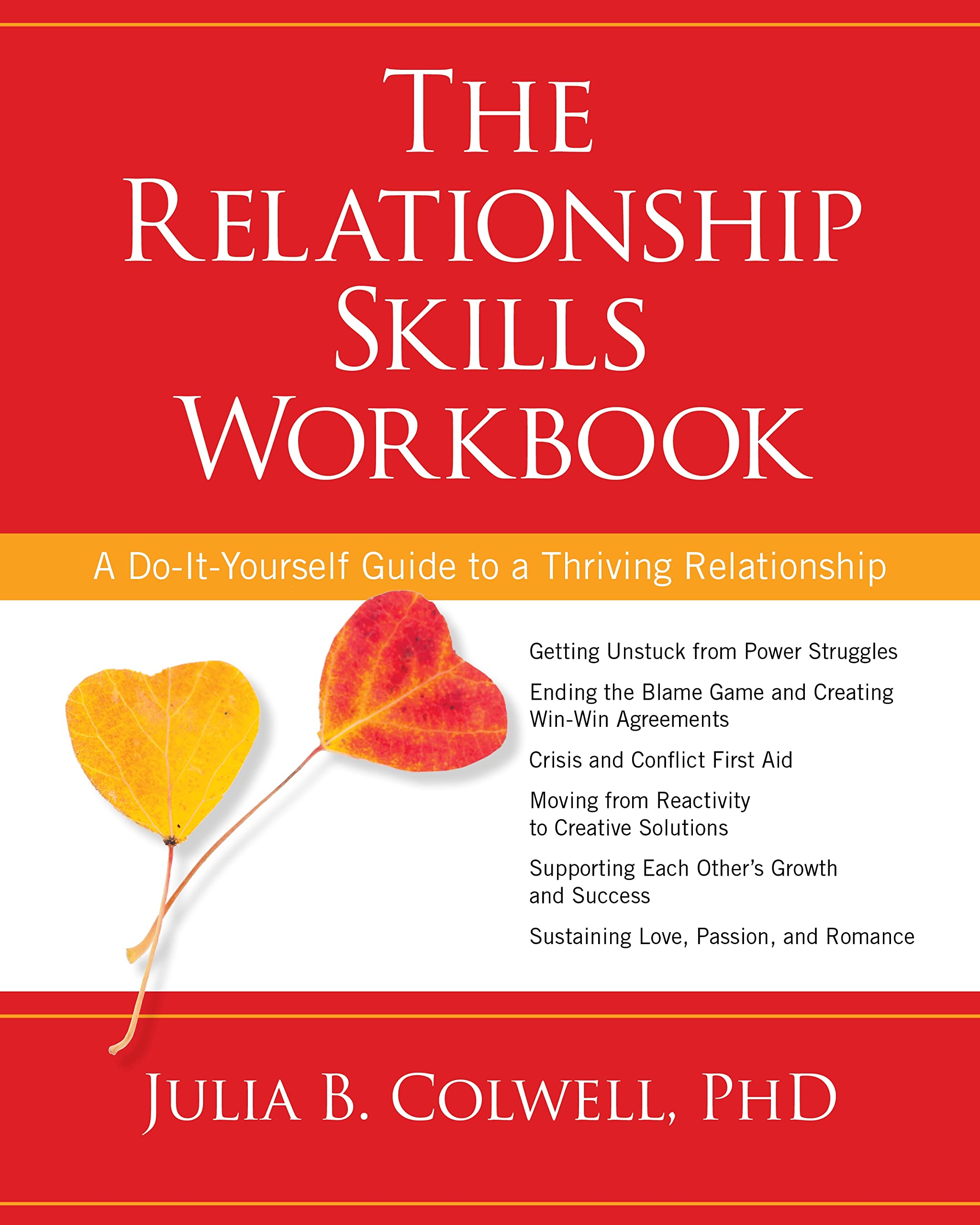
The ideas in this book can revolutionize how you relate to your self, your loved ones, and your world. Right here, in this little workbook, for $15, you can can learn to notice all the rules, expectations, and well defined roles that have controlled your life to this point, and discover instead who you really are and what you really want. Then you can discover who your loved one really is and what he or she really wants. Your most important relationship is with yourself, so this workbook begins by helping you discover what your body is trying to help you know about yourself: I'm scared, I'm angry: I wonder why? (hint: its not someone else's fault). Then, if you want to love and be loved, this book helps you learn what your loved one is feeling, what he or she really wants. And with that new knowlege, the book helps you see how both you and your loved one can both get what you want - not getting what you want by blaming or creating rules and expecations, or sacrificing your wants for the other, but by making genuine power-equal agreements. The ideas in this book take practice; you won't relearn old habits overnight. But that is why the workbook format is so helpful: it offers you the questions to think about, journal and wonder about so that you can explore YOUR issues and YOUR life. There's gold in this book; every chapter has some new idea that can help you live your life in a genuinely happier place.
A**R
Eye opening and humbling
Reading this book brought so much perspective and shined a light on where I can do better with clear ways to actually do it. It’s helped me explore deeper parts of myself and find more understanding for others. It really helped me see things differently that I truly felt confused about how to even begin changing what I was doing that wasn’t working. Thank you for creating this book!
S**U
Why buy a book written by someone who doesn't even profess to be right?
Like many folks, when I read a book that is full of advice I kind of assume that the author is right and, to the extent that what I've been doing doesn't agree, I’d best be learning the “right” way. How interesting that Chapter 1 of “The Relationship Skills Workbook” is about the relative unimportance of being right. One might wonder why they should read a book when the author herself doesn't insist on being right?But perhaps Julie writes to expose her own passions rather than writing to be right. The author's voice remains confident even if we don't agree with a damn thing she says. Julie might even be more pleased if we put the book down with a considered disagreement than with unconsidered acceptance. This book is not a proclamation of the ways that Dr. Julie Colwell is right so much as an exposition of herself, lessons learned through her personal and professional life, a sharing of shiny experiences that have worked, along with not-so-shiny experiences that serve to, well, make the shiny experiences all that more shiny.I was not burdened with jargon or convoluted concepts. I appreciate the effort to keep the processes simple, and the reassurance that even though simple, the techniques are sometimes hard to practice. The writing style is approachable and friendly even though the content is dense and intelligent. I recommend the paperback edition so you can plan to write in it, highlight, tag, fold, spindle and mutilate. Most of all plan to re-read it because the words come with intent to meet you where you are whenever you reach them.Each page is written to be read. And re-read. Read in order and out of order. Read it once to disagree with everything you see when you tense up reading a passage or think an example is contrived. Read it once again to see if you can sense a truth in the concepts you resist. Read it yet again when faced with your own experience and you are left saying "what the heck just happened?" It is something akin to an art appreciation book; its purpose is not so much to set out a list of good art and bad art, but to help develop a vocabulary and syntax for understanding art in a useful way when we see it. And the art, in this case, is my own life. How wonderful it is to think I might be able to use tools from The Relationship Skills Workbook to better appreciate the art of my own life for the next decades more ably than I could the preceding decades.
J**O
Still reading but makes sense to me!
I’m still reading this book, but the first few chapters have been very interesting! I am enjoying looking at my relationships differently and how I interact with my family and friends! I tend to want the last word and to be “right” so arguing has always been my strong suit! Lol this has opened my eyes to a new way of communicating without it ending in an argument!
M**E
Very deep & analytical. Could be good, could be bad depending on your taste
A little fluffy and vague... even for a chick. It's a very abstract, deep workbook, which has some useful information, but it is not exactly straightforward and direct. If you enjoy analytical and deep (and your husband does too) great book. If you're looking for straightforward guidance you may want to try another.
T**N
Listening to our bodies is key in creating healthy relationships!
I have been reading many books on relationship skills after going through a difficult divorce. By far this is one of the most exciting and easy to understand books on relationship skills that I have read. As a yoga and expressive arts instructor, I agree that coming into the body to awaken to what we are feeling is key in every relationship. In my yoga classes, I know that it takes time to understand what wave of emotion is moving through the body by listening to the sensations of the body. Julia B. Colwell, PhD, states, "The whole function of emotion is to deliver data to you about how you are experiencing what is going on around you. That means that when it has communicated its message, emotion is designed to move on through, like any good messenger." Julia's approach begins with listening to our bodies in order to identify our emotions as we communicate with one another. I love how Julia honors our emotions and honors our bodies by having us tune into their internal messages to create healthy loving relationships!!!
Trustpilot
Hace 1 mes
Hace 3 semanas