We remain fully operational. Our teams are working around the clock to ensure your deliveries continue safely.

Descargar la aplicación


Servicios al cliente
Sobre nosotros
Copyright © 2025 Desertcart Holdings Limited
Descargar la aplicación
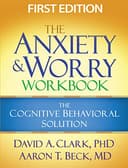
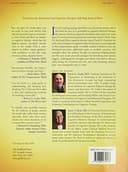
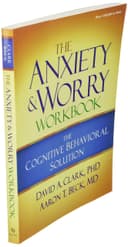
The Anxiety and Worry Workbook: The Cognitive Behavioral Solution: 9781606239186: Medicine & Health Science Books @ desertcart.com Review: Excellent workbook for more advanced CBT skills for anxiety - I am a cognitive behavior therapist specializing in anxiety disorders. I often recommend this book to my clients who have generalized anxiety, excessive worry, panic attacks or social anxiety. I consider this to be an advanced workbook as it is more helpful to people who have already read a more basic workbook on anxiety or clients who already have a basic understanding of CBT. It has a strong emphasis on cognitive skills to help you change your thinking about anxiety by learning to assess danger more realistically as well as increase your ability to cope with the situations that make you anxious. In Chapter 7, it also includes some behavioral work incorporating exposure therapy, which is critical for anyone trying to get control of anxiety. Research has indicated that exposure may be the most critical element in reducing anxiety. I have found that a combination of exposure plus cognitive restructuring is most beneficial. Otherwise, people may be too afraid or unmotivated to face their fears in real life. The cognitive work helps people get ready to do things that are uncomfortable. Paradoxically, the way to reduce anxiety is to approach it and even welcome anxiety into your life. The less you fear being anxious, the less anxious you will feel. I really like Chapter 11 on Overcoming Worry. It is one of the best chapters I have read on strategies to deal with worry. Overall, I think this is a superb workbook and, if you can do all the exercises in this workbook, you will gain new skills to manage anxiety and worry. Review: Will help you understand and address what makes you so anxious - This book is very helpful. I love the cognitive behavioral approach, as it helps us to grasp what is going on in the mind, and how that leads to our feelings of anxiety. It is especially helpful how the book points out that anxiety is not itself a bad thing. We should not be afraid of it (remember what FDR said ;)). The problem is that some of us struggle more than normal, making monsters out of situations that might at times be nerve wracking but that we should be able to handle. There is a thought process that leads there, and retraining our mind is a way to begin addressing the problem. I am a pastor and have found this book very useful for myself and for counseling others. Of course, my job is not to be a psychiatrist, but to help people think in accordance with God's Word, but this book is not contrary to that approach. Instead, it helps me to understand what is making it difficult to get to the peace and assurance found in Scripture, and pave a way forward. Many people struggle with anxiety. There is no reason to ignore it or shame it. But those of us who struggle with it can have hope that there is a way out. I am grateful for the role this book has played in helping me to understand what is happening in cases of overwhelming anxiety.
| Best Sellers Rank | #116,529 in Books ( See Top 100 in Books ) #96 in Mood Disorders (Books) #329 in Anxiety #450 in Popular Psychology Pathologies |
| Customer Reviews | 4.6 4.6 out of 5 stars (3,306) |
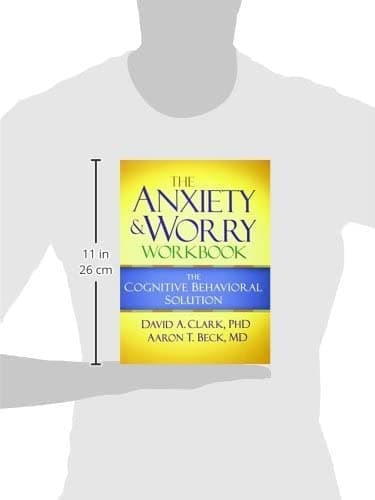
| Dimensions | 8 x 0.75 x 10.5 inches |
| Edition | First Edition |
| ISBN-10 | 160623918X |
| ISBN-13 | 978-1606239186 |
| Item Weight | 1.44 pounds |
| Language | English |
| Print length | 294 pages |
| Publication date | September 8, 2011 |
| Publisher | The Guilford Press |
N**.
Excellent workbook for more advanced CBT skills for anxiety
I am a cognitive behavior therapist specializing in anxiety disorders. I often recommend this book to my clients who have generalized anxiety, excessive worry, panic attacks or social anxiety. I consider this to be an advanced workbook as it is more helpful to people who have already read a more basic workbook on anxiety or clients who already have a basic understanding of CBT. It has a strong emphasis on cognitive skills to help you change your thinking about anxiety by learning to assess danger more realistically as well as increase your ability to cope with the situations that make you anxious. In Chapter 7, it also includes some behavioral work incorporating exposure therapy, which is critical for anyone trying to get control of anxiety. Research has indicated that exposure may be the most critical element in reducing anxiety. I have found that a combination of exposure plus cognitive restructuring is most beneficial. Otherwise, people may be too afraid or unmotivated to face their fears in real life. The cognitive work helps people get ready to do things that are uncomfortable. Paradoxically, the way to reduce anxiety is to approach it and even welcome anxiety into your life. The less you fear being anxious, the less anxious you will feel. I really like Chapter 11 on Overcoming Worry. It is one of the best chapters I have read on strategies to deal with worry. Overall, I think this is a superb workbook and, if you can do all the exercises in this workbook, you will gain new skills to manage anxiety and worry.
D**N
Will help you understand and address what makes you so anxious
This book is very helpful. I love the cognitive behavioral approach, as it helps us to grasp what is going on in the mind, and how that leads to our feelings of anxiety. It is especially helpful how the book points out that anxiety is not itself a bad thing. We should not be afraid of it (remember what FDR said ;)). The problem is that some of us struggle more than normal, making monsters out of situations that might at times be nerve wracking but that we should be able to handle. There is a thought process that leads there, and retraining our mind is a way to begin addressing the problem. I am a pastor and have found this book very useful for myself and for counseling others. Of course, my job is not to be a psychiatrist, but to help people think in accordance with God's Word, but this book is not contrary to that approach. Instead, it helps me to understand what is making it difficult to get to the peace and assurance found in Scripture, and pave a way forward. Many people struggle with anxiety. There is no reason to ignore it or shame it. But those of us who struggle with it can have hope that there is a way out. I am grateful for the role this book has played in helping me to understand what is happening in cases of overwhelming anxiety.
V**E
Very helpful!!
I've been through different therapy, and I know the root of my anxiety, but I was looking for something to help me when I'm feeling anxious that wasn't medication. The book is really helpful if you have specific anxiety about one thing, or more generalized - like me. I've been having fun chipping away at the book and working through my anxiety episodes. I'm happy I purchased this and already feel myself managing my anxiety better. The book is fun to write in and helps me set realistic goals.
S**A
Do the work and heal
This workbook and intro to CBT is an excellent resource. Like any CBT training, you must do the work - complete the inventories, questionnaires, record-keeping - in order to see results. But if you do that work, you will see improvement. I read through the text first, then began at the beginning and did the assignments. I skipped some of the later chapters that deal with specific anxieties because only one applied to me. I did read and complete the exercises in the chapter that applied to my situation, and gained astonishing insight into the heart of the matter, as it were. I hope you have the same epiphany, and I hope you will be able to use the techniques and information from this amazing resource to calm the beast of anxiety and find the peace you deserve.
S**G
Helped me immensely
I think the authors are well known in the mental health world. This workbook helped me a lot with tools for my situational anxiety. I can't afford counseling, and also found it hard to find a good counselor for CBT. This workbook was the next best thing. I will add that it is not easy, it has a lot of worksheets, and will take a lot of time. I can see why the authors recommended doing this workbook along with counseling. I wasn't able to complete all the worksheets 100%, it was too overwhelming. However, I still gleaned enough out of it to make a big, positive difference in dealing with anxiety. I wish there was a CD that contained the worksheets, along with the book. Trying to copy these worksheets isn't easy, and there are so many of them.
A**D
Powerful tool to deal with Anxiety and Panic
This book is powerful in the sense that 1. It contextualizes the disorder. For somebody who is struggling to understand the “why”.. 2. Forces you to think in a structured manner to explore th emotions to create a anxiety profile 3. Provides tools and techniques to create a response plan. Doesn’t make high promises or fix all solution!! 4 weeks into this book (i haven’t started some of the exposure techniques yet)… but I can feel that I am in better control and tolerant of my anxious situations. Need a some time commitment and focus to do the exercises and I think will be of great help if one is working with a therapist.
F**Z
C'est un livre dificil à lire, même pour quelq'un interessé. Il peut être d'interet seulement pour ceux qui ont déjà fait un traitement de cette sorte.
J**Y
As described, well packed
D**N
This is an important book, for obvious reasons. It's the first self-help book on anxiety by Aaron T. Beck, the founder of cognitive therapy. It's published hot on the heels of Beck's 2010 revised treatment manual for cognitive therapy of anxiety disorders, also co-authored with David Clark. Beck's original treatment manual for anxiety was published in 1985 and revised in 2005 but this is a major revision of his approach. He has now provided an extremely comprehensive account of the scientific evidence for cognitive therapy and a more carefully defined and up-to-date set of guidelines for clinicians. This self-help workbook is basically the companion text for that clinical manual, presenting the same approach in a version designed for the general public to use by themselves or as homework when seeing a cognitive therapist using the same approach. It's not as much of of a light-read as some popular self-help books. It's a workbook in the true sense, with a thorough and systematic chapter-by-chapter approach, including many forms to complete and regular exercises to engage in, perhaps requiring half an hour of work per day for several months. This, in other words, is a serious evidence-based guide to addressing anxiety directly and it will require commitment from the reader. The book begins with a generic approach to anxiety, which can be used for subclinical problems and many mild-moderate issues. The later chapters focus on three special categories of anxiety: panic attacks, social anxiety and chronic worry. These problems are experienced by many people but the chapters will, of course, be particularly relevant to people who suffer from panic disorder, social phobia, or generalised anxiety disorder (sometimes called the "worry" disorder). Of course, individuals with diagnosable anxiety disorders should probably seek treatment from a qualified therapist who can guide them through an approach like this. Beck's approach is different to that described by many other books on CBT, some of which adopt a simpler approach or perhaps failed to recognise or assimilate aspects of Beckian cognitive therapy fully. For example, Beck has always interpreted anxiety as being maintained by faulty "appraisals" of threat and coping, following early research in the field of stress, which he applied to anxiety. Thoughts which over-estimate the probability and severity of potential harm are therefore the main target, along with those which under-estimate one's ability to cope and create a sense of helplessness or vulnerability. Moreover, Beck makes the technique of exposure to feared events central to his approach, emphasising the role of "habituation", from behaviour therapy, the natural tendency for anxiety to abate when anxious situations are endured in a repeated, prolonged and systematic manner, without internal struggle or unecessary safety-seeking efforts. Beck also recognises that the process of worrying, prolonged thinking about possible catastrophes and one's difficulty coping, needs to be addressed in a way that goes beyond simple disputation of individual thoughts. The AWARE acronym recommended in his earlier manual (1985) as a self-help strategy for use early in cognitive therapy, although not mentioned in his recent clinical manual for anxiety, re-appears here, particularly as advice for coping during exposure experiments. (AWARE = Accept feelings, Watch thoughts and feelings in a detached way, Act as if non-anxious, Repeat these steps, and Expect to make progress, adopting a realistic but optimistic attitude.) This acronym (from 1985) shows the extent to which Beck's original cognitive therapy for anxiety pre-empted recent "mindfulness and acceptance-based" approaches to CBT. For some people, without the guidance of a therapist, this workbook (which is really a rigorous programme of self-help) will perhaps be too demanding. However, it probably contains the best evidence-based guidance on tackling anxiety available and potentially makes a powerful adjunct to individual CBT for a range of anxiety disorders. That said, even if someone reads it and only applies some parts of the book, they may still be better off than someone who reads poor advice from popular but less scientific books on anxiety and self-help. So overall: highly recommended!
K**Y
Das Buch an sich macht einen guten Eindruck und ich bin sehr gespannt was mich erwartet. Zustand neu und unbeschadet. Was mich jedoch etwas stört war die sehr lange Versandzeit und die Tatsache dass ich dann zusätzlich noch Zollgebühren bezahlen musste. Dies war nirgends ersichtlich und hätte vom Verkäufer vorher geklärt werden müssen!!
P**E
The one book that goes beyond the usual CBT bla bla bla and makes one works hard going through numerous cognitive and exposure assignments (worksheets). It's almost like having your own therapist at your disposal. There's even an whole chapter for those suffering from panic attacks and , again, it's based on practical assignments that you have to go through once you know your panic triggers (wich the first chapters take care of). Sincerely, after reading many books on the subject, this one surpass them all on all fronts. Sincerely I would give this book 6 stars if it were possible!
Trustpilot
Hace 5 días
Hace 2 semanas