
Review: Solid content and great value for serious traders - I have mostly positive things to say about this book, but there are also some things I didn't like. On the positive side, Miner lays out a trading plan that is comprehensive and specific--much more so on both counts than you are likely to find in most other trading books. He presents four tools to work with: multiple-time-frame momentum analysis, pattern (simplified Elliott Wave analysis), price (using Fibonacci concepts, but much more robust than the typical Fibonacci treatment) and time (also using the Fibonacci framework, but again, more robust than the usual treatment). Moreover, he devotes a good bit of space in the book to examples that show readers how to use these concepts, including entry, exit and position sizing considerations. Also, Miner appears to be the real deal. He has actually won a real-time trading contest and speaks from long experience as a trader. You'd be surprised at how many so-called trading gurus have minimal or no trading experience. It's hard to know for sure, of course, but I think Miner's trading credentials are genuine. A CD is included with the book to add another dimension to the learning experience. All in all, you can tell that Miner has expended considerable time and effort to make sure that purchasers of the book are rewarded for the money they've invested in it. For those who are wondering about the differences between this book and Miner's earlier work, "Dynamic Trading," there are several things to be aware of. The primary addition to the new work is multiple-time-frame momentum analysis. This is a major component of Miner's strategy. It is the first concept he discusses in the book, and it is the key component he uses to screen for trading opportunities. In my opinion, the book is worth having merely for that reason. Beyond multiple-time-frame momentum analysis, Miner has simplified his discussion of pattern, price and time from what we saw in "Dynamic Trading." Realizing how ridiculously complex Elliott Wave analysis can get, for example, he presents one feature to look for (overlapping) to determine whether the market is trending or correcting, and three other tools for identifying trend and correction position. Despite Miner's attempt at simplifying, I'd say the book's level of difficulty is relatively high. It is not a book most people will be able to breeze through--mainly because of the numerous examples--but it is one that will repay careful study. And, as I said, one advantage of the book is that you are getting a comprehensive trading framework. If you read only this one book and faithfully follow Miner's advice, you should have everything you need to be successful as a trader. It is helpful, but not absolutely crucial, to use Miner's Dynamic Trader software when implementing his system. I think the software would be especially helpful if you are trading on shorter time frames. Certainly for trading from daily charts, and possibly for shorter time frames, it might work to use a spreadsheet or a calculator to make the relatively simple calculations that are required. Ultimately, this is a question readers will have to answer for themselves. In my opinion, much of what Miner teaches can be implemented whether you own his software or not. Now for what I didn't like about the book. Miner has a brash, arrogant style of writing that I find tiresome. He also makes a habit of belittling virtually every other source of trading information, as though he were the only honest, competent vendor out there. Hence, you frequently run across sentences like this one on page 56: "If you ever read a trading book or take a trading course where the author/instructor does not clearly state that whatever strategy he is teaching will not be profitable with every trade, and doesn't show examples that don't work out, get out as quickly as possible before it costs you a lot of hard-earned money." An occasional warning like this would be fine, but Miner's prose--while clear and easy to follow--is unfortunately laden with such heavy-handed admonishments. Additionally, I find Miner inconsistent on some key points. For example, on page 23 he rails against trading instructors who present methods for trading in trading-range markets. Says Minor indignantly (and in italics), "You can never know in advance if a market is going to begin a trading range--never." But later in the book, he presents tools to determine whether the market is trending or correcting, and whether the trend/correction is close to completing. If a correction is something like a trading range, which seems a reasonable assumption, isn't Miner, in effect, proposing that we can know what he earlier said was impossible to know? What's more, after spending most of the book trumpeting that his tools will enable readers to trade with high probability, he announces on page 158 (while hammering home the importance of limiting losses), "Listen up, reader. If you have better than a 50% winning trade percentage over time, you are among the trader elite. If you get good at trading, you will have around a 30% to 40% win percentage." I don't know about other readers, but I was stunned to find that after employing all of Miner's tools, the best I could hope for was probably only 30% to 40% accuracy. That puts Miner's methods about on a par with a number of completely mechanical trend-following systems. Despite these quibbles, I found "High Probability Trading Strategies" extremely worthwhile. I don't buy many trading books any more, but this is one I'm glad to have in my library. I will likely use it, in conjunction with some other tools I have that are geared specifically for the stock market, to trade stock index futures and ETFs--and hopefully raise that win percentage! Review: If you are a trader or aspire to be one you need this book - Over the years I have purchased literally hundreds of books focused on trading the markets. I have also attended numerous trading courses live and online. I wish this book was available years ago. I could have saved a lot of money. If you are new to trading and technical analysis you may want to get educated in some of the basics before attempting to apply the strategies outlined in the book because you may find some of the discussion a bit overwhelming. That is not essential, however, but it will probably make it easier for you. This book is the whole meal deal. It covers all aspects of a trading campaign from finding your potential candidates, entry and stop placement, taking part profits and protecting your remaining profits as the trade continues to move in your favor through the final exit. There is also a section on money management and position sizing which is ctritical part of any trading system. The book and accompanying CD trade examples are very effective in illustrating the strategies. If you apply the strategies as described and rigidly stick to the required discipline to preserve your capital and profits you WILL make money. Do yourself a favor. Buy the book, study it, and apply it and forget about spending $3000 on that weekend course that will more than likely only leave you having to spend even more money to access the presenter's "secret formulae".
| Best Sellers Rank | #255,908 in Books ( See Top 100 in Books ) #70 in Futures Trading (Books) #623 in Finance (Books) #1,733 in Economics (Books) |
| Customer Reviews | 4.3 out of 5 stars 298 Reviews |
J**S
Solid content and great value for serious traders
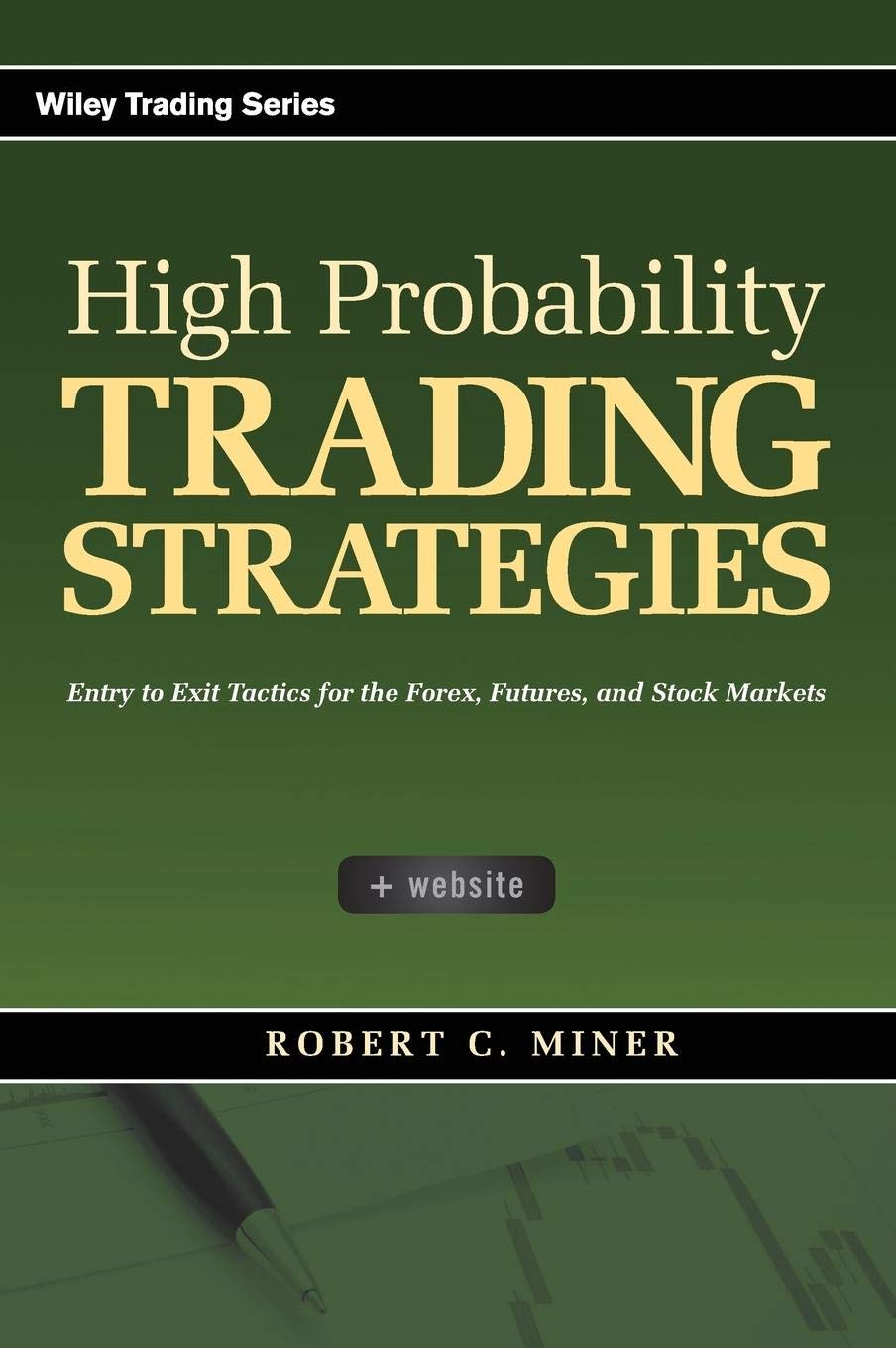
I have mostly positive things to say about this book, but there are also some things I didn't like. On the positive side, Miner lays out a trading plan that is comprehensive and specific--much more so on both counts than you are likely to find in most other trading books. He presents four tools to work with: multiple-time-frame momentum analysis, pattern (simplified Elliott Wave analysis), price (using Fibonacci concepts, but much more robust than the typical Fibonacci treatment) and time (also using the Fibonacci framework, but again, more robust than the usual treatment). Moreover, he devotes a good bit of space in the book to examples that show readers how to use these concepts, including entry, exit and position sizing considerations. Also, Miner appears to be the real deal. He has actually won a real-time trading contest and speaks from long experience as a trader. You'd be surprised at how many so-called trading gurus have minimal or no trading experience. It's hard to know for sure, of course, but I think Miner's trading credentials are genuine. A CD is included with the book to add another dimension to the learning experience. All in all, you can tell that Miner has expended considerable time and effort to make sure that purchasers of the book are rewarded for the money they've invested in it. For those who are wondering about the differences between this book and Miner's earlier work, "Dynamic Trading," there are several things to be aware of. The primary addition to the new work is multiple-time-frame momentum analysis. This is a major component of Miner's strategy. It is the first concept he discusses in the book, and it is the key component he uses to screen for trading opportunities. In my opinion, the book is worth having merely for that reason. Beyond multiple-time-frame momentum analysis, Miner has simplified his discussion of pattern, price and time from what we saw in "Dynamic Trading." Realizing how ridiculously complex Elliott Wave analysis can get, for example, he presents one feature to look for (overlapping) to determine whether the market is trending or correcting, and three other tools for identifying trend and correction position. Despite Miner's attempt at simplifying, I'd say the book's level of difficulty is relatively high. It is not a book most people will be able to breeze through--mainly because of the numerous examples--but it is one that will repay careful study. And, as I said, one advantage of the book is that you are getting a comprehensive trading framework. If you read only this one book and faithfully follow Miner's advice, you should have everything you need to be successful as a trader. It is helpful, but not absolutely crucial, to use Miner's Dynamic Trader software when implementing his system. I think the software would be especially helpful if you are trading on shorter time frames. Certainly for trading from daily charts, and possibly for shorter time frames, it might work to use a spreadsheet or a calculator to make the relatively simple calculations that are required. Ultimately, this is a question readers will have to answer for themselves. In my opinion, much of what Miner teaches can be implemented whether you own his software or not. Now for what I didn't like about the book. Miner has a brash, arrogant style of writing that I find tiresome. He also makes a habit of belittling virtually every other source of trading information, as though he were the only honest, competent vendor out there. Hence, you frequently run across sentences like this one on page 56: "If you ever read a trading book or take a trading course where the author/instructor does not clearly state that whatever strategy he is teaching will not be profitable with every trade, and doesn't show examples that don't work out, get out as quickly as possible before it costs you a lot of hard-earned money." An occasional warning like this would be fine, but Miner's prose--while clear and easy to follow--is unfortunately laden with such heavy-handed admonishments. Additionally, I find Miner inconsistent on some key points. For example, on page 23 he rails against trading instructors who present methods for trading in trading-range markets. Says Minor indignantly (and in italics), "You can never know in advance if a market is going to begin a trading range--never." But later in the book, he presents tools to determine whether the market is trending or correcting, and whether the trend/correction is close to completing. If a correction is something like a trading range, which seems a reasonable assumption, isn't Miner, in effect, proposing that we can know what he earlier said was impossible to know? What's more, after spending most of the book trumpeting that his tools will enable readers to trade with high probability, he announces on page 158 (while hammering home the importance of limiting losses), "Listen up, reader. If you have better than a 50% winning trade percentage over time, you are among the trader elite. If you get good at trading, you will have around a 30% to 40% win percentage." I don't know about other readers, but I was stunned to find that after employing all of Miner's tools, the best I could hope for was probably only 30% to 40% accuracy. That puts Miner's methods about on a par with a number of completely mechanical trend-following systems. Despite these quibbles, I found "High Probability Trading Strategies" extremely worthwhile. I don't buy many trading books any more, but this is one I'm glad to have in my library. I will likely use it, in conjunction with some other tools I have that are geared specifically for the stock market, to trade stock index futures and ETFs--and hopefully raise that win percentage!
T**Q
If you are a trader or aspire to be one you need this book
Over the years I have purchased literally hundreds of books focused on trading the markets. I have also attended numerous trading courses live and online. I wish this book was available years ago. I could have saved a lot of money. If you are new to trading and technical analysis you may want to get educated in some of the basics before attempting to apply the strategies outlined in the book because you may find some of the discussion a bit overwhelming. That is not essential, however, but it will probably make it easier for you. This book is the whole meal deal. It covers all aspects of a trading campaign from finding your potential candidates, entry and stop placement, taking part profits and protecting your remaining profits as the trade continues to move in your favor through the final exit. There is also a section on money management and position sizing which is ctritical part of any trading system. The book and accompanying CD trade examples are very effective in illustrating the strategies. If you apply the strategies as described and rigidly stick to the required discipline to preserve your capital and profits you WILL make money. Do yourself a favor. Buy the book, study it, and apply it and forget about spending $3000 on that weekend course that will more than likely only leave you having to spend even more money to access the presenter's "secret formulae".
B**Z
a recomended read on trading strategies
A glance at my bookshelf shows 11 titles on trading the stock markets accumulated paradoxically over 11 years of trading! from this position I can say that Robert Miner's book is one of the best you will read! Certainly, the tools he presents will cause you to get out your calculator and do some work but it will be well worth the effort. Robert has some 20 years trading experience with a sprinkling of trading awards to his name and his experience shows in this book. I found the Fibonacci discussion to be particularly useful for its demystifying of the Fibonacci principals. I must say that the honesty of his writing was truly appreciated and although he has a software program available for sale, his book should not be considered a sales push as everything he talks about can be used with any charting system you like. That being said, I appreciated his honesty and the content of the book that much that I bought the software, which I now use exclusively and love it, there is no doubt that with his book, his course and his software, studied and used correctly, you will make money in the markets! And if anyone is wondering if he backs himself and his software product, I can tell you that recently I had an issue that his tech team couldn't fix and I received a phone call from Robert himself to resolve the issue! Now some may think that unremarkable, but I live on the other side of the world which meant that Robert got out of bed at midnight to make that call!! As a trader I love his book and his software and as a business consultant I have been blown away by his product support.
R**E
TryHard gets traction
I got this book a year ago, and instantly appreciated it's value. It's a work that is perfect for me, (and maybe you)? as the dedicated, "almost-there" aspiring professional trader. I'm not sure it's a work which would be appreciated by total beginners - it is only because of much hard work, hard knocks and experience over the last four years that I've been able to discern it's value. Clearly, this book is a distillation of Mr Miner's work over the last 20 some years. I've adopted the HPTS way, and have just completed my best, most consistently profitable year yet - despite still making plenty of mistakes. It's value, as I see it, is this: * Miner insistes on trader education, and that we treat it as a business. * Miner insists we understand certain principles, on which are based specific trading rules. This gives us some flexibilty - not emotional wriggle-room, but the ability to adapt to a situation which does not line up perfectly. These principles are what I always come back to when I get confused. Then the way is clear. This gives us a intellectual security which you just won't have if trying to trade, say, a rigid rule-based system. * The trade entry and management methods I have found to be life-saving. My entries now are always accurate (objective, to use Miner's distinction), and the management methods work brilliantly to avoid early (emotional) exits, and usually secure at least a reasonable profit. The losing trades are also objective, and easy to accept. The HPTS way has to be adapted by the individual to fit. You have to limit your markets and setups. For instance, although we are taught to project the end of wave 5 of a major trend, I usually get my clock wiped trying to trade that reversal, so now I simply don't look at end of wave 5's. The DT software is perfect for the job, and I appreciate that it is specific to Miner's methods, and not trying to be all things to all traders. If you have embraced and discarded various approaches, and are yet to realise consistent profitability, I do recommend this book and CD. I'll see you on the right side of the trade.
J**S
Best Trading Book I ever read!
I have read a ton of trading-books - mostly from Amazon...Many are good; some are not so good..This is the best trading book I've read...I am about 1/2 way through - but am so impressed I could not contain myself...It yields many benefits: 1) The tools are applicable for any market and any time-frame - what more can you want! 2) The tools are NON-Overlapping - that is he uses Momentum, Pattern, Price, and Time in an integrated system...Most of you know for example using a system with just Oscillators is not too good. Even though you may use STO, MACD, RSI - they all give you the same info basically...So Miner uses separate approaches to arrive at trade targets! This leads to higher probability trades. 3) I have read books on Elliot Wave - and really couldn't use it in real trading...Miner breaks it down to practical tradable techniques. 4) This guy can teach! He builds the system step-by-step. He has enough repetition so you really absorb it...I have read other Trading Pro's like Connie Brown (e.g. Fibonacci Analysis; TA for Trading Professionals) and although Connie is obviously a genius and a supper-trader, he books are very "labor-intensive" for the reader - you have to dig out the gems...But with Miner's book it is all laid out!!! One caveat - you should have a good understanding of general T.A. theory before reading this - may I suggest Murphy's books (e.g., the visual investor and/or T.A. of the financial markets). What can I say, Miner delivers in this book... I will update this post when I finish reading it. Best wishes to all! -Joe
S**R
Mixed feelings - buyer beware (lengthy review but worth the read)
I have read this book & agree with some of the other reviews that the writing style is a little annoying when the author feels he must repeatedly point out that his book is "better" than other "frauds" (my words, not his) that only cherry pick historical chart patterns to supposedly demonstrate their trading system when in reality they have no predictive value. I usually always respond better to salesmen who sell on the merit of their own product, not by bashing their competitors. But with that said, I was actually very intrigued with his multi-pronged approach to trading/investing and was very excited to try the strategies out once I finished the book. Unfortunately, I ran into a little glitch (a big one, actually). The problem is that I have yet to find a trading platform or software (for either forex or stocks) that is capable of doing everything he describes in his book. So to that extent he is still basically writing a book that is tailored to his one proprietary piece of software that happens to cost $2,000 just to be able to fully implement & try these techniques. For me, that's not feasible. If I had $2,000 to blow on an "experiment" just to see if his techniques really work then I probably wouldn't be so concerned about trying to generate more money through investing because I'd already be "rich"! The author doesn't exactly do what it appears other writers have done where their book is just a full-on "sales brochure" for their own software, website or newsletter. Its not a blatant deception because I do think that the rationale behind the strategies he explains COULD possibly be used to work with any trading software system -- IF ONLY there were any other programs out there that were capable of doing exactly what Mr. Miner's proprietary software does, which he obviously hired somebody to tailor make for him to sell. So to a certain extent I believe the author is willing to share his techniques, knowing well that after reading his book the reader is not fully able to implement his system (to the best of my knowledge anyway) without ultimately looking up his Dynamic Trader program on the web once the reader discovers that their current online trading platform or other charting software doesn't do everything exactly the way Mr. Miner's does. Then the reader will naturally check out Dynamic Trader on Miner's website, as I did, and discover that it costs $2,000.... I believe he does mention TradeStation (which is an independant program/service) a few times in the book as a possible alternative, but at $250/month, even Robert Miner's software sounds reasonably priced!!! So it appears to me that the book is a very subtle bait to direct people to buy his own software program. He's not a predator like a lion that pounces on his prey in an ambush; he's more like the sly little spider that just sits back & waits for them to stumble into his website after discovering that they have no other options available to implement all of the strategies in the book. Note that I say ALL, not SOME of his stategies, because it is still true that a few of the less exotic things can be done with most types of software, but for the system to really be "high probability" as the title says, you need to follow EVERY SINGLE ONE of his techniques and use them in conjunction with each other, and that is where my frustration lies because I have yet to encounter a trading platform or charting software that allows this. Sorry Mr. Miner, I believed in your book enough to buy it, finish it & go out & try to use the techniques, but I don't believe in it enough to part with $2,000 just to try them out. There isn't even a free trial offered on his website. You've got to buy the software & hope for the best once you've purchased it. So to that extent I was pretty disappointed. I hate to say it, but right now I'm a "small fish" in the world of investing; is there no reasonably priced software that can accomplish the techniques of this book?! I would appreciate any advice somebody who is familiar with this book can offer to point me in the right direction if you know of REASONABLY priced charting software or trading platforms that are capable of measuring & reporting ALL of the indicators that the author describes in his book. Scottrade doesn't offer it, and Gain Capital's Forex Trader Pro doesn't cut it either. I did an online search for other types of programs to purchase (granted, I was looking for a significantly less price than $2,000 or $250/month), but haven't really been able to find much that I'm confident enough will work to go ahead & purchase. I simply won't know if it can do everything Miner describes in his book until I've already spent the money & may just find that I'm still out of luck when it comes to being able to follow the strategies in this book. I am very leery that the techniques of this book are best implemented with one & only one program, which is Robert Miner's $2,000 Dynamic Trader. Before I'd spend that money on a leap of faith in Robert Miner, I'd rather spend a fraction of that money on other authors' books to expand my knowledge until I have a more well-rounded idea of what authors are really here to help novices like me vs. those who are only out there to sell, sell, sell their own expensive products. I believe Mr. Miner MAY be in the latter category, but am holding out hope that somebody who reads this review, and who knows this book can point me in the right direction to economically implement his strategies. If there is something out there that I'm missing then please do share, as I would love to know where it is so that I can give Miner's method a try. Unless there is the opportunity to use any of a variety of reasonably priced programs to employ the methods, then any potential buyer of this book should understand that it is interesting but essentially worthless unless you're willing to spend another $2,000.00 on the Dynamic Trader software. And only THEN will you be able to put his methods to the test & see if you win or lose with his trading system. That's a pretty big gamble, in my opinion, to justify buying his Dynamic Trader software.
J**Y
Excellent book on implementing Technical Analysis
This book is an excellent source for an intermediate student of Technical Analysis (TA). Having trading experience is a definite plus as well. What the author does, is describe the most important pieces of TA that you need to utilize in order to make a trade with a high probability of success. Having probability on your side gives you an edge, and this is everything in trading. It has taken me several years of trial and error to determine what are the necessary forces in the market that determine whether to place a trade or not. The author has summed up the most important, and more importantly how to align them. The forces are Momentum (on dual time frames), Price Pattern, and Cycles (timing). Putting these together, gives the trader a great edge. The only negatives are that he references his trading platform software more than is needed. Overall however, a great book on how to actually implement all of that TA knowledge that you have accumulated over the years!
A**T
Good practicle book
After reading this book I reviewed my open trades and applied the strategy analysis to each. The market had just went through a few days of correction. I could see I was on the wrong side of the market after buying the dip (not taught in the book!). Rather than just close out I was able to determine a counter trend move was likely and placed orders to exit at the most probable resistance zone. Even if the market rebounds through my orders to exit it is not an issue, just by applying the dual timeframe analysis I could see I probably had no business being in these trades at this time. Prior to reading this book I had been trading for about 5 years and did have some Elliott Wave knowledge. I think the author really does provide a strategies that will work. After all, he was a world champion trader.
Trustpilot
Hace 2 meses
Hace 2 semanas