We remain fully operational. Our teams are working around the clock to ensure your deliveries continue safely.

Descargar la aplicación


Servicios al cliente
Sobre nosotros
Copyright © 2025 Desertcart Holdings Limited
Descargar la aplicación
Buy anything from 5,000+ international stores. One checkout price. No surprise fees. Join 2M+ shoppers on Desertcart.
Desertcart purchases this item on your behalf and handles shipping, customs, and support to Peru.
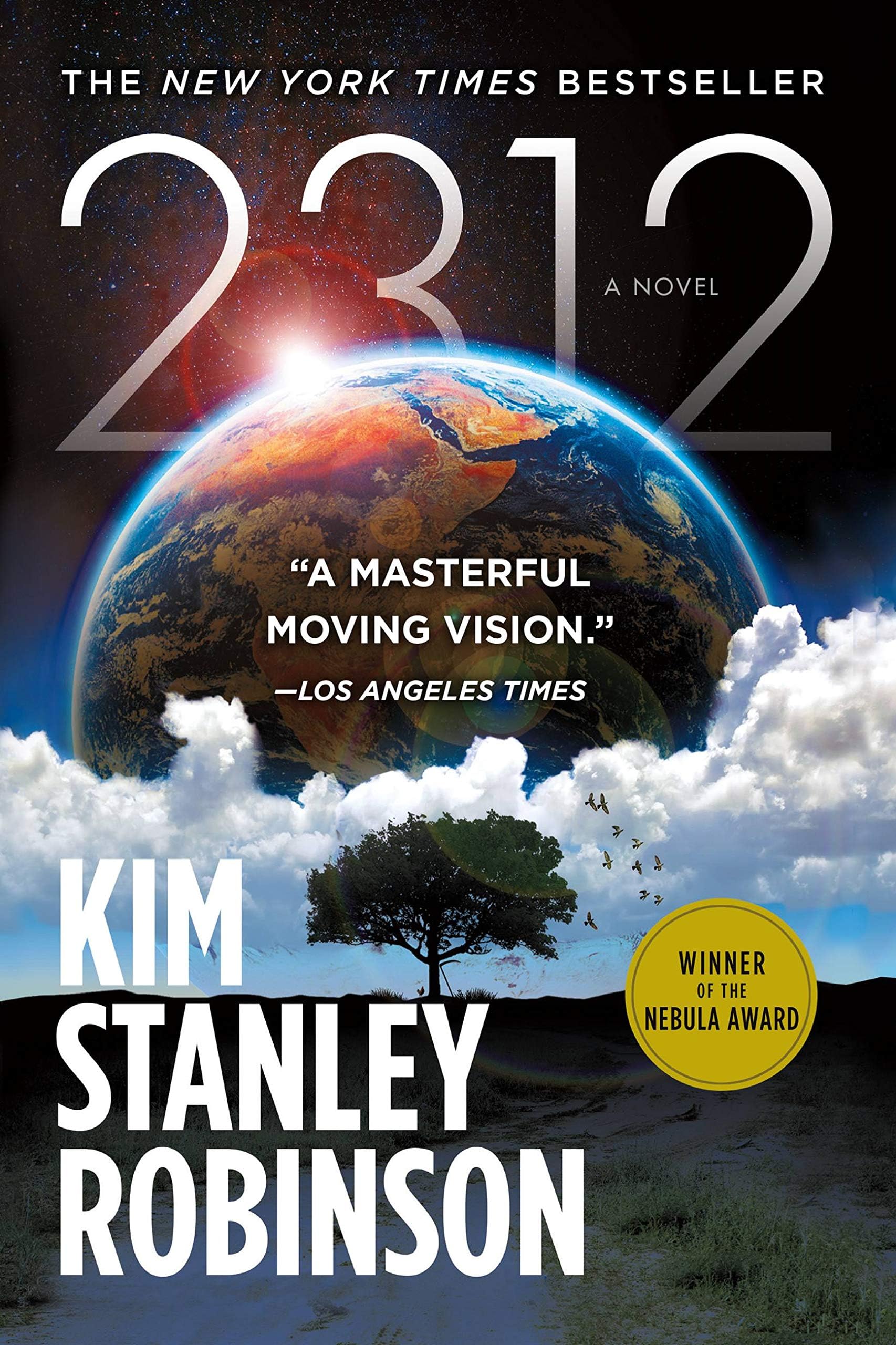
2312: A Novel [Robinson, Kim Stanley] on desertcart.com. *FREE* shipping on qualifying offers. 2312: A Novel Review: 2312 - Best known for his work with the Mars trilogy, and The Years of Rice and Salt, Kim Stanley Robinson is a visionary author whose works have challenged readers' views about nearly every aspect of society, from government, to business, to global warming and religion itself. His latest novel, 2312 takes place three hundred years in the future, and provides a glimpse at a very believable humanity that's spread to the other planets. It's always difficult to find fault with Robinson's works. His use of vocabulary and stage-setting is without equal, and continues to impress in 2312 as well. It seems that the perfectly appropriate word is used in every circumstance, which enriches the strength of the story. He writes of many places and situations that humans have never before been associated with, but in a way that's purely authentic; indeed, it would be thoroughly surprising if reality differs from Robinson's depictions by much at all. He portrays a web of humanity that has spread to nearly every conceivable location in our solar system, and even beyond, by the later chapters of the book. From the moons of Jupiter and Saturn, to the terrariums built out of asteroids, the book reads almost as a history of the future. As always, Robinson's choice of characters is both excellent, and profoundly believable. Characters with real flaws always tell the best stories, and those in 2312 are not only realistic, but very flawed, each in their own way. The primary character, Swan Er Hong is moody, eclectic, often quick to anger, and not even particularly sympathetic, yet the reader is forced to care deeply about her, thanks to Robinson's work. In the same way that the book seems to tell the history of events that haven't yet happened, the characters in 2312 feel so real, it's as if they just haven't been born yet. The dialogue is equally astute, and shows that these characters live in their world, and have been a part of it long before the reader picked up the novel. Though there are a lot of terms that should be foreign to the reader, they are somehow not. The author does a great job of weaving story, characters, and dialogue together as to make the page disappear, and the plot live on in the readers' mind. Kim Stanley Robinson books are typically slow-burning, and 2312 is no exception. Often times, it's difficult to place exactly where the climax is coming from, as events necessarily build toward a specific point. However, 2312 does build up, only with small, but significant sections. The plot comes together very quickly, and once it does, readers will be rewarded with an excellent consolidation of seemingly minor plot points, that suddenly mean everything. The book takes place in so many locations as to be a whirlwind, but it never feels that way. Majestic vistas, from the bright side of Mercury, to the rings of Saturn, and even the shattered locations of Earth are portrayed perfectly in the book; it's completely understandable how these locations have come to be the way they are by 2312. Perhaps some of the most surprising aspects of this novel are the depictions of places like New York City, and the terrariums themselves. Terminator on Mercury is also an intriguing locale, though Robinson perhaps could have spent some more time describing and exploring that section of the book. Still, the idea of New York City as a drowned metropolis, yet being converted into a bustling Venice-like city of glass towers reflecting on water seems magical. Most works that detail New York City being flooded seem to portray people as abandoning it to rot and collapse back on itself. It's refreshing to find an author who sees how people would likely really see the city. It's also unusual to hear New York City sound as if it's better for having been drowned. For all the good this novel does, however, there are a few things that tend to get in the way of the enjoyment. The challenges to genders in 2312 seem rather confusing, and are never explained particularly well. It seems that the idea of male and female have been transformed tremendously, and yet it never seems to affect the characters all that much. With the exception of a sex scene, it's almost as though gender doesn't matter, yet Robinson goes to great lengths in certain sections to describe the various genders. It seems that in only three hundred years, gender is essentially removed from the equation, which feels somewhat far-fetched in this novel. Still, it's perhaps a unique insight into how Robinson sees us moving forward as a species, and the trends that today's societal roles see changing. 2312 does a fantastic job of building a new fiction universe for Robinson to continue working in. The book itself seems to tell only a part of a very large story that takes place in this futuristic reality of 2312, and it would truly be a shame to not see more of this particular future that he has so masterfully created. 2312 is world-building at its finest, and no author accomplishes it quite as successfully as Kim Stanley Robinson. Review: Fascinating, but long, future history, taking place in the year 2312 - This is the 4th novel I've read by Kim Stanley Robinson, the first three being part of his Mars Trilogy (Red Mars, Green Mars and Blue Mars). I was a voracious science fiction reader as a kid, but gave it up when actual science fiction seemed to be replaced by dragons and fantasy. Then a rave review in the Washington Post and a free e-book offer convinced me to read Red Mars a couple of years ago, and I was hooked. This is "hard" science fiction, that is, it is SF based on the best of actual, known science. It's not "Buck Rogers," though there is conflict, economic and political, including terrorism and some cold-war type standoffs between the settled planets, moons and asteroids of the solar system. There is also a lot of slow, but fascinating descriptions of how these planetary bodies might be terraformed, or made habitable for humans; about the effect of global warming on our own planet (think New York turned into a 24th Century Venice, with skyscrapers rising from its flooded streets); and political and economic critiques of a capitalist economy. There is also a hint of romance between two of the main characters, and settings that are charming. That may sound strange, but underneath their domed cities, space dwellers have created attractive parks, plazas and terraced, tile-roofed towns. There are a number of expository excerpts that break up the actual storyline. Some are greater scientific details and others are excerpts by historians in a future some decades or more after the events of 2312, analyzing that year. These can be both fascinating and annoying. I'm not the fastest of readers, and reading on a Kindle, I kept pausing to consult my pop-up dictionary for unfamiliar words. So it took me a month to finish reading 2312. But having read the author's earlier novels, I expected a long, thoughtful and ultimately satisfying read, and I got what I expected.
| Best Sellers Rank | #1,189,974 in Books ( See Top 100 in Books ) #1,687 in Hard Science Fiction (Books) #2,888 in Space Operas #3,940 in Science Fiction Adventures |
| Customer Reviews | 3.9 3.9 out of 5 stars (3,474) |
| Dimensions | 5.5 x 1.63 x 8.25 inches |
| Edition | Reprint |
| ISBN-10 | 0316526983 |
| ISBN-13 | 978-0316526982 |
| Item Weight | 1.12 pounds |
| Language | English |
| Print length | 608 pages |
| Publication date | June 5, 2018 |
| Publisher | Orbit |
A**R
2312
Best known for his work with the Mars trilogy, and The Years of Rice and Salt, Kim Stanley Robinson is a visionary author whose works have challenged readers' views about nearly every aspect of society, from government, to business, to global warming and religion itself. His latest novel, 2312 takes place three hundred years in the future, and provides a glimpse at a very believable humanity that's spread to the other planets. It's always difficult to find fault with Robinson's works. His use of vocabulary and stage-setting is without equal, and continues to impress in 2312 as well. It seems that the perfectly appropriate word is used in every circumstance, which enriches the strength of the story. He writes of many places and situations that humans have never before been associated with, but in a way that's purely authentic; indeed, it would be thoroughly surprising if reality differs from Robinson's depictions by much at all. He portrays a web of humanity that has spread to nearly every conceivable location in our solar system, and even beyond, by the later chapters of the book. From the moons of Jupiter and Saturn, to the terrariums built out of asteroids, the book reads almost as a history of the future. As always, Robinson's choice of characters is both excellent, and profoundly believable. Characters with real flaws always tell the best stories, and those in 2312 are not only realistic, but very flawed, each in their own way. The primary character, Swan Er Hong is moody, eclectic, often quick to anger, and not even particularly sympathetic, yet the reader is forced to care deeply about her, thanks to Robinson's work. In the same way that the book seems to tell the history of events that haven't yet happened, the characters in 2312 feel so real, it's as if they just haven't been born yet. The dialogue is equally astute, and shows that these characters live in their world, and have been a part of it long before the reader picked up the novel. Though there are a lot of terms that should be foreign to the reader, they are somehow not. The author does a great job of weaving story, characters, and dialogue together as to make the page disappear, and the plot live on in the readers' mind. Kim Stanley Robinson books are typically slow-burning, and 2312 is no exception. Often times, it's difficult to place exactly where the climax is coming from, as events necessarily build toward a specific point. However, 2312 does build up, only with small, but significant sections. The plot comes together very quickly, and once it does, readers will be rewarded with an excellent consolidation of seemingly minor plot points, that suddenly mean everything. The book takes place in so many locations as to be a whirlwind, but it never feels that way. Majestic vistas, from the bright side of Mercury, to the rings of Saturn, and even the shattered locations of Earth are portrayed perfectly in the book; it's completely understandable how these locations have come to be the way they are by 2312. Perhaps some of the most surprising aspects of this novel are the depictions of places like New York City, and the terrariums themselves. Terminator on Mercury is also an intriguing locale, though Robinson perhaps could have spent some more time describing and exploring that section of the book. Still, the idea of New York City as a drowned metropolis, yet being converted into a bustling Venice-like city of glass towers reflecting on water seems magical. Most works that detail New York City being flooded seem to portray people as abandoning it to rot and collapse back on itself. It's refreshing to find an author who sees how people would likely really see the city. It's also unusual to hear New York City sound as if it's better for having been drowned. For all the good this novel does, however, there are a few things that tend to get in the way of the enjoyment. The challenges to genders in 2312 seem rather confusing, and are never explained particularly well. It seems that the idea of male and female have been transformed tremendously, and yet it never seems to affect the characters all that much. With the exception of a sex scene, it's almost as though gender doesn't matter, yet Robinson goes to great lengths in certain sections to describe the various genders. It seems that in only three hundred years, gender is essentially removed from the equation, which feels somewhat far-fetched in this novel. Still, it's perhaps a unique insight into how Robinson sees us moving forward as a species, and the trends that today's societal roles see changing. 2312 does a fantastic job of building a new fiction universe for Robinson to continue working in. The book itself seems to tell only a part of a very large story that takes place in this futuristic reality of 2312, and it would truly be a shame to not see more of this particular future that he has so masterfully created. 2312 is world-building at its finest, and no author accomplishes it quite as successfully as Kim Stanley Robinson.
R**B
Fascinating, but long, future history, taking place in the year 2312
This is the 4th novel I've read by Kim Stanley Robinson, the first three being part of his Mars Trilogy (Red Mars, Green Mars and Blue Mars). I was a voracious science fiction reader as a kid, but gave it up when actual science fiction seemed to be replaced by dragons and fantasy. Then a rave review in the Washington Post and a free e-book offer convinced me to read Red Mars a couple of years ago, and I was hooked. This is "hard" science fiction, that is, it is SF based on the best of actual, known science. It's not "Buck Rogers," though there is conflict, economic and political, including terrorism and some cold-war type standoffs between the settled planets, moons and asteroids of the solar system. There is also a lot of slow, but fascinating descriptions of how these planetary bodies might be terraformed, or made habitable for humans; about the effect of global warming on our own planet (think New York turned into a 24th Century Venice, with skyscrapers rising from its flooded streets); and political and economic critiques of a capitalist economy. There is also a hint of romance between two of the main characters, and settings that are charming. That may sound strange, but underneath their domed cities, space dwellers have created attractive parks, plazas and terraced, tile-roofed towns. There are a number of expository excerpts that break up the actual storyline. Some are greater scientific details and others are excerpts by historians in a future some decades or more after the events of 2312, analyzing that year. These can be both fascinating and annoying. I'm not the fastest of readers, and reading on a Kindle, I kept pausing to consult my pop-up dictionary for unfamiliar words. So it took me a month to finish reading 2312. But having read the author's earlier novels, I expected a long, thoughtful and ultimately satisfying read, and I got what I expected.
G**B
A deep, intelligent, intense, unpredictable book.
F**O
No se inglés, lo he comprado en inglés y no he podido leerlo. Es una historia muy larga, pero me han dicho que está muy bien.
A**A
So as I went over my notes on when I was reading this book, I think they can be summarized as “Reasons Why I Hate This Book”. However, since the book has been nominated for the Hugo, the Arthur C Clarke Award and won the Nebula Award for Best Science-Fiction Novel, I feel like I have to justify why it wasn’t a particularly satisfying read for me. In Kim Stanley Robinson’s 2312, the date is given by the title and our solar system is a very different place. Humans have terraformed and colonised every inhabitable planet and moon. Asteroids have been repurposed as long-haul shuttles, self-contained habitats that people live on for years or months till they reach their destination. Mercury supports a city called Terminator, which is a shielded habitat that travels around the planet on rails, pushed forward by the thermal expansion of metal at sunrise. The protagonist is Swan Er Hong, a native of Terminator, and grand-daughter of Alex, one of the most powerful women in the solar system. Swan is impulsive, erratic and emotionally intense. Her past is full of outrageous risks and extreme creativity: having songbirds neurons implanted into her brain, eating extra-terrestrial bacteria, designing habitats in the asteroid belt and creating art on the plains of Mercury. The story opens with Swan mourning Alex’s death. An inspector from the asteroids and a diplomat from Titan (Fitz Wahram) enter her life, and Swan finds out that Alex’s death may not be due to natural causes. And then Mercury is attacked, making the situation really complicated. Now, while all of this may sound really promising, why I thought 2312 was nothing more than an ambitious failure was its lack of a coherent storyline. Robinson has imagined a truly amazing world, but he doesn’t seem to know what to do with it. The characters don’t seem to have any concept of fiscal or practical limitation. They head across the solar system on a moment’s notice, take vacations on random asteroids and seem to have a free hand in messing with the Earth’s already too-fucked environment, with next to no repercussions. In structure, 2312 is supposed to be a murder mystery. Swan and Wahram witnessed the attack on Terminator, survived it and then investigate it, which in turn leads them to the pre-existing fault lines their society. The problems with this are that the society hasn’t been described coherently enough for the reader to grasp the potential fault lines and Robinson has no idea about how to construct a mystery plot. Swan and Wahram’s approach is very disjointed, there is no sense of gathering clues and very little sense of drama. All of the plot revelations are dropped in Swan’s lap by another character at a convenient moment. The characters essentially do no meaningful investigation and show no investment in the outcome of the plot. When the climax comes, it is very weirdly forgettable. There are also large sections of the book that appear to have nothing to do with the rest of the plot, and that’s where the unfortunate interval on Earth comes in. Robinson takes advantage of the scenes on Earth to do a bit of alienation and shows how foreign and strange and stifling Earth feels to someone who grew up outside of its atmosphere. Parts of this work, but he puts the plot on hold to do it. And parts of it do not work at all. The most glaring example is Swan and Wahram’s bizarre bit of attempted charity in Africa, which comes across as stunningly high-handed and arrogant. This could be in character, particularly for Swan (who is not long on empathy), but, if so, the book doesn’t signal to the reader that it should be read that way. Instead, there are some side (or snide) comments that seem to indicate Robinson knows nothing about the economic arc of Africa from the past twenty years. And when their absurd, botched, condescending charity plan fails for all the obvious reasons, the characters, and apparently the novel, throw up their hands and write Earth off as a stagnant lost cause that can’t accept the imposition of a good idea and go back to the plot, never apparently caring about Earth again. Almost as frustrating is the way that these interludes are tied back into the story, which is usually through Swan getting ridiculously lucky on her random encounter rolls. It felt like whenever Robinson needed to make progress in the plot, Swan would just accidentally run into exactly the right person or situation to bring up the next plot point or to have some investigation make sense. (Not that Swan usually figured this out. Normally, the inspector explains it to her.) The author’s finger was planted so firmly on the scales that it destroyed my suspension of disbelief and made a mockery of the idea that the characters were actually investigating anything. 2312 is built around a skeleton of a plot, but the lack of engagement with it, the lack of tension and emotion, the way the next developments are generally narrated to the protagonists and the reader, and the repeated use of random encounters to steer it left me without much reason to care. Robinson tries a few twists, but since the story never felt committed to its plot anyway, those twists feel less like planned complications and more like another random veer in the road. It didn’t help that the final outcome was more prosaic and forgettable than the book had been implying it would be. At the end, I would like to say that 2312 is not all that bad. The protagonists are memorable, and Robinson was brilliant at world-building and at writing the set pieces. However, the book lacked a plot and the characters needed a more coherent and complete cultural backdrop. Without these, the book just felt like reading about gorgeous moments separated by a whole lot of boring, and gave the overall impression of a construction tour rather than a story. There are bits of it I loved (especially the extended characterisation of Swam and Wahram in the tunnels of Mercury) but the book as a whole is a mess, and I can’t recommend wading through it for the good parts.
H**E
It's science fiction, with descriptions of worlds inhabited by–adapted–humans. It's a mystery, a whodunnit. It's a love story. It's a reflection on Earth now, the trouble it's in and the failure of us humans to do more than manage the deterioration. Yes it's somehow positive. The author shows wide reading and a very creative mind.
G**N
Kim Stanley Robinson excels at literary SF, but it's a sub-genre that people seem to either love or hate - hence the U-shaped distribution of stars awarded by previous Amazon reviewers. For Robinson, this is a return to the big, roomy, contemplative style of his Mars trilogy. No-one is better at dropping characters into the middle of huge, striking landscapes, and he has plenty of scope for that here, during a tour of the Solar System three centuries from now: on Mercury, Venus, Titan and Mars, among other locations. He also deploys his usual minute observation of the detail of everyday life: the little noises, flickering expressions and awkward pauses that punctuate human interaction. And he expects the reader to do a little work: he spreads external references throughout the text, and if you have to go searching for explanations for coined terms like "goldsworthy" "abramovic" and "ballardian", then that just broadens the experience. Stirred into the mix this time are extended contemplations of gender and consciousness, and of how we seem just to get on with the business of living despite the ever-present knowledge of death. I'm at a loss to understand how some reviewers feel that there is no character development in this novel. The subtle building of the relationship between the two main characters (one maddeningly mercurial, the other infuriatingly saturnine) is the central driver of the story. If you contrive to miss that fundamental feature, then it's perhaps unsurprising if you also think (as some reviewers seem to) that the plot is rather sparse. There are occasional infelicities. Coriolis force doesn't work quite the way Robinson describes; there are some odd spelling mistakes; and the "forced rewilding" of Earth in one episode is simply too implausible to sit easily in the narrative, although it does provide us with one of the most striking images in science fiction (ever), beautifully handled by Robinson. Five stars, then, because the journey is so enjoyable that you scarcely notice the odd little bump in the road. (Robinson has said that he "plagiarizes himself", and he does so doubly here. The terraformed Mars of this novel is not the terraformed Mars of his trilogy and short story collection, despite resemblance; the Terminator city of this novel is not the Terminator city of his short story "Mercurial", despite resemblance. So this novel seems to be a stand-alone offering. But there is scope, indeed there are hooks available, for a sequel. I, for one, would love to read such a thing.)
Trustpilot
Hace 3 semanas
Hace 2 semanas