We remain fully operational. Our teams are working around the clock to ensure your deliveries continue safely.

Descargar la aplicación


Servicios al cliente
Sobre nosotros
Copyright © 2025 Desertcart Holdings Limited
Descargar la aplicación
Buy anything from 5,000+ international stores. One checkout price. No surprise fees. Join 2M+ shoppers on Desertcart.
Desertcart purchases this item on your behalf and handles shipping, customs, and support to Peru.
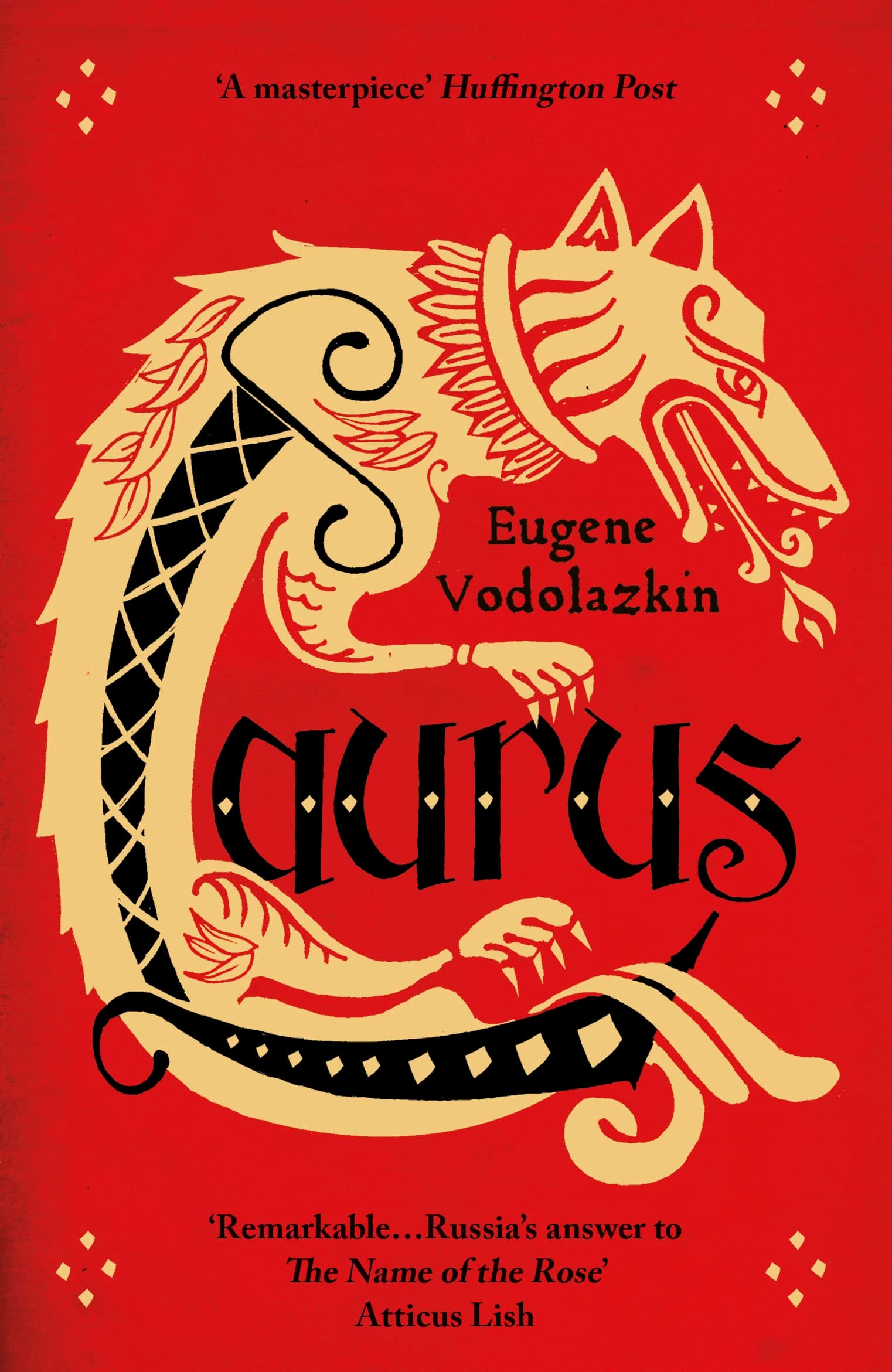
desertcart.com: Laurus: The International Bestseller: 9781780748719: Vodolazkin, Eugene: Books Review: A novel of the Russian Orthodox soul, set in the Middle Ages. - My tenth-grade English teacher once reproached me by quoting the aphorism "We don't judge a classic; it judges us." Whether or not Laurus is a classic will not be known for a century or two, but it is of sufficient weight and complexity to judge the reader. Hence the five stars. Who am I to doubt? Russia underwent three traumas in the last century--the Revolution, the forced industrialization and repression of Stalinism, and the Second World War. The first two were accompanied by the worst persecution of Christians in history. The demise of communism has led to a revival of the Russian Orthodox Church, with the support of the state. My recent read, Everyday Saints, and this book were both best sellers, and bear witness to this trend. In fact, Vodolazhkin was secretly baptized as a child, and feared exposure as a Christian in his university days. He has written a book which expresses the legendary Russian soul and certain aspects of the Russian version of the Orthodox world view. Set in the Fifteenth Century, with occasional leaps to other times, the book traces the life of his hero, in four stages, represented by his four names, Arseny, Ustin, Amvrosy, and Laurus. Arseny metamorphoses throughout the book, from a rural healer, to a "fool for Christ," a pilgrim, and a monk, among other things. In the course of the book, we are treated to elements of historical fiction--a recreation of the era in rural Russia, of magic realism with leaps in time all kinds of strange and miraculous events, a meditation on the meaning of time, an introduction to many aspects of Russian Orthodoxy, and a touch of the picaresque, though without the cynicism of, say, the Lazarillo de Tormes. I have no Russian, but I take it on faith that there is much word play with archaic vocabulary and constructions. These the translator has tried to signify by introducing strange spellings of words from time to time. I think that experiment fails, rather like a gift shop that tries to project antiquity by labeling itself "Ye Olde." That said, the book is quite readable, with short chapters, live prose, and a rapid unfolding of events. It is no doubt the case that this book is not for everyone. People who are impatient with things religious, feet set in the concrete of their skepticism, might find this book annoying. Such readers' willful suspension of disbelief will require something of an effort. If one is interested in the Middle Ages, the Russian soul, or Orthodoxy, you are likely to find the book rewarding. Someday soon, I may read it again. Review: Best book I have read in years! - Author Eugene Vodolazkin has written a Russian masterpiece. He tells the story of a truly good (though imperfect) man. I am reminded of Dostoevsky’s The Idiot, which is set in 19th century Russia. Vodolazkin’s story, set in the Medieval Russia more perfectly hits the mark. Both are great thought-provoking novels which deal with the unique Russian religious tradition of Holy Fools, but Vodolazkin allows the mystical element to take center stage, making the story line stronger. Vivid depictions of Medieval life, and a wonderful cast of characters all make this book highly readable. There is a secondary theme about time and space, which is intriguing, and the translator did an outstanding job of capturing Vodolazkin’s effective use of occasional modern slang and images, interspersed with this story set in the 1600’s. Although most of the action of the story is set 400 years ago, the themes of kindness, grace, hope, and (above all) redemptive love have a timeless appeal. I chuckled, I wept, I felt refreshed as I read this beautifully written story. Highest recommendation.
| Best Sellers Rank | #35,753 in Books ( See Top 100 in Books ) #88 in Christian Historical Fiction (Books) #124 in Cultural Heritage Fiction #1,667 in Literary Fiction (Books) |
| Customer Reviews | 4.4 4.4 out of 5 stars (1,182) |
| Dimensions | 5.1 x 1.3 x 7.8 inches |
| Edition | Reprint |
| ISBN-10 | 178074871X |
| ISBN-13 | 978-1780748719 |
| Item Weight | 2.31 pounds |
| Language | English |
| Print length | 384 pages |
| Publication date | September 13, 2016 |
| Publisher | Oneworld Publications |
G**S
A novel of the Russian Orthodox soul, set in the Middle Ages.
My tenth-grade English teacher once reproached me by quoting the aphorism "We don't judge a classic; it judges us." Whether or not Laurus is a classic will not be known for a century or two, but it is of sufficient weight and complexity to judge the reader. Hence the five stars. Who am I to doubt? Russia underwent three traumas in the last century--the Revolution, the forced industrialization and repression of Stalinism, and the Second World War. The first two were accompanied by the worst persecution of Christians in history. The demise of communism has led to a revival of the Russian Orthodox Church, with the support of the state. My recent read, Everyday Saints, and this book were both best sellers, and bear witness to this trend. In fact, Vodolazhkin was secretly baptized as a child, and feared exposure as a Christian in his university days. He has written a book which expresses the legendary Russian soul and certain aspects of the Russian version of the Orthodox world view. Set in the Fifteenth Century, with occasional leaps to other times, the book traces the life of his hero, in four stages, represented by his four names, Arseny, Ustin, Amvrosy, and Laurus. Arseny metamorphoses throughout the book, from a rural healer, to a "fool for Christ," a pilgrim, and a monk, among other things. In the course of the book, we are treated to elements of historical fiction--a recreation of the era in rural Russia, of magic realism with leaps in time all kinds of strange and miraculous events, a meditation on the meaning of time, an introduction to many aspects of Russian Orthodoxy, and a touch of the picaresque, though without the cynicism of, say, the Lazarillo de Tormes. I have no Russian, but I take it on faith that there is much word play with archaic vocabulary and constructions. These the translator has tried to signify by introducing strange spellings of words from time to time. I think that experiment fails, rather like a gift shop that tries to project antiquity by labeling itself "Ye Olde." That said, the book is quite readable, with short chapters, live prose, and a rapid unfolding of events. It is no doubt the case that this book is not for everyone. People who are impatient with things religious, feet set in the concrete of their skepticism, might find this book annoying. Such readers' willful suspension of disbelief will require something of an effort. If one is interested in the Middle Ages, the Russian soul, or Orthodoxy, you are likely to find the book rewarding. Someday soon, I may read it again.
C**S
Best book I have read in years!
Author Eugene Vodolazkin has written a Russian masterpiece. He tells the story of a truly good (though imperfect) man. I am reminded of Dostoevsky’s The Idiot, which is set in 19th century Russia. Vodolazkin’s story, set in the Medieval Russia more perfectly hits the mark. Both are great thought-provoking novels which deal with the unique Russian religious tradition of Holy Fools, but Vodolazkin allows the mystical element to take center stage, making the story line stronger. Vivid depictions of Medieval life, and a wonderful cast of characters all make this book highly readable. There is a secondary theme about time and space, which is intriguing, and the translator did an outstanding job of capturing Vodolazkin’s effective use of occasional modern slang and images, interspersed with this story set in the 1600’s. Although most of the action of the story is set 400 years ago, the themes of kindness, grace, hope, and (above all) redemptive love have a timeless appeal. I chuckled, I wept, I felt refreshed as I read this beautifully written story. Highest recommendation.
P**K
The author was trying to capture about what life was like back then and life is like right now
Reading this book is an experience. The author was trying to capture about what life was like back then and life is like right now. What is the overarching thing that unites Arseny's life? What is the overarching thing that unites the life of the modern reader? Some parts are amazingly beautiful and other parts are very difficult to get through. Which is surprisingly much like life.
A**R
Beautiful and Powerful
This book took me by surprise, I did not expect to be so captivated and moved by the language, the characters, the world Vodolazkin has created in Laurus. I simply did not want the book to end. Almost imperceptibly and without fanfare the author unfolds Arseny’s life in medieval Russia with a deep knowledge of history and customs but mainly an unerring understanding of the Russian soul and its spirituality. By the end what matters and what will linger in my memory is the beautiful and strange progress of this man’s soul through his pilgrimage. The moment I finished the book, I started reading it again.
N**A
Deeply Moving, Spiritually and on Many other Levels. One of the few books I will keep for the rest of my life.
WARNING *** proceed with caution *** SPOILER ALERT *** Several days ago I finished reading the book Laurus* written about a 15th century monk who lived his life as a healer, trying to redeem the life of his young love and her baby, both of whom died in childbirth, without the benefit of confession, and having been living sinfully outside of marriage. The main character who starts life as an orphan named Arseny has learned the gift of healing from his grandfather, long dead. Because he is ashamed that he has hidden the young woman in his home secretly, he does not want to call for a midwife when her time comes, thinking he will be able to deliver her. But instead, both she and the baby boy die. Arseny, overcome with guilt, vows to live Ustina’s unlived life for her, for it is only in life that we are able to make reparation for our sins. And so he plans to do good for all of his days and to scourge himself , whom he despises in order to gain redemption for Ustina and the baby. Throughout his life, he stays true to his word and endures much hardship and suffering. Sometimes it seems that his life is one long dark night of the soul. He oftens questions himself and his direction in life, never knowing if he is proceeding as he should. Always, he is faithful to Ustina, speaking to her, telling her that he is working to save her soul and asking for her advice. But she never answers, and Arseny takes this as a sign that further, more rigorous effort is required. He does this by giving away all he owns, including any food that is given him and by scourging himself in various, often brutal ways. As his reputation as a healer and a holy man begins to grow, and his works are considered miraculous and a work from God, his deep humility never changes, and he considers himself most unworthy. Nearing the end of his life, he asks the parish priest that his body be dragged through the streets in one last act of humiliation to his body; and so this is religiously performed by a holy trinity including an abbot, a bishop and an archbishop sent to accompany Laurus into his next life: "They kneel and soundlessly pray. They take the ends of the rope in their hands, kiss them, and stand up straight. Cross themselves in unison. The hems of their robes and the ends of their beards flap in unity….Their gazes are directed above…" 10,000 people who have been touched by the life of this holy man are on their knees in shock and sorrow as he is dragged through the town where he was born one last time. Laurus’ goodness and mercy had transformed this once ordinary man into a saint for the ages. + + + The transformative power of suffering was the major theme of this novel. But suffering without humility is wasted, and so humility assumed an equal role. In the beginning, Arseny erred, as most young people do, on two fronts: youthful hubris and new love/lust. In today’s world, we almost consider these things a rite of passage, but in Arseny’s world with the the resulting outcome, they became the devastation of three lives. I would argue that Arseny took on the Herculean task of reparation for three souls and gave everything, even the mortification of his body beyond death. I wept for him, and I continue to weep. Laurus suffered silently and without complaint. He did not defend himself when falsely accused. For long periods of time he felt speech unnecessary and lived silently by himself. Time began to shimmer and skip for him. His life unfurled itself in a particular direction, and then returned to where it began. He traveled a spiral path, climbing ever higher to God, yet all the time feeling he was an abject sinner and lost. Perhaps there is hope for us (me) here. If a man such as this can be clothed in the schema and all his life feel worthless and confused and lost, yet keep doing good and praying then that is all that any of us can do in this life, and perhaps we are not so lost, after all. + *Arseny undergoes several name changes in the novel which is the tradition when one is ordained as a monk. As one is elevated to a new rank or order, one’s name is changed again. The last name he receives, Laurus is one that accompanies his receipt of the schema, the highest degree of asceticism in Eastern Christianity. This novel is loosely based on the life of St Cyril of the White Lake, who did indeed live during that time period. To see images and read about the real St Cyril, or to purchase the book, see the links below: St Cyril of the White Lake with View of the Kirillo-Belozersky Monastery, http://www.gettyimages.com/detail/news-photo/saint-cyril-of-white-lake-w... "Venerable Cyril, the Abbot of White Lake",[...]
F**S
This is a beautiful, wonderful book
This is a beautiful, wonderful book. Immersed in the Orthodox phronema or mindset, it follows the spiritual journey of a single soul, and explores the way in which holiness affects not only Laurus, but those who come into contact with him. If you are Orthodox, you will immediately recognize and understand what Laurus is experiencing. If you are not Orthodox, it is a wonderful introduction to a spirituality which is shared by hundreds of millions around the world. The story is Russian, but also universal. You will find Laurus throughout eastern Europe and the middle east. You will also find him (rarely, sadly) in North America, and elsewhere around the world. The book is moving, and deeply inspirational. This book also struck me in another way. While the story of Laurus in some respects resembles a hagiography, it is also a story of humility, fear, and even failure. All humans know these things, and saints know them acutely. We sometimes miss this truth - that all saints are human, and the road to holiness is one that is arduous. Laurus teaches us that side of faith as well.
D**E
A Tale of 15th Century Russia
Laurus is the tale of a 15th century Russian medical doctor and ascetic with powers that go beyond the merely scientific. Laurus, who goes by a few different names in this story, spends his life seeking redemption for himself and the love of his life who died in child birth. The story of Laurus' life confronts the reader with the great Christian conflict between faith and works but the resolution is left up to the reader. The great strength of this novel is Vodolazkin's ability to tell a tale of 15th century Russia which captures the imagination of 21st century readers of various cultural backgrounds. The great weakness of this story is that the author randomly inserts scenes from the 19th and 20th centuries which seem to imply that some of the characters have been reincarnated, a doctrine which is foreign to Russian Orthodoxy and Christianity as a whole. In spite of this weakness Laurus can be enjoyed by westerners who are unfamiliar with Russian culture as well as those with a familiarity with the culture and history of Russia.
G**G
A novel of medieval Russia that speaks to us today
Arseny is born in Russia in 1440, or “the 6948th year since the Creation of the world.” When he is seven, his father brings him to live with the boy’s grandfather, Christofer; Arseny’s parents have grain to reap even though they are awaiting a recurrence of the plague. His parents do not survive the plague. Christofer raises Arseny, teaching him what he knows about healing, everything from setting broken bones and dealing with illnesses to helping couples become pregnant. He also teaches Arseny about nature and God. They live within the shadow of a monastery. These themes – healing, nature and God – suffuse Eugene Vodolazkin’s “Laurus.” This isn’t a novel about religion and faith set in medieval Russia; this is a novel that places the reader firmly in the reality of medieval Russia. We live Arseny’s life. We heal with Arseny’s hands. We live his life, and it is a remarkable life. It is a story that moves in unexpected directions. And it is a story of redemption, and how a holy man, in the sense that medieval Russia understood “holy men,” finds redemption. “Laurus” is an astonishing work. I approached it with skepticism because I couldn’t imagine becoming engaging with a novel about a holy man in medieval Russia. From the first pages, I could barely stand to put it down. At times, it reads like an old story found in archives, complete with the occasional use of archaic language, which translator Lisa Hayden transforms into Old English for the English translation. The challenges she faced in the translation had to be prodigious; she write’s about some of them in the translator’s introduction. And at times, it reads like “a journal of the plague years.” The plague becomes a kind of character of its own in the story. It is how Arseny meets the woman he falls in love with, although he wouldn’t have described it that way. It is how his reputation as a holy man is made – the healer who seems personally impervious to the contagion of the plague, allowing him to heal, often to the point of exhaustion. It is how he becomes protected by a prince. Arseny will go on a journey to Jerusalem, a mission of redemption. His companion will be, of all people, an Italian who has occasional glimpses into the future, far into the future. Those visions help to make “Laurus” something of a contemporary story as well – God, and faith, exist outside of time. Voloalazkin works in the department of Old Russian Literature at the Pushkin House in St. Petersburg, where he is an expert in medieval Russian history and folklore. That expertise likely has much to do with how “Laurus” is structured, how it reads, who the characters are and what they do. It is an engaging story, a remarkable story, a revealing story. And it is, perhaps the most revealing about its readers. “Laurus” is a novel about medieval Russia that speaks directly to the society we live in today.
Trustpilot
Hace 1 mes
Hace 2 semanas