We remain fully operational. Our teams are working around the clock to ensure your deliveries continue safely.

Descargar la aplicación


Servicios al cliente
Sobre nosotros
Copyright © 2025 Desertcart Holdings Limited
Descargar la aplicación

Buy anything from 5,000+ international stores. One checkout price. No surprise fees. Join 2M+ shoppers on Desertcart.
Desertcart purchases this item on your behalf and handles shipping, customs, and support to Peru.
🧘♀️ Find your calm in the chaos — peace is every step!
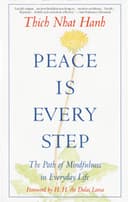
Peace Is Every Step by Thich Nhat Hanh is a bestselling mindfulness guide ranked #6 in Zen Spirituality, offering practical exercises to cultivate presence, reduce stress, and enhance emotional well-being. With a 4.8-star rating from over 4,500 readers, this book empowers professionals to integrate mindful living into their hectic lives for lasting peace and clarity.


| Best Sellers Rank | #5,443 in Books ( See Top 100 in Books ) #5 in Zen Spirituality #32 in Meditation (Books) #182 in Personal Transformation Self-Help |
| Customer Reviews | 4.8 4.8 out of 5 stars (4,568) |
| Dimensions | 5.23 x 0.43 x 8.23 inches |
| ISBN-10 | 0553351397 |
| ISBN-13 | 978-0553351392 |
| Item Weight | 7.4 ounces |
| Language | English |
| Print length | 157 pages |
| Publication date | March 1, 1992 |
| Publisher | Random House Publishing Group |
S**N
A Profound Way to Find Peace!
In a world characterized by relentless noise, distractions, and stressors, finding inner peace can seem like an elusive dream. However, the principles of mindfulness offer a transformative path to cultivate calm, clarity, and contentment in the midst of daily life. What Is Mindfulness? Mindfulness is the practice of intentionally attending to the present moment without judgment. It involves observing one's thoughts, feelings, bodily sensations, and surroundings with a sense of curiosity and acceptance. By releasing the need to control or cling to thoughts or emotions, individuals can experience reality as it unfolds without the filter of attachment or aversion. The Path of Mindfulness in Everyday Life The beauty of mindfulness lies in its applicability to all aspects of life. Here are some key practices that can help incorporate mindfulness into everyday routine: * Mindful Breathing: Throughout the day, take a few deep breaths, paying attention to the rise and fall of your chest and the flow of air into your lungs. Notice any tension or constriction and allow it to dissolve. * Mindful Walking: When you walk, engage all of your senses. Pay attention to the sensations of your feet on the ground, the movement of your body, and the sights and sounds around you. Let each step be a reminder to be fully present. * Mindful Eating: When you eat, give your full attention to the food on your plate. Savor the flavors, textures, and sensations with a sense of gratitude. This practice helps cultivate mindful consumption and appreciation for the nourishment we receive. * Mindful Communication: In conversations, listen attentively to others, free from distractions or judgments. Focus on understanding their perspective and respond with kindness and compassion. This fosters deeper connections and better communication outcomes. * Mindful Activities: Throughout the day, set aside time to engage in activities that bring you joy and calm. This could include reading, gardening, painting, or simply spending time in nature. Allow yourself to fully immerse in the experience and let the present moment wash over you. The Benefits of Mindfulness Regular mindfulness practice has been linked to numerous physical and mental health benefits, including: * Reduced stress and anxiety * Improved sleep quality * Enhanced emotional regulation * Increased self-awareness and compassion * Greater focus and concentration * Improved immune function Cultivating a Mindful Lifestyle Incorporating mindfulness into everyday life requires ongoing practice and commitment. Here are some tips to help you stay on track: * Start small: Begin with simple practices, such as mindful breathing or walking, and gradually increase the time and frequency. * Be patient and kind to yourself: Mindfulness is a journey, not a destination. There will be moments of distraction or frustration; simply acknowledge them and return your attention to the present moment. * Join a class or support group: There are many mindfulness classes, online resources, and support groups available. Connecting with like-minded individuals can provide motivation and support. * Make it a habit: Schedule regular time in your day for mindfulness practice, even if it's just for a few minutes. Consistency is key to developing a mindful lifestyle. Conclusion The path of mindfulness offers a profound way to find peace, clarity, and contentment in the midst of everyday life. By intentionally attending to the present moment without judgment, individuals can cultivate greater inner well-being, improve their relationships, and enhance their overall quality of life. As Thich Nhat Hanh reminds us, 'Peace is every step. The path for peace is right here, right now.'
J**N
Peace is a Gift, & Our Life is a Work of Art!
Life is a miracle, so don't waste another minute... What a book! This is the first book I read from Thich Nhat Hanh. What a pleasing manuscript and unique simple text (anyone can read this). There are so many `common-sense' lessons found here which we should know already, OR we do know but don't practice for whatever reason. In any event, how refreshing, and revitalizing it is to see some of these wonderful lessons in black and white... There are a lot of catch phrases that people say like: Don't put something off until tomorrow because tomorrow may not come OR Stop dwelling in the past because you can't change anything. OR Life isn't a destination but a journey. What Hanh does here is very simple and interesting - he states that there is nowhere to live BUT in the present moment. You cannot live 5 minutes from now, OR 5 minutes ago. You can only live right here / now, and in the present. This is the only way to be in touch with life. And for people that don't understand - that means that you can't be focusing on 10 different things because then you are distracted, and you aren't `truly in the moment'. That goes for work, for life itself or even leisure activities. Even though we have hobbies, the trick is not to get so lost in your hobby (whether it's music, etc.) that you lose sight of your surroundings. You must always maintain a sense of reality even as you enjoy yourself too. Forget the past and the future, for life is only found in the present, so be here mentally to witness it for all its' splendor! Another little note to mention that I found very stimulating: Conversation is something to be watchful about. What you talk about affects your mood and your thoughts. You must try to have nice discussions and maintain a positive mental attitude. In many books I have read from "The Rule of St Benedict" to the "I Ching" to this book - they all preach --- Beware of idol banter, and gossip etc. This kind of talk (which most people indulge in) is not healthy. Not only is it not nice to talk about others when they aren't present, but there is nothing to accomplish here. All you're doing is talking for the sake of talking, and worse yet, you are speaking about others in an unhealthy manner. Subsequently, this has an effect on your being whether you know it or not. The effect is not positive so we should refrain from it. If there is one thing from this book to take with you it is this - "Each minute, each second of life is a miracle". It doesn't matter what we're doing; don't take it for granted. So stop thinking about what you have to do next, and what you have to do after that... Simply focus on the present moment for all its' worth. Awe-inspiring work! After this, I plan on reading "True Love", and "The Art of Power", both by Hanh.
D**A
Loved It
Great book. Easy read. More for meditation and mindfulness
A**H
Kindness
Awesome book brand new
F**O
Es un gran libro, redactado de manera sencilla y con varias moralejas y enseñanzas. Creo que es una buena intro en el tema.
A**E
Estupendo! Al terminarlo quería empezar otra vez para que me siga acompañando en el día a día. Recomiendo
A**R
The Path of Mindfulness in every day life sounds simple. We pay attention to what is going on around us and within us. In order to make the jump from our normal (at least in the West) thinking of the past and the future we are being asked to be mindful of now. Yes, this is simple to accomplish for a few minutes but very difficult to sustain throughout the day. This book contains some of the most deceptively simple teachings that I have ever read. The author shows us that red traffic lights instead of being seen as a nuisance can be seen as an opportunity to remind us to live in the present and to be truly alive to our reality. We are surrounded by opportunities on a daily and hourly basis to be aware of who we are. The author has also shown that you do not have to sit in a special position in order to meditate and we do have to be in a special building to meditate. Walking down the street can be a time of prayer and meditation. A wonderful, delightful, and informative book from an author with so much humanity and kindness,
D**.
Amazing book to teach mindful living to the average person. I have given several copies to friends as well.
H**R
Very impactful
Trustpilot
Hace 3 días
Hace 3 semanas