We remain fully operational. Our teams are working around the clock to ensure your deliveries continue safely.

Descargar la aplicación


Servicios al cliente
Sobre nosotros
Copyright © 2025 Desertcart Holdings Limited
Descargar la aplicación
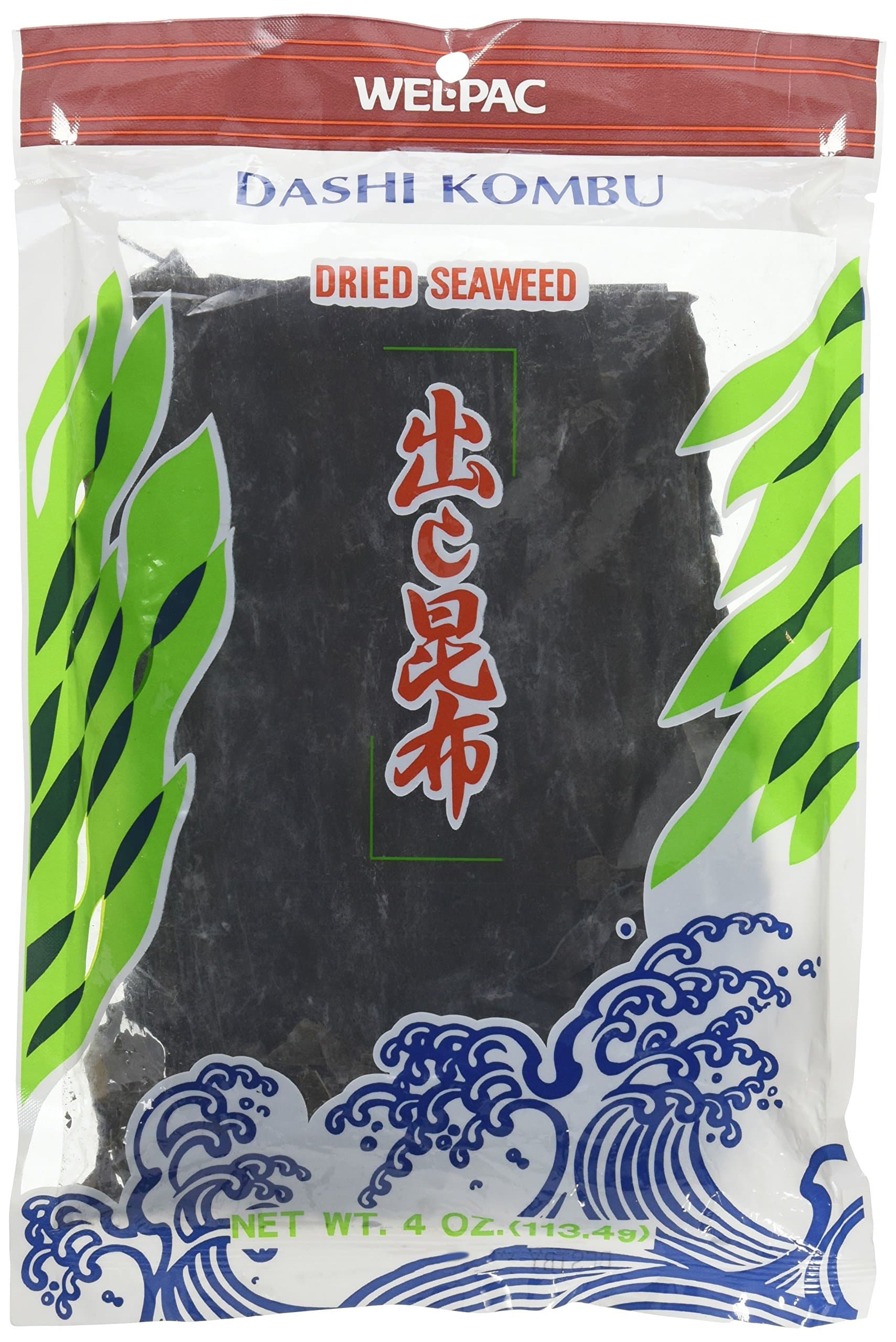

🌿 Unlock the ocean’s secret umami—your kitchen’s new best-kept flavor hack!
WEL-PAC Dashi Kombu is premium dried seaweed designed to effortlessly infuse your soups, stews, and broths with deep umami flavor. Each thick, clean strip dissolves quickly to create a silky, restaurant-quality dashi base without any fishy aftertaste. Highly rated and nutrient-rich, it’s a versatile culinary essential for millennial food enthusiasts seeking to elevate everyday cooking with authentic oceanic depth.

| ASIN | B00ZB13JHO |
| Best Sellers Rank | #16,216 in Grocery & Gourmet Food ( See Top 100 in Grocery & Gourmet Food ) #21 in Dried Seaweed & Nori |
| Customer Reviews | 4.5 4.5 out of 5 stars (3,687) |
| Is Discontinued By Manufacturer | No |
| Item model number | LEPPPO01-27MA33157 |
| Manufacturer | WEL-PAC |
| Package Dimensions | 11.38 x 7.64 x 1.1 inches; 3.99 ounces |
| UPC | 639476213548 011152134079 |
| Units | 4 Fluid Ounces |
A**N
Wonderful kombu!
This is the go-to kombu I have used for many years. Good quality for a small price - excellent for miso soup and when cooking with beans to soften them, I always add it to the pot after the halfway time - kombu is a healthy addition to many soups and stews, and seafood dishes...👍
R**N
99% of the iodine can be removed by boiling the kombu for 15 minutes
According to a scientific study of Japanese seaweed eaters, "When kombu is boiled in water for 15 minutes, it can lose up to 99% of its iodine content, while iodine in sargassum, a similar brown seaweed, loses around 40% [28,29]. Processed kelp is often boiled in dye for half an hour ("ao-kombu" or "kizami-kombu") before hanging to dry [21], a process which can reduce seaweed iodine content before it is consumed. When kelp is used to flavor soup stocks, the seaweed is often removed after boiling, resulting in soup stock high in iodine." Many people avoid eating kombu because it contains way too much iodine. According to the Linus Pauling Institute, people with an extremely high iodine intake will substantially increase their risk of developing thyroid papillary cancer but substantially decrease their risk of developing thyroid follicular cancer. Thyroid papillary cancer is less aggressive and has a better prognosis than thyroid follicular cancer. However, iodine, selenium, and zinc are the 3 antioxidant minerals in human nutrition. In my opinion, a high intake of these 3 beneficial antioxidant minerals might very likely slightly lower our risk of developing all cancers. Thyroid cancer is extremely rare. Even in Japan, where people eat a huge quantity of iodine from seaweed, only 1 man in 100,000 develops thyroid cancer and only 3 women in 100,000 develop thyroid cancer. Hiroshima and Nagasaki had the highest rates of thyroid cancer in Japan, not the northeast coast of Japan where seaweed consumption is extremely high. Technically, "brown" seaweeds such as kombu (kelp), arame (kelp), limu moui (kelp), wakame, mozuku, and hijiki are not plants. Biologists have placed "brown" seaweeds under Kingdom Chromalveolata instead of Kingdom Plantae. However, "red" seaweeds such as nori (laver), ogo (limu), and dulse are classified as plants. "Brown" seaweeds have rootlike structures that cling to the ocean bottom but they lack true roots, true stems, and true leaves. Also, all "brown" seaweeds are rich in the extremely beneficial marine polysaccharide, fucoidan, and the extremely beneficial marine carotenoid, fucoxanthin. By contrast, green vegetables growing on land and "red" seaweeds are rich in the carotenoids, lutein, zeaxanthin, neoxanthin, and violaxanthin but contain zero fucoxanthin and zero fucoidan. Biologists have shown that the reason why nobody who lives within 300 miles of the ocean has ever developed an iodine deficiency is because the kelp growing near the shoreline manufacture large amounts of iodine gas which escapes to float above the surface of the ocean and gets blown inland by the wind. Attached to the surface of all "brown" seaweeds are probiotic saltwater bacteria which manufacture an enzyme which allows humans to digest the extremely beneficial polysaccharides and extremely beneficial carotenoids in "brown" seaweeds. Without these probiotic saltwater bacteria, "brown" seaweeds would pass through our digestive tracts without being digested. Yes, this product is delicious but because salt always contains cancer-causing nitrosamines, it's a good idea to soak this product in water for at least 5 minutes to remove as much salt as possible. This product was farmed in the coastal areas of South Korea.
C**H
Nice kombu
Nice quality
I**N
Good kombu umami
I made miso soup today using wel-pac dashi kombu. I let it soak in water for 30 minutes, and then I tried it. Not bad at all, it has mellow sweet flavor. I mixed with bonito flakes and the flavor jumped 3 fold at least. Once the soup was done, I was pleasantly surprised by the flavor, and this kombu definitely played a crucial role in achieving the final taste. In my opinion, it would have been nicer if the flavor is a bit stronger, more like ocean taste, but it is still very good.
M**T
Essential ingredient
I’m mostly vegan so I used this and dried shiitake as a soup base for gumbos, chilis, paella, and curries. Very convenient.
L**E
Perfect for Kombu Maki
I’ve ordered this before and it’s perfect for what I need. I use it to make Kombu Maki !!
M**E
Title: “Instant Depth—Pure Umami for Stocks, Ramen & Risotto”
⭐️⭐️⭐️⭐️⭐️ WEL-PAC Dashi Kombu (Dried Seaweed, 1 pack) Title: “Instant Depth—Pure Umami for Stocks, Ramen & Risotto” One sheet of this kombu turns a plain pot of water into a silk-smooth, restaurant-quality dashi in minutes. The strips are thick, clean, and free of sandy residue, yet still soften quickly. I’ve also shaved pieces into risotto and even infused cocktails—zero fishy smell, just that elusive, rounded savor. If you’re serious about layering flavor, keep a bag of WEL-PAC on hand.
D**N
The seaweed highest in Iodine.
The Kombu is great quality and does provide that extra flavour to my miso soup. I did not know how excessively high Kombu is in Iodine. After drinking my first batch of true miso soup with Kombu, I felt a slight tingling and swelling of my thyroid/neck area. I then did some research and wow, I never realized how high most seaweeds are in Iodine (luckily I don’t eat sushi). I’ve always made miso soup without it and to be honest, it’s subtle additional flavour isn’t worth the health risks for me. I left it out of my next batch and no one even noticed. Hopefully this will help others out there.
A**J
High quality clean tasting kombu makes excellent stock.
Z**I
about 35$ CAD, which is good value in our region (southern NB). There's no chinatown here. Kombu lasts ages if kept well. It has produced some great kombu dashi with plenty of depth, I have a culinary background but no claim no expertise of Japanese cuisine. Have made kombu dashi, which I've used to make: chawanmushi and miso soup; the flavour really came through properly. Also use it to make various other soups and as stock in general cooking where a sea flavour is desirable. I've also put the kombu in the rice cooker to add depth of flavour when making sushi rice. The used kombu can then be used again to make lower grade dashi or you can chop it up and use it to make furikake. If this kombu were graded I don't think it's going to be super high but I think it's plenty good for most people, for daily home use. An essential for Japanese cooking.
P**E
Great product
T**G
The right price and a good product will make me order this again. Flavor wonderful/.
A**R
Perfect product, but ended up finding it WAY cheaper at a T&T in person.
Trustpilot
Hace 3 días
Hace 1 mes