We remain fully operational. Our teams are working around the clock to ensure your deliveries continue safely.

Descargar la aplicación


Servicios al cliente
Sobre nosotros
Copyright © 2025 Desertcart Holdings Limited
Descargar la aplicación
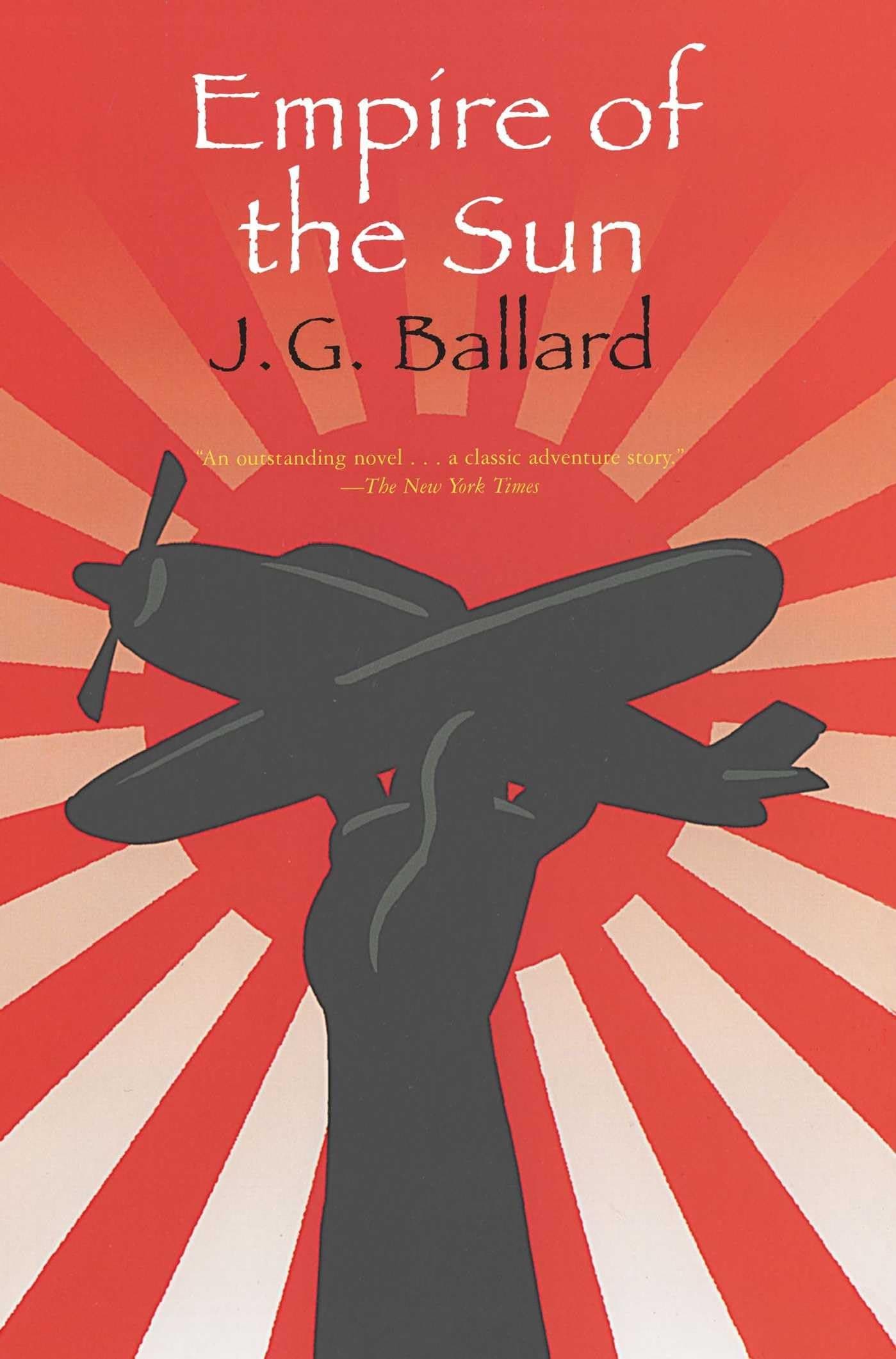
desertcart.com: Empire of the Sun: 9780743265232: Ballard, J. G.: Books Review: Humanity, stripped to its core - My first introduction to this story was, like many others, through Steven Spielberg's adaptation. For me, the hauntingly beautiful "Suo Gan" that serves as that movie's de facto theme song perfectly captures the fragile yet enduring beauty of humanity that Spielberg so successfully captures in his movie version. The movie abounds with poignant moments of hope, warmth, and exhilaration amongst the great struggles that befall Jim and his band of acquaintances. I enjoyed the movie, and Jim's story and haunting memory of Suo Gan made a lasting impression. Years later, I encountered the original story--J.G. Ballard's novel that served as Spielberg's inspiration. Just as the newsreels and magazines that tell of the war fascinate Jim in the book because they describe a war so different than the one he knows, so does Spielberg's movie tell a different tale from Ballard's book. The events are by and large the same, but the tone of the story, the horrors experienced by Jim, and the lessons and impressions instilled by the novel are on a different order of magnitude from the movie. I enjoyed the movie on its own merits, but I imagine the order in which you encounter them colors your impression--for people like me who saw the movie first, it was easy to appreciate the movie, and then be blown away by the power of the book. For those who read the book first, I would imagine the movie would be a disappointing, sanitized version of the original work. The novel overpowers the reader from start to finish by Ballard's stark account of Jim's survival against all odds, in conditions stacked heavily against him. Death, betrayal, illness, and hunger surround Jim and yet somehow he always managed to survive because he never despairs, never gives up, always keeps his wits about him, and as he himself explains, because he "takes nothing for granted." The world of WWII Shanghai strips humanity to its bare, naked, ugly core. Growing up in this environment, Jim becomes a remarkably complex character in spite of (or perhaps because of) his young age. Jim is intelligent, naive, loyal, callous, hopeful, curious, delusional, and yet oddly lucid--all at the same time. The image of flight is strong throughout the story, as a form of escape, and in some ways the only vestige of childhood granted to this boy as he goes through a life full of cruel ironies--first, the inability despite repeated attempts to surrender to an enemy that he needs infinitely more than they need him; then, the odd realization that this "enemy" is his greatest protector and in many instances, friend; finally, that even with the war over he is in greater danger and further from his parents than ever. War, peace, friend, foe, cause, effect, even the distinction between life and death ... these cease to have meaning for Jim. Finally, Jim is saved in an almost deus ex machina fashion by the heroic Dr. Ransome, a man whose selfless actions mildly amuse and baffle Jim, who cannot quite understand this brand of humanity which is quite different from the one he learned through his own experiences. Ransome's life is one that takes certain things for granted. Jim has not been afforded this luxury. Jim's reunion with his parents is another, critical difference between the movie and the book. The "happily-ever after" ending in the movie is filled with hope and relief. Jim and his parents don't recognize each other at first. Then they do. This symbolizes that the war is finally over for Jim, now he can go back to a normal life. The End. In the book, however, the ending is much more nuanced. Despite returning "home" to Shanghai, Jim's home will forever be Lunghua in the novel version. Normalcy will never be a suburban life in England, for Jim it is wartime Shanghai. The odds of Jim being able to live what most of us would call a "normal life" are practically zero ... after all, he has just experienced a lifetime of events more "real" and vivid than "normal life" could ever be; the war never ends for Jim. Seeing the far-from-normal life Ballard himself has led, and the fiction he has written, one realizes that even though "Jim" and "J.G. Ballard" may not quite be the same person (one crucial difference--Ballard is never separated from his parents), Ballard is still the adult that Jim would have grown up to be. It is this honest and uncompromising portrayal of Jim as a true tragic hero that separates the book from the movie, and makes this book one of the truly great accounts of surviving a brutal war that knows and shows no mercy. Review: Son of the Empire - "Are you still interested in aeroplanes, Jim? You'll have to join the R.A.F. 'I'm going to join the Japanese Air Force.' The widows tittered, still unsure of Jim's sense of humour." "He had been trying to keep the war alive, and the security he had known in the camp. It was time to face the present, the rule that had sustained him through years of the war." "A flash of light filled the stadium, as if an immense bomb exploded northeast of Shanghai. It faded in a few seconds, but a pale sheen covered everything. Prisoners on the grass sat on the floor of a furnace, heated by a second sun." "Jim glanced at the people around him, the clerks and the coolies and peasant women, well aware of what they were thinking. One day China would punish the rest of the world and take a frightening revenge." ********* J G Ballard lived in the Shanghai British Concession from his birth in 1930 to the end of the war in 1945. During the 1937 invasion of China he witnessed the Japanese bombings and battles from inside the International Settlement. In 1943 his family were relocated to an internment camp for foreigners after the occupation of Hong Kong. This 1984 novel reflects some of the experiences he had as a youth. It was shortlisted for the Booker Prize and made into a popular movie in 1987. Ballard's story opens in Shanghai December 1941 on the eve of the Pearl Harbor attack. The narrator Jim is an eleven year old boy who describes city life circumscribed by troops from Japan. Poverty and desperation in the Chinese is contrasted with the wealth and ease of Europeans, who are nonetheless anxious about the war's outcome. Jim admires the Japanese for their courage and Communists for their subversion. He finds skeletons in fields and corpses floating in the river. Seen through the eyes of a child, Shanghai's nightclubs and casinos overflow with gangsters and bargirls. People flee the city, selling jewelry in the street, as they crowd onto the last steamers to Hong Kong. The spectacle of Shanghai comes to life in the memories of J G Ballard. Exploring the destroyed airfield, Jim finds crashed bombers and trenches of troops. He fantasizes becoming a pilot and fighting alongside Japan, but soon watches as the naval shelling of Shanghai begins. Separated from his parents and escaping a hospital ward Jim returns home, now alone in his abandoned mansion. Tanks roll by in the streets and planes fly through the air. Houses of friends are empty, their belongings in shambles. Japanese patrols relocate British and Americans to makeshift camps outside of town. Starving, he survives on leftover tins found in homes and by handouts from soldiers. He rides his bicycle through the city, a target for crime and spite by the locals. Jim crosses the Huangpu river on a rotted sampan to rusting carcasses of merchant ships, moored in Pudong opposite of the Bund. He is taken in by two American seamen living on a wreck, refugees who think he might be worth something. They make a living by plucking gold teeth from mouths of the dead. Jim leads them on with tales of his former life of luxury. An attempt to burglarize fancy homes ends in his capture and confinement in a Japanese detention center. Malaria and dysentery plague the detainees but Jim is glad to be off the streets. As the war continues the Japanese run out of food and guards, and he is left for dead on a forced march to another facility. American planes drop food, delaying his starvation. He hasn't found his parents and wonders if he will see them again. An irony of this book is Jim suffers the hardships of war but still sympathizes with the Japanese. Critical of his own empire, he has admiration for another. Ballard's description of Shanghai deserves its accolades as a compelling account of WWII told by an eyewitness. His 2008 autobiography 'Miracles of Life' tells how he quit Cambridge medical school, joined the Royal Air Force, and became a notable writer. For anyone who is interested in the history and cityscape of Shanghai this novel is a powerful memoir. The film is excellent too, nominated for six academy awards, featuring early performances by actors who are now stars.
| Best Sellers Rank | #91,211 in Books ( See Top 100 in Books ) #340 in Military Historical Fiction #995 in War Fiction (Books) #3,470 in Classic Literature & Fiction |
| Book 1 of 2 | Empire of the Sun |
| Customer Reviews | 4.4 4.4 out of 5 stars (1,795) |
| Dimensions | 5.5 x 0.7 x 8.44 inches |
| ISBN-10 | 0743265238 |
| ISBN-13 | 978-0743265232 |
| Item Weight | 8.8 ounces |
| Language | English |
| Print length | 279 pages |
| Publication date | March 7, 2005 |
| Publisher | Simon & Schuster |
C**S
Humanity, stripped to its core
My first introduction to this story was, like many others, through Steven Spielberg's adaptation. For me, the hauntingly beautiful "Suo Gan" that serves as that movie's de facto theme song perfectly captures the fragile yet enduring beauty of humanity that Spielberg so successfully captures in his movie version. The movie abounds with poignant moments of hope, warmth, and exhilaration amongst the great struggles that befall Jim and his band of acquaintances. I enjoyed the movie, and Jim's story and haunting memory of Suo Gan made a lasting impression. Years later, I encountered the original story--J.G. Ballard's novel that served as Spielberg's inspiration. Just as the newsreels and magazines that tell of the war fascinate Jim in the book because they describe a war so different than the one he knows, so does Spielberg's movie tell a different tale from Ballard's book. The events are by and large the same, but the tone of the story, the horrors experienced by Jim, and the lessons and impressions instilled by the novel are on a different order of magnitude from the movie. I enjoyed the movie on its own merits, but I imagine the order in which you encounter them colors your impression--for people like me who saw the movie first, it was easy to appreciate the movie, and then be blown away by the power of the book. For those who read the book first, I would imagine the movie would be a disappointing, sanitized version of the original work. The novel overpowers the reader from start to finish by Ballard's stark account of Jim's survival against all odds, in conditions stacked heavily against him. Death, betrayal, illness, and hunger surround Jim and yet somehow he always managed to survive because he never despairs, never gives up, always keeps his wits about him, and as he himself explains, because he "takes nothing for granted." The world of WWII Shanghai strips humanity to its bare, naked, ugly core. Growing up in this environment, Jim becomes a remarkably complex character in spite of (or perhaps because of) his young age. Jim is intelligent, naive, loyal, callous, hopeful, curious, delusional, and yet oddly lucid--all at the same time. The image of flight is strong throughout the story, as a form of escape, and in some ways the only vestige of childhood granted to this boy as he goes through a life full of cruel ironies--first, the inability despite repeated attempts to surrender to an enemy that he needs infinitely more than they need him; then, the odd realization that this "enemy" is his greatest protector and in many instances, friend; finally, that even with the war over he is in greater danger and further from his parents than ever. War, peace, friend, foe, cause, effect, even the distinction between life and death ... these cease to have meaning for Jim. Finally, Jim is saved in an almost deus ex machina fashion by the heroic Dr. Ransome, a man whose selfless actions mildly amuse and baffle Jim, who cannot quite understand this brand of humanity which is quite different from the one he learned through his own experiences. Ransome's life is one that takes certain things for granted. Jim has not been afforded this luxury. Jim's reunion with his parents is another, critical difference between the movie and the book. The "happily-ever after" ending in the movie is filled with hope and relief. Jim and his parents don't recognize each other at first. Then they do. This symbolizes that the war is finally over for Jim, now he can go back to a normal life. The End. In the book, however, the ending is much more nuanced. Despite returning "home" to Shanghai, Jim's home will forever be Lunghua in the novel version. Normalcy will never be a suburban life in England, for Jim it is wartime Shanghai. The odds of Jim being able to live what most of us would call a "normal life" are practically zero ... after all, he has just experienced a lifetime of events more "real" and vivid than "normal life" could ever be; the war never ends for Jim. Seeing the far-from-normal life Ballard himself has led, and the fiction he has written, one realizes that even though "Jim" and "J.G. Ballard" may not quite be the same person (one crucial difference--Ballard is never separated from his parents), Ballard is still the adult that Jim would have grown up to be. It is this honest and uncompromising portrayal of Jim as a true tragic hero that separates the book from the movie, and makes this book one of the truly great accounts of surviving a brutal war that knows and shows no mercy.
D**R
Son of the Empire
"Are you still interested in aeroplanes, Jim? You'll have to join the R.A.F. 'I'm going to join the Japanese Air Force.' The widows tittered, still unsure of Jim's sense of humour." "He had been trying to keep the war alive, and the security he had known in the camp. It was time to face the present, the rule that had sustained him through years of the war." "A flash of light filled the stadium, as if an immense bomb exploded northeast of Shanghai. It faded in a few seconds, but a pale sheen covered everything. Prisoners on the grass sat on the floor of a furnace, heated by a second sun." "Jim glanced at the people around him, the clerks and the coolies and peasant women, well aware of what they were thinking. One day China would punish the rest of the world and take a frightening revenge." ********* J G Ballard lived in the Shanghai British Concession from his birth in 1930 to the end of the war in 1945. During the 1937 invasion of China he witnessed the Japanese bombings and battles from inside the International Settlement. In 1943 his family were relocated to an internment camp for foreigners after the occupation of Hong Kong. This 1984 novel reflects some of the experiences he had as a youth. It was shortlisted for the Booker Prize and made into a popular movie in 1987. Ballard's story opens in Shanghai December 1941 on the eve of the Pearl Harbor attack. The narrator Jim is an eleven year old boy who describes city life circumscribed by troops from Japan. Poverty and desperation in the Chinese is contrasted with the wealth and ease of Europeans, who are nonetheless anxious about the war's outcome. Jim admires the Japanese for their courage and Communists for their subversion. He finds skeletons in fields and corpses floating in the river. Seen through the eyes of a child, Shanghai's nightclubs and casinos overflow with gangsters and bargirls. People flee the city, selling jewelry in the street, as they crowd onto the last steamers to Hong Kong. The spectacle of Shanghai comes to life in the memories of J G Ballard. Exploring the destroyed airfield, Jim finds crashed bombers and trenches of troops. He fantasizes becoming a pilot and fighting alongside Japan, but soon watches as the naval shelling of Shanghai begins. Separated from his parents and escaping a hospital ward Jim returns home, now alone in his abandoned mansion. Tanks roll by in the streets and planes fly through the air. Houses of friends are empty, their belongings in shambles. Japanese patrols relocate British and Americans to makeshift camps outside of town. Starving, he survives on leftover tins found in homes and by handouts from soldiers. He rides his bicycle through the city, a target for crime and spite by the locals. Jim crosses the Huangpu river on a rotted sampan to rusting carcasses of merchant ships, moored in Pudong opposite of the Bund. He is taken in by two American seamen living on a wreck, refugees who think he might be worth something. They make a living by plucking gold teeth from mouths of the dead. Jim leads them on with tales of his former life of luxury. An attempt to burglarize fancy homes ends in his capture and confinement in a Japanese detention center. Malaria and dysentery plague the detainees but Jim is glad to be off the streets. As the war continues the Japanese run out of food and guards, and he is left for dead on a forced march to another facility. American planes drop food, delaying his starvation. He hasn't found his parents and wonders if he will see them again. An irony of this book is Jim suffers the hardships of war but still sympathizes with the Japanese. Critical of his own empire, he has admiration for another. Ballard's description of Shanghai deserves its accolades as a compelling account of WWII told by an eyewitness. His 2008 autobiography 'Miracles of Life' tells how he quit Cambridge medical school, joined the Royal Air Force, and became a notable writer. For anyone who is interested in the history and cityscape of Shanghai this novel is a powerful memoir. The film is excellent too, nominated for six academy awards, featuring early performances by actors who are now stars.
P**I
Highly recommended, must read
A**R
This is the first novel I have read by J G Ballard and I must say I thoroughly enjoyed reading it. Based on his personal experience. Good story, good plot lines, engaging and believable characters, all the ingredients of a great story.
L**R
Llego en perfectas condiciones y a tiempo
S**I
"Empire of the Sun" is one of the most haunting books I have ever read. It took me a while to get into the story, as I found the beginning somewhat repetitive, but by a third of the way in I was gripped. It's a loose autobiography, based on Ballard's own experiences of the fall of Shanghai and the civilian internment camp at Lunghua, as he was aged between 11 and 14. The themes covered include the loss of innocence, the breakdown of civilisation, survival and the question of freedom. I was particularly struck by the imagery in the book, the constant juxtaposition of brutal and harrowing images against the remnants of the 1930s British ex-pat life with its cricket bats, gramophones and tennis racquets, like a Betjeman poem against the backdrop of a recurring nightmare. The honesty and matter-of-factness of young Jim's acceptance of the horrors as he wheels and deals his way around the camp, and his relish of the war and hero-worship of the Japanese may be upsetting for some, but I can sense that these feelings are exactly those experienced by the author at the time. This is a book that I certainly won't forget in a hurry.
伊**ろ
Kindle版 Print Length: 331 pages ASIN: B00457WT9E のレビュー J. G. バラードの初期の作品は大昔に翻訳で読んだが、現在のわたしとしては、再読する意欲がない。80年代以降も評価の高い作品を次々に発表しているが、手にとったことはない。 それでこの作品だが、第二次世界大戦を背景にした自伝的小説として読みはじめた。日本人の作品を含め、この時代を扱った小説は山のようにあるので、そのごく一部分しか知らないが、たぶん、かなりの傑作の部類だろう。 自伝的とは言うものの、内容は完全なフィクションである。このkindle版には1995年に発表されたThe End of My War というエッセイが収録されている。それによれば、1930年生まれのジム少年は妹を含めた四人家族。対日戦が1941年12月8日始まったわけだが、その後一年ほどは自宅で過ごすことができ、学校も再開された。家族そろって収容所に入っていたのは二年半。前半は食糧事情も日本軍の対応も穏やかだった。また、上海には中立国のヨーロッパ人もたくさんいて、スイス赤十字からの援助もあった。収容所の責任者は立派な人物で、後に戦犯裁判にかけられたさい、ジムの父のバラード氏が弁護して無罪になったそうだ。 というわけで、この小説のストーリーとはまったく異なる事情だったわけだ。 しかし、この作品に描かれるモノ、臭いとほこり、臓物と膿と血液と小便と大便、ハマダラカとハエとコクゾウムシ、マラリアと脚気、泥とヘドロと油膜、それらのものはみなジム少年のまわりに日常的にあったことだろう。上海在住のブリテン人、召使いやアマ、宣教団体のブリテン人、民間人のアメリカ人、日本兵、ユーラシアン、そして背後にうごめくチャイニーズ、それぞれが少年の目と通して描かれる。 小説の紹介として順序が逆になったが、構成は三部に分かれている。第一部は開戦の日から三か月ほど。第二部は終戦前の三か月ほど。第三部は8月15日以後。つまり真ん中の三年ほどが省かれている。短い41の章に分けられ、各章はスケッチ風の短編小説風である。ただし、SF作品とは違い、読んだあと何がなんだかわからない不条理な作品ではない(あ、不条理とかシュールって便利な言葉だが、いまいち内容がないね)。視点人物はジム少年に固定しているし、話の流れもある。 kindle版には、このほかTravis Elboroughによる2006年のインタビューも収録。スピルバーグ監督の映画を作者は気に入っていて時々見るのだそうだ。へえ、意外だ。たいていの作家は自作の映画化に文句つけたり無視したりするものだが。インタビューの中で自伝で書くつもりはないと語っているが、その後2008年に自伝発表。2009年死去。
Trustpilot
Hace 1 mes
Hace 2 meses