We remain fully operational. Our teams are working around the clock to ensure your deliveries continue safely.

Descargar la aplicación


Servicios al cliente
Sobre nosotros
Copyright © 2025 Desertcart Holdings Limited
Descargar la aplicación
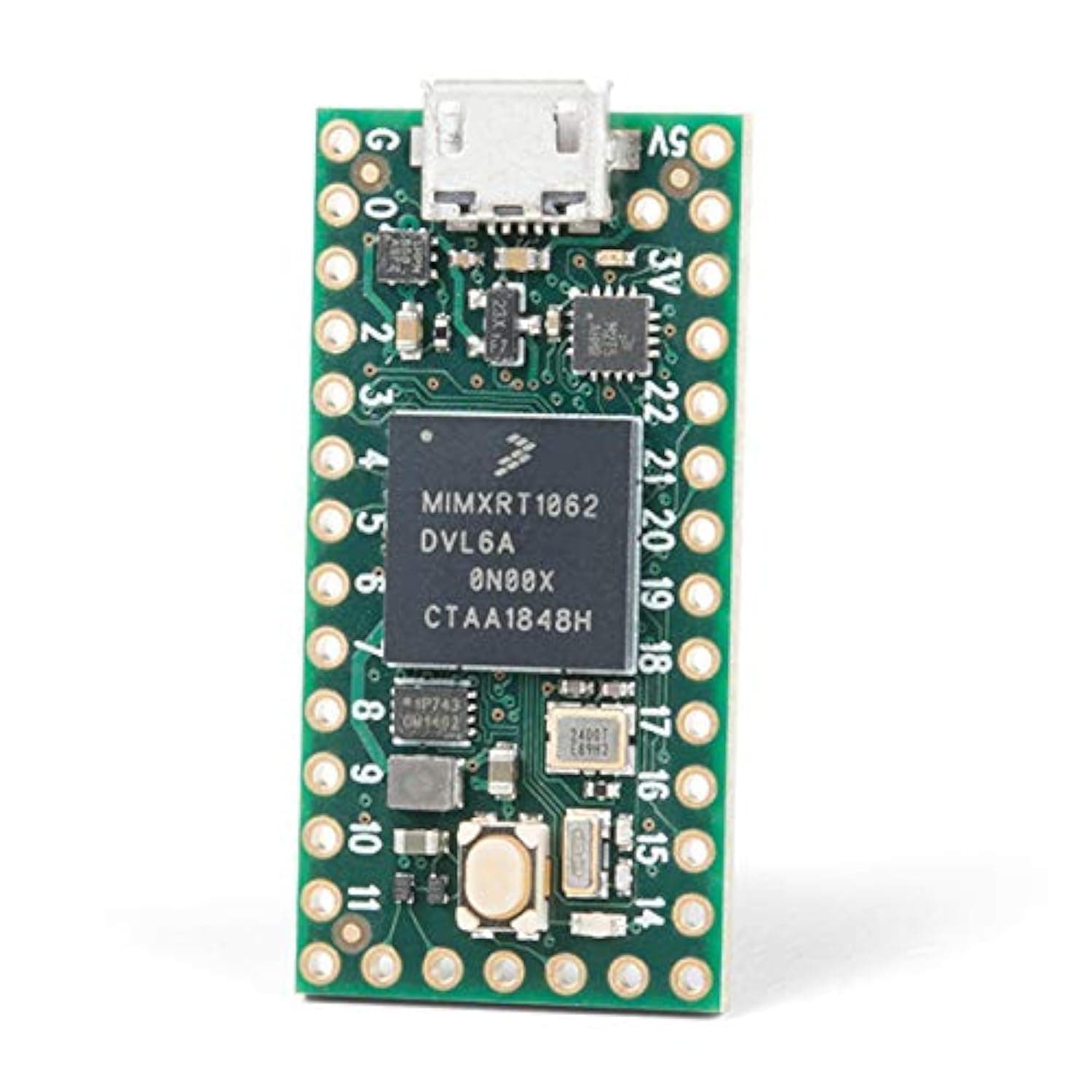
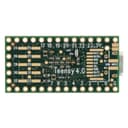
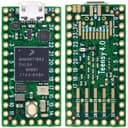
🚀 Power-packed microcontroller that makes your projects future-proof and envy-worthy!
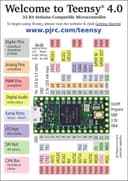
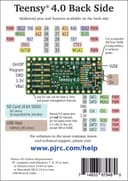
The Teensy 4.0 is a cutting-edge microcontroller board featuring a 600MHz ARM Cortex-M7 CPU, 1MB of tightly coupled SRAM, and 2MB of flash memory. Its compact 1.4 x 0.7 inch footprint houses dual 480 Mbit/s USB ports, 3 CAN buses (including CAN FD), and 2 I2S audio interfaces, making it ideal for high-performance embedded applications. With seamless Arduino IDE compatibility and top-tier build quality, Teensy 4.0 delivers unmatched speed and developer support for professional-grade prototyping.
| ASIN | B07W5J3WNH |
| Best Sellers Rank | #56,209 in Industrial & Scientific ( See Top 100 in Industrial & Scientific ) #96 in Prototyping Boards & Accessories |
| Brand | PJRC |
| Built-In Media | 1 x Board |
| CPU Model | Cortex |
| Compatible Devices | Personal Computer |
| Connectivity Technology | USB |
| Customer Reviews | 4.8 4.8 out of 5 stars (200) |
| Item Dimensions L x W x H | 1.5"L x 0.5"W x 0.5"H |
| Item Weight | 10 Grams |
| Manufacturer | PJRC |
| Memory Storage Capacity | 2048 KB |
| Mfr Part Number | Teensy 4.0 |
| Model Name | Teensy 4.0 |
| Model Number | Teensy 4.0 |
| Operating System | DOS |
| Processor Brand | NXP |
| Processor Count | 4 |
| Processor Speed | 600 MHz |
| RAM Memory Installed | 1 MB |
| RAM Memory Technology | SRAM |
| UPC | 714833879480 732387207924 |
| Wireless Compability | 802.11b |
G**V
Math powerhouse in a compact package
The number-crunching power of this diminutive board is astonishing. It is very, very fast at default speed of 600Mhz, but with the help of a small passive heatsink it can be overclocked almost up to 1 GHz, which is simply overkill unless you plan to port Quake onto it. If your application is heavy on math (anything floating point based, trigonometry, signal analysis, 3d and so on) that is needed to be processed fast in the most compact package, I don't think there is a better dev board for such tasks than Teensy 4.0. The support from the board creator PJRC has always been excellent, and integration with Arduino environment is nearly seamless, especially compared to other boards with similar (though still inferior) processing power, like ESP32S3-based ones. The quality of the PCB and soldering is also a step above most other boards you can buy on Amazon. It is built to last. There are some shortcomings though, which may or may not be important, depending on application. I fully understand that we cannot have everything we ever wanted packed into one tiny board, but still, here's my "black" list: 1. Teensy boards stiill use Micro USB instead of a more modern and convenient USB-C. I'm sure we are going to see USB-C in all upcoming boards, including the ones made by PJRC. 2. Teensy 4.0 cannot be soldered directly onto a PCB because its components protrude from both sides (unlike XIAO boards, for example). Consequently, it is necessary to use pin headers in order to attach the board to a PCB, and waste a lot of valuable space on the other side of that PCB, which otherwise could be used for running traces for other components. 3. Total lack of wireless communication. 4. No integrated battery charger. 5. No DAC. Need to use a separate board (unlike Teensy 3.1-3.2) 6. 5V signal intolerance. I know that most microcontroller boards these days are 3.3 volts only, but it sure would be nice to get rid of the ugly battery of logic level shifters, which I need to use so that Teensy 4.0 could communicate with my CNC controller. Again, Teensy 3.1-3.2 was much better in this regard. Unfortunately, the latter's processing power is not really up to the task today. After all critique, let me reiterate the fact that Teensy 4.0 is still a GREAT board, manufactured by high quality standards, packing more horsepower per square millimeter of PCB that most (all?) other dev boards on the market, and having excellent (probably the best) developer support. It really shines when the application lets it play to its strengths.
J**N
Super-fast and Super-features!
Until recently I worked with all sorts of Arduinos: Uno, Mega, Nano, and Pro. A month ago I started a new project that required microsecond-timing and decided to use a Teensy 4.0. The result: I am blown away by the incredible speed of the Teensy, which I am estimating to be 10-100 times faster than that of the Arduinos. It is like entering a new world in which I need not fear writing CPU-intensive functions. Those are a drop in the bucket, not even noticeable when working with a Teensy 4.0. This, combined with the order of magnitude bigger memory space available on the Teensy make programming fun again. Forget about struggling to work around the Arduinos' resource limitations. I am also extremely impressed by the extensive documentation on the Teensy developer's website (pjrc dot com). There are tens of libraries optimized for Teensys' spectacular performance, code examples, explanations, diagrams, and most importantly, a very active and helpful user forum. After I installed the Teensyduino add-on (it took maybe 15 minutes) I could upload sketches straight from the customary Arduino IDE, without any problems. Except that the uploads are much faster with the Teensy than they were with the Arduino. I could go on heaping praise on this little marvel, but I am too eager to get back to my Teensy project. I want to add, though, that I am not affiliated with Teensy in any way, nor have I received any kind of freebies. I am just a genuinely thrilled user.
C**L
Easy, fun little board, but overpriced IMO
With this board you get 3 CAN busses (when you add a transceiver, typically a $5 board per bus) and an easy to use Arduino experience. Plenty of IO, plenty of power. I've been amazed at how much this tiny little thing can handle. I started out with a simple CAN application, then realized I could drive long LED strips, and do BT stuff all on the same board at the same time. It's flexible, power efficient, and tiny. FlexCAN_T4 is a fantastic CAN library - clean and straight forward, using simplified interface. I am more of a Swift/Kotlin/Java guy and the simpler the library, the more likely I am to build something cool. I got up and running with CAN bus stuff faster and cheaper on Teensy than I did with RaspberryPi and Python. Back to the value question - As a sort of high performance catch all device, many using it for audio applications, it's going to have features you do not need. It's sitting between an RPi and traditional Arduino. For my exact application this means it's slightly over priced since I needed to pile on more and more accessories to get to something like an ESP32 which wifi and dual mode bluetooth for a fraction of the total cost. Even a Nano IOT starts to make me wonder why I picked a Teensy. Performance is the biggest trade off. One thing you cannot put a price on though is the ease of use. If I waste hours messing with a shoddy complicated board, optimizing code so it fits or runs better on a less capable board, how much is that really worth? So I can move faster and create more interesting things without worrying about specs, but It's a double edged sword. Teensy is cost prohibitive if you start trying to productize your creation built upon it, even if to make a few copies. Make sure you really need the power and most of the features before committing to it. Otherwise there are cheaper options with different features that might fit better.
Trustpilot
Hace 5 días
Hace 1 mes