We remain fully operational. Our teams are working around the clock to ensure your deliveries continue safely.

Descargar la aplicación


Servicios al cliente
Sobre nosotros
Copyright © 2025 Desertcart Holdings Limited
Descargar la aplicación
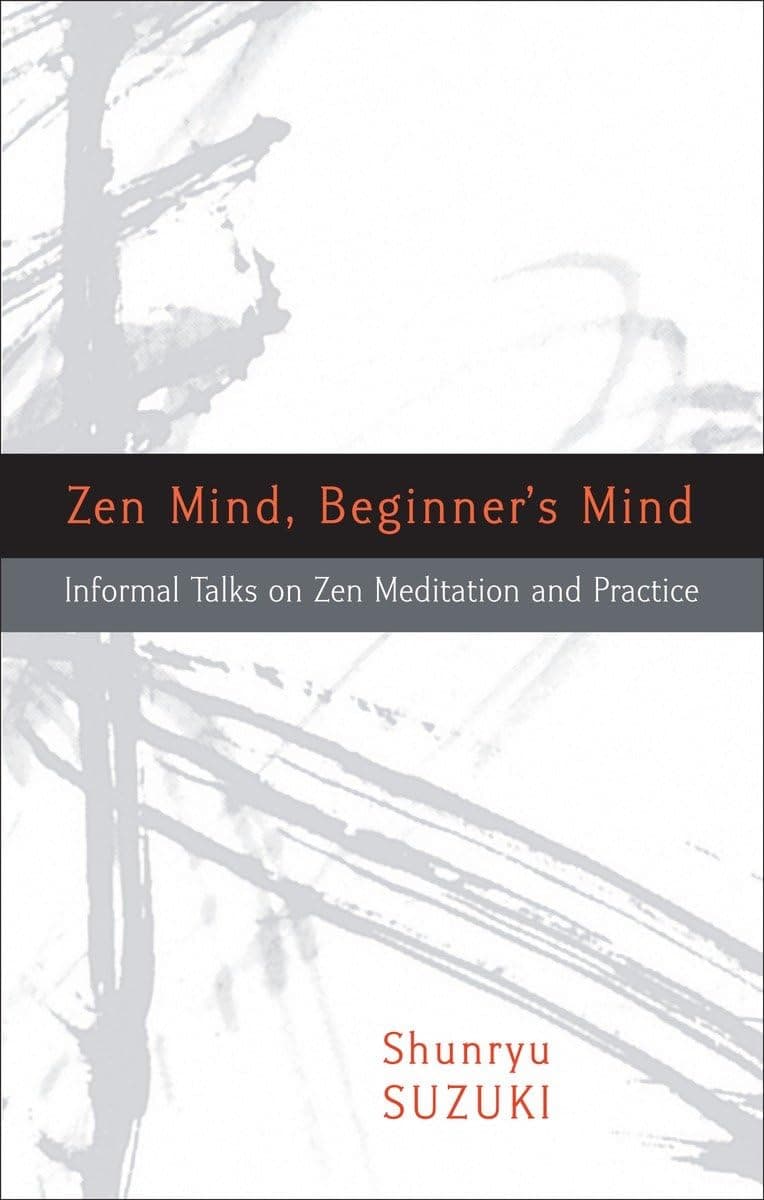
desertcart.com: Zen Mind, Beginner's Mind: Informal Talks on Zen Meditation and Practice: 8601401052623: Suzuki, Shunryu, Dixon, Trudy, Smith, Huston, Baker, Richard, Chadwick, David: Books Review: Turns Out 'No Escape' is Actually the Best Way In - My initial reaction to a title like "The Wisdom of No Escape" was, let's just say, a little apprehensive. "No escape"? In this economy? In this chaotic world? My instinct is usually to find the nearest exit, the quickest distraction, the most comfortable hiding spot. I thought this book might be a stern lecture on toughing it out. Instead, Pema Chödrön offered something far more radical and, ultimately, incredibly liberating: a gentle, compassionate invitation to stay. To stay with the discomfort, the fear, the awkwardness, the heartbreak – all the messy bits of being human that we spend so much energy trying to outrun. Reading this book felt like a wise friend taking my hand and saying, "It's okay. You don't have to fix it or run from it right now. Just... be here." Chödrön's writing is so warm, so honest, and so deeply human. She doesn't pretend to be above the struggle; she shares her own vulnerabilities and insights gained from facing her own "no escape" moments. This made the wisdom she shared feel not just believable, but deeply relatable. The core message, that our difficulties are not obstacles to our spiritual path but the path itself, was a complete paradigm shift for me. It transformed my view of challenging emotions from enemies to be vanquished into teachers with valuable lessons. The "path of loving-kindness" woven throughout isn't about forced positivity, but about cultivating a genuine softness and acceptance towards ourselves and our experiences, even the painful ones. This book didn't give me a list of things to do to feel better. It gave me permission to be with what is, and in that being, I found a surprising sense of peace and resilience I hadn't accessed before. It's impactful because it doesn't offer a way out, but a way through, and that feels far more sustainable and true. If you're tired of running, if you're yearning for a deeper way to engage with your life, or if you simply need a reminder that you are fundamentally okay, exactly as you are, even in the midst of difficulty, pick up this book. It's a profound and tender guide to finding freedom not by escaping the cage, but by realizing the door was never locked. Review: A very good introduction into Zen meditation. - This is the first review I have ever written on any of the 2,000+ books I have read on Kindle and in print. This changed when the early effects of this book hit me between the eyes. I acknowledge that this is not “the” book on Buddhist practices ... it’s only one of many. But it is (so far) the one that made the most impression on me. (And I have read many informative ones.) Since the closest Buddhist temple/meditation center to me is a 2 1/2-hour drive one-way using highways (which I don’t drive on), I have been doing my best to study Buddhism on my own. Since about 1968 or so, I have been reading Buddhist history, information on the various Buddhist traditions, books by the various teachers of the many traditions, Sutras, and other texts, books that tell me to empty my mind to meditate while others tell me to examine my thoughts to do so, books and videos on guided meditation ... and so forth. My education has been a hodge-podge, cherry-picking what resonates with me. And, then, I purchased “Zen Mind Beginner’s Mind: 50th Anniversary Edition,” and things started to click for me. I’m sure that there are many other books by various masters -- I’ve read more than a few, but this is the first one that explains to me how to meditate, what you are attempting to do, and how to examine things in actively in meditation; and then, when you have exhausted the examination, switching to quiet-mind meditation to come to an Ah! Hah! Moment. I have not finished the book, but I couldn’t wait to share what I found “talked to me.” I have liked the book so much on my Kindle, I have ordered the book in print. I generally read my books on Kindle cover-to-cover. When I want to go back and read specific sections, etc., I want a book in my hands.
| ASIN | 1590308492 |
| Best Sellers Rank | #490,919 in Books ( See Top 100 in Books ) #2 in Zen Spirituality #2 in Zen Philosophy (Books) #8 in Buddhist Rituals & Practice (Books) |
| Customer Reviews | 4.6 4.6 out of 5 stars (3,631) |
| Dimensions | 5.27 x 0.47 x 8.24 inches |
| ISBN-10 | 9781590308493 |
| ISBN-13 | 978-1590308493 |
| Item Weight | 8 ounces |
| Language | English |
| Print length | 176 pages |
| Publication date | June 28, 2011 |
| Publisher | Shambhala |
M**S
Turns Out 'No Escape' is Actually the Best Way In
My initial reaction to a title like "The Wisdom of No Escape" was, let's just say, a little apprehensive. "No escape"? In this economy? In this chaotic world? My instinct is usually to find the nearest exit, the quickest distraction, the most comfortable hiding spot. I thought this book might be a stern lecture on toughing it out. Instead, Pema Chödrön offered something far more radical and, ultimately, incredibly liberating: a gentle, compassionate invitation to stay. To stay with the discomfort, the fear, the awkwardness, the heartbreak – all the messy bits of being human that we spend so much energy trying to outrun. Reading this book felt like a wise friend taking my hand and saying, "It's okay. You don't have to fix it or run from it right now. Just... be here." Chödrön's writing is so warm, so honest, and so deeply human. She doesn't pretend to be above the struggle; she shares her own vulnerabilities and insights gained from facing her own "no escape" moments. This made the wisdom she shared feel not just believable, but deeply relatable. The core message, that our difficulties are not obstacles to our spiritual path but the path itself, was a complete paradigm shift for me. It transformed my view of challenging emotions from enemies to be vanquished into teachers with valuable lessons. The "path of loving-kindness" woven throughout isn't about forced positivity, but about cultivating a genuine softness and acceptance towards ourselves and our experiences, even the painful ones. This book didn't give me a list of things to do to feel better. It gave me permission to be with what is, and in that being, I found a surprising sense of peace and resilience I hadn't accessed before. It's impactful because it doesn't offer a way out, but a way through, and that feels far more sustainable and true. If you're tired of running, if you're yearning for a deeper way to engage with your life, or if you simply need a reminder that you are fundamentally okay, exactly as you are, even in the midst of difficulty, pick up this book. It's a profound and tender guide to finding freedom not by escaping the cage, but by realizing the door was never locked.
R**R
A very good introduction into Zen meditation.
This is the first review I have ever written on any of the 2,000+ books I have read on Kindle and in print. This changed when the early effects of this book hit me between the eyes. I acknowledge that this is not “the” book on Buddhist practices ... it’s only one of many. But it is (so far) the one that made the most impression on me. (And I have read many informative ones.) Since the closest Buddhist temple/meditation center to me is a 2 1/2-hour drive one-way using highways (which I don’t drive on), I have been doing my best to study Buddhism on my own. Since about 1968 or so, I have been reading Buddhist history, information on the various Buddhist traditions, books by the various teachers of the many traditions, Sutras, and other texts, books that tell me to empty my mind to meditate while others tell me to examine my thoughts to do so, books and videos on guided meditation ... and so forth. My education has been a hodge-podge, cherry-picking what resonates with me. And, then, I purchased “Zen Mind Beginner’s Mind: 50th Anniversary Edition,” and things started to click for me. I’m sure that there are many other books by various masters -- I’ve read more than a few, but this is the first one that explains to me how to meditate, what you are attempting to do, and how to examine things in actively in meditation; and then, when you have exhausted the examination, switching to quiet-mind meditation to come to an Ah! Hah! Moment. I have not finished the book, but I couldn’t wait to share what I found “talked to me.” I have liked the book so much on my Kindle, I have ordered the book in print. I generally read my books on Kindle cover-to-cover. When I want to go back and read specific sections, etc., I want a book in my hands.
C**S
very helpful book
Zen requires practice, study alone is of no use. This book is more useful than all other Zen books I read combined.
M**E
good book, but ironically it may not be for beginners.
This book may be somewhat difficult to understand for someone just starting to read about eastern thought in general. Listening to many hours of Alan Watts and reviewing other info about Buddhism in general really helped me appreciate this book more. Honestly I don't understand somewhere between 50% to 30% of what I read. However, one day I plan on practicing Zen at a Zen center and then will review certain parts of this book. I'm glad I bought this book (instead of borrowing it from the library) because I and many other readers probably will not be able to appreciate it the first time around. Some chapters are as clear as day - especially when he alludes to the waterfall and individual droplets being each of us. Not recommended if you have no background in eastern thought - you should start elsewhere, but if you are still interested in Buddhism after dabbling around in general Buddhism literature, this is one of the classics that you should really look into if you are thinking about practicing Zen. Someone said this is too esoteric and I can see what they mean - but because it is so, it seems to be more genuine and complete. When I read for example, Thich Nhat Hanh's The Art of Power, it seems so very dumbed down that I feel insulted and even bored at times even though I know he understands Buddhism. He uses very applied/practical examples within our daily lives and is very concrete. Thich overuses the word love. My gut kind of objects love as an emphasis of Buddhism. In a way, yes, you can say that some aspects of Buddhism may imply love, but that is not the main point of Buddhism. This book (Zen Mind, Beginners Mind) is less touchy-feely in that sense. However, it offers a lot of insight. When I ordered my book from amazon, I got a nice book mark with it with some calligraphy on it. the back cover of the book is quite interesting and if you read the content towards the end of the book it will point out something interesting about the face of the author. This is a permanent member of my small collection of books.
L**R
Faisons simple, j'ai plus appris en lisant ce livre qu'en plusieurs années de vie. Croyez moi parfois on pense savoir, mais la vérité est qu'on ne sais pas. Lisez le, c'est très bien écris.
K**A
Love it!
S**N
Very simple to read but very deep to realize. A must have book for a person searching for peace and bliss.
S**A
Merce perfetta come da descrizione, ottimi i tempi di spedizione (come da sito) . Tutto Ok!!!. da consigliare a tutti.
O**N
Great buy, super reading!
Trustpilot
Hace 2 semanas
Hace 1 mes