We remain fully operational. Our teams are working around the clock to ensure your deliveries continue safely.

Descargar la aplicación


Servicios al cliente
Sobre nosotros
Copyright © 2025 Desertcart Holdings Limited
Descargar la aplicación
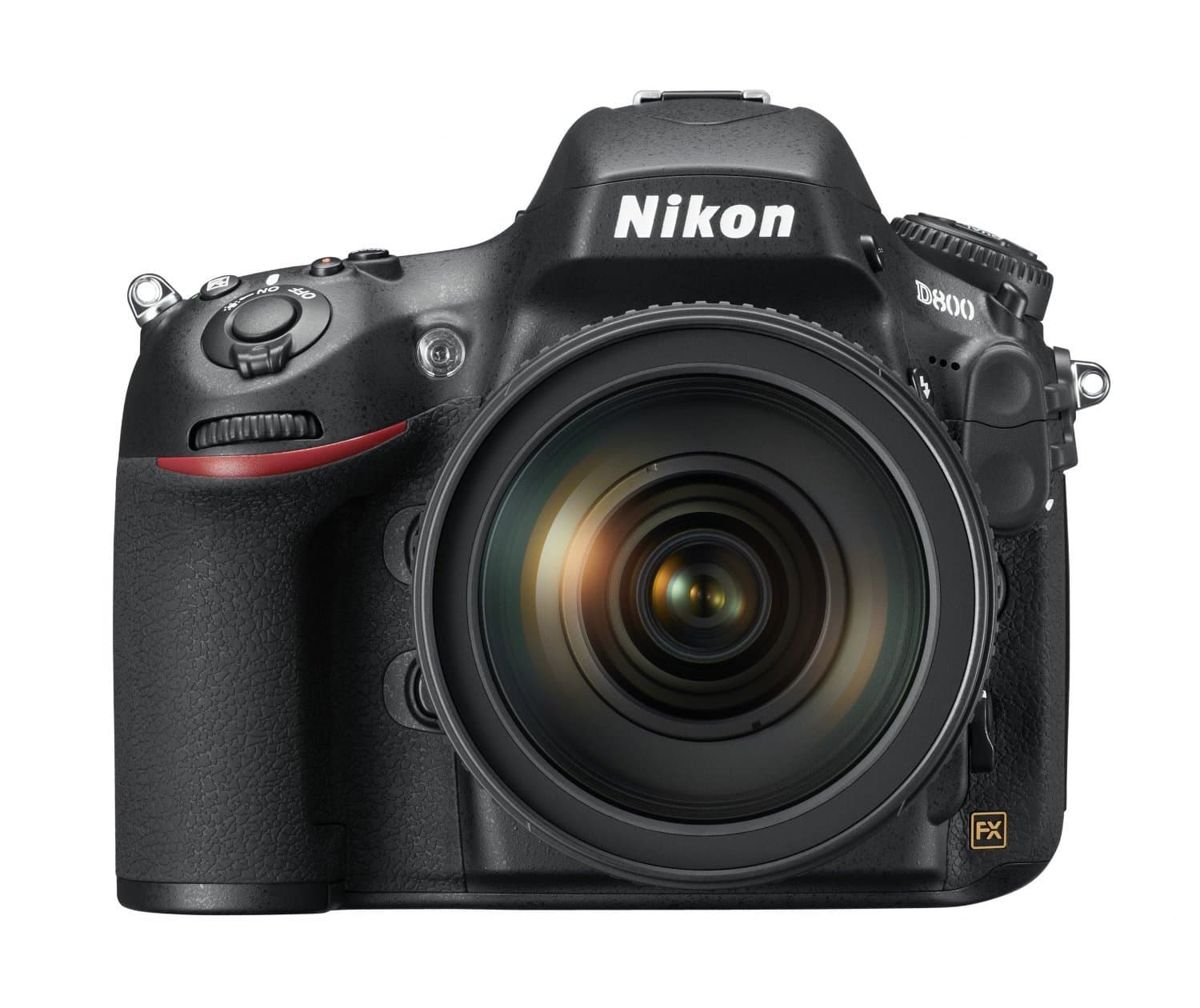
📷 Elevate your craft with Nikon D800 — where every pixel tells a story.
The Nikon D800 is a professional-grade full-frame DSLR featuring a 36.3MP CMOS sensor that delivers extraordinary image detail and dynamic range. It offers 6 fps continuous shooting, a sophisticated 51-point autofocus system with 3D tracking, and Full HD 1080p video recording. Designed for demanding photographers, it includes dual memory card slots (CF and SD), a 3.2-inch high-resolution LCD, and a 100% optical viewfinder. Its intelligent Auto ISO adapts shutter speed relative to lens focal length, optimizing sharpness especially with telephoto lenses. This camera is ideal for professionals seeking uncompromising image quality and versatile performance.
| ASIN | B0076AYNXM |
| Age Range Description | Adult |
| Aperture modes | Yes |
| Are Batteries Included | Yes |
| Aspect Ratio | 1.30:1 |
| Auto Focus Technology | Continuous, Face Detection, Live View, Multi-area, Phase Detection, Selective single-point, Single, Tracking |
| Autofocus | Yes |
| Autofocus Points | 51 |
| Best Sellers Rank | #64,605 in Electronics ( See Top 100 in Electronics ) #56 in DSLR Cameras |
| Bit Depth | 16 Bit |
| Brand | Nikon |
| Built-In Media | Battery, Body Cap, Instruction Manual, USB Cable |
| Camera Flash | Hot Shoe, PC Terminal |
| Camera Lens | Lens not included; Nikon F-mount accommodates a wide range of AF lenses |
| Color | Black |
| Compatible Devices | Nikon F (FX) mount devices |
| Compatible Mountings | Nikon F (FX) |
| Connectivity Technology | HDMI, USB |
| Continuous Shooting | 6 |
| Crop Mode | 1.30:1 |
| Customer Reviews | 4.4 4.4 out of 5 stars (543) |
| Digital-Still | Yes |
| Display Fixture Type | Fixed |
| Display Maximum Resolution | 307,000 x 307,000 pixels |
| Display Resolution Maximum | 921,000 |
| Display Type | LCD |
| Effective Still Resolution | 36.3 MP |
| Expanded ISO Minimum | 100 |
| Exposure Control | Aperture priority (A), Automatic, Manual, Shutter-priority (S) |
| File Format | NEF (RAW): 12 or 14 bit, lossless compressed, compressed or uncompressed, TIFF (RGB), JPEG |
| Flash Memory Type | Compact Flash (Type I), SD/SDHC/SDXC UHS-I compliant |
| Flash Memory Video Speed Class | V30 |
| Flash Modes | First-Curtain Sync, Auto, Red-Eye Reduction, Second-Curtain Sync, Slow Sync, Slow Sync/Red-Eye Reduction |
| Flash Sync Speed | 1/250_sec |
| Focal Length Description | 300 millimeters |
| Focus Features | Multi-CAM3500 FX Phase detection with 3D tracking |
| Focus Mode | Manual Focus (MF) |
| Focus Type | Automatic with Manual |
| Form Factor | Mid-size SLR |
| Generation | 2 |
| Global Trade Identification Number | 04960759134653 |
| HDMI Type | Type C Mini HDMI |
| Hardware Interface | USB |
| Has Color Screen | Yes |
| Image Capture Type | Stills & Video |
| Image stabilization | Digital, Dynamic, Optical |
| Item Weight | 1 Grams |
| JPEG Quality Level | Basic, Fine, Normal |
| Lens Type | Nikon F-mount |
| Manufacturer | Nikon |
| Manufacturer Part Number | 25480 |
| Maximum Aperture | 3.5 Millimeters |
| Maximum Focal Length | 300 Millimeters |
| Maximum Image Size | 6.3 Inches |
| Maximum Shutter Speed | 1/8000 Seconds |
| Memory Slots Available | 1 CompactFlash© (CF) card and 1 Secure Digital (SD) card |
| Memory Storage Capacity | 4 GB |
| Metering Methods | Multi, Center-weighted, Average, Spot |
| Minimum Focal Length | 55 Millimeters |
| Minimum Shutter Speed | 30 seconds |
| Model Name | Nikon D800 |
| Model Number | 25480 |
| Model Series | D800 |
| Movie Mode | Yes |
| Night vision | No |
| Optical Zoom | 1 x |
| Photo Sensor Resolution | 36.3 MP |
| Photo Sensor Size | Full Frame |
| Real Angle Of View | 0.39 Degrees |
| Recording Capacity | 6 Minutes |
| Remote Included | No |
| Screen Size | 3.2 Inches |
| Self Timer | 10 Seconds |
| Sensor Type | CMOS |
| Shooting Modes | High dynamic rang |
| Skill Level | Professional |
| Special Feature | 921,000-dot TFT-LCD with 170° wide-angle viewing |
| Specific Uses For Product | Photography |
| Supported Image Format | NEF (RAW), TIFF (RGB), JPEG, NEF (RAW)+JPEG |
| Total Still Resolution | 36.3 MP |
| Total USB 3.0 Ports | 1 |
| Total USB Ports | 1 |
| Total Video Out Ports | 1 |
| UPC | 018208922062 018208254804 |
| Video Output | HDMI |
| Video Resolution | FHD 1080p |
| Viewfinder | Optical |
| Viewfinder Magnification | 0.70x |
| White Balance Settings | Auto |
| Write Speed | 6 fps |
| Zoom | manual |
J**L
A review without the same info over and over...
I am not going to give a full review of this camera since it is likely you are already well aware of much of what is out there. That being said, there are a few things I have noticed which there don't seem to be much feedback on which I would like to highlight. For point of reference I am coming from a D700 and have many of the high end FX lenses. One of the absolute best improvements (aside from obvious things like resolution, improved DR etc.) is the Auto ISO feature. Am I the only one who loved this on my D700 and love it even more on the D800? Nikon has tweaked the min shutter speed setting on this so it is a little more intelligent. Instead of just saying 1/50 or whatever you want as the min (this would be a decent setting for a wide lens) the D800 takes it 1 step further and allows it to float relative to the focal length. In other words 1/50 with a 200mm lens might be a little low in my opinion but the D800 will set it to 1/200 (following the 1/ FL rule). Furthermore, you can tell the camera to set it faster or slower (there are 5 levels with the mid setting as 1/FL) so the same 200mm lens will have some multiple (or fraction) applied to this as well. I like the one step up setting so my 200mm lens never shoots with a shutter less than 1/400. This makes it so much easier on longer length lenses and especially zooms like the 70 - 200 where you might jump around and going back into the menu is a pain to set the min shutter each time... Call me lazy but I love this feature - great addition. EDIT: After shooting 2,000 shots or so with the D800 (and especially with any longer non-VR lenses) I see why this feature has been added... With the D700 the 1/FL rule seemed to work just fine, especially with VR equipped lenses (most non caffeine junkies can get away with far less). With the D800 this rule just doesn't work as well and will produce mixed results. With a D700 and my 24-70 I would shoot at ISO 100, 50mm and 1/50s all day long. On the D800 I have found it is better to go to 1/100 or even a little higher with ISO 200 or higher - the ISO change is a lot less noticeable than the increase in sharpness due to the shutter. With the 14-24 this "new" rule (haven't decided yet if the new rule should 1/2*FL or 1/3*FL) isn't too hard to follow but with the 70-200 I find myself pushing the ISO frequently of changing the setting down a bit due to the presence of VR (I use the VRII model). I honestly would not have guessed that the increase in MP would require this much of a change in technique but it does. Of course you can always downsample and still be better off than where you were with the D700 so don't take this as a negative to the camera - just a required change in technique in my opinion. When I first wrote this review I loved the new feature and I still do now but there is one change they now need to make: Recognize VR equipped lenses and allow conditional rules such as 1/2*FL with VR and 1/3*FL without. None the less I just change the setting in "my menu" when I use a 16-35VR or 70-200VR (although the longer one can sometimes benefit from just leaving it) and the end result is the same but Nikon made it 90% of the way on the new feature, why not round it out. I did also pick up a grip and use rechargeable AAs simply to add weight & this also helps but D800 + grip + 8 rechargeable AAs + 70-200 is not something I walk around with for hours on end. Other more minor comments: - This is less about Nikon as it is about Adobe but it caught me off guard: LR3 will not read D800 RAW files nor will it ever! You either have to use a converter (add more workflow steps which is unacceptable in my opinion) or upgrade to LR4. I suppose I can see both sides but it is annoying to say the least. Adobe should really support this in LR3. It made me want to use Aperature instead but I also use PCs so that is just a pain. - Built in HDR is a joke. Any respectable HDR shooter will bracket with at least 5 frames and likely use Photomatrix or something similar. It also does not work if you shoot RAW - only JPG and only 2 images hence the joke. Your probably not buying the camera for this anyway. - The quiet mode is also useless. Fractionally less noisy than the std and a waste of a spot on the dial. - The + / - on the image zoom is backwards from the D700. Just takes some getting used to... - Folks, it is a 36mp sensor; you will need a bigger drive and 16GB cards barely scrape by now. I am finding 14 bit lossless compression files in the 50mb range - directly after a format the camera reads 200 available images on the 16GB card. A 2GB card is like an old roll of film now for 25 "exposures" LOL. I get that wedding shooters are going to need a lot more bigger drives but you can't have more detail without more space... Yes, people say you can downscale but this poses a serious workflow bottleneck for me. I have also found that in addition to more drive space working with these large files, particularly in PS & HDR SW with a dated dual-core 2.4GHz CPU and 4 gigs of ram in 32 bit mode requires patience. I hate waiting. EDIT: I have underestimated the PC side of the equation on this camera upgrade. I had to buy a new computer with a lot more muscle to handle a 7 or 9 image RAW stack to be sent to Photomatrix. These get really big and processor hungry. I got a PC with dual quad core (8 total) 3.2GHz XEONs and 16GB of RAM. The processors are far more important than the RAM I have found so get a faster processor and 8GB if you must to save $. It costs as much as a nice lens or even a bit more but keep in mind it is used for every image I take... Worth the upgrade in my mind and something to consider if you have an aging PC / Mac. - 100% viewfinder vs 95% on the D700 doesn't sound like much but it is really a welcome improvement. - I have now started buying SD cards to compliment the CFs I already used with my D700. For whatever reason tests I have done on my computer show I am getting faster write speeds out of a 60mb/s Sandisk EX Pro CF card than I get out of a 95mb/s Sandisk Extreme Pro SD card. Same manufacturer but the CF cards just seem to be faster. They are also more expensive - go figure. - I have never owned a D7000 but I hear the auto focus settings (selecting) are the same on the D800. It is way different than the D700 and took me 10 minutes just to figure out how to adjust from AF-S to AF-C. Hint: it is on the front (the side button) to the left of the lens when looking thru the viewfinder. - It has been said before but the fact that this thing has similar high ISO performance compared to the D700 with 3x the resolution deserves a slow clap from Nikon. Really, impressive. I have no issue with using ISO 1600 in auto ISO mode and for certain types of shots see little downside to 3200 unless you are seriously pixel peeping. - Their product launch and way they rolled this out and so dramatically underestimated demand is the exact opposite. Once you have one (a good one without some of the early mfg issues) though you seem to forget all the frustration of the wait. These are just the initial impressions since I have only had the camera for a week or so and shot < 1,000 images. So far very impressed thou and would do it again in a heartbeat. Lastly, in case you are also wondering, I have since cold my D700. Given it still has amazing value I just could not justify it as a backup body and there were few if any advantages that I could really see. I can see wedding photographers scooping these up though as they are a great balance of performance and file size if you are getting into the 4 digit file counts per shoot.
S**G
Great camera, astonishing details!! ...updated
You all know what the specs of this camera are. I won't lose your time with that. I have the camera for about 20 days and here are my impressions so far. In the beginning I was very upset by the Mpx number. After just the first shoot, I have to tell you - I don't want to have a camera with small resolution any more. Period! The level of details is astonishing! The images are excellent even straight from the camera - with no edit at all. The dynamic range is excellent. Also the AF is very good. It literally sees in the dark. I tried to take pictures in dark room at night (no light - all lights turned off) and the AF assistant light was enough to focus, without even hunting. I wasn't able to see ANYTHING, because it was complete dark, but the camera did. Daytime I never experienced any problems with the AF. I believe the fast AF and details level are also determined by what lens you use (and I have really good optics), but I do compare with D700 and D7000 and there is significant improvement. I like the ergonomics. It's comfortable to hold, even for quite long time. I like the screen resolution, but it does have that slight greenish tint (if that's bothering you it can be changed in the settings). The only things I don't like are: There is a slight noise even in low ISO values - 400 and above, but it is only when you look at 100% and the noise is very fine grade, extremely easy to remove in LR. I would also like to see some more customization options for some of the buttons - like I never use the WB (well almost never) and since I shoot RAW, for me this is quite useless button. I currently own the Sony NEX-7 and I'm impressed with the level of customization of that camera. You can do all your settings just with your thumb - A, S, ISO, etc. I really would enjoy to see at least some of this on D800. Overall, D800 is a dream camera - I highly recommend it to everyone! ~~~~~~~~~~ Update 1 ~~~~~~~~~~~ (after 4 months of use): Lowering my score to 2 stars. I do not change my mind on what I've written before about this camera. Everything is correct, except with one - the AF. I said I didn't have problems with my AF, but surely now I do. And it's the commonly spread left AF points problem. I did not discover it in the beginning, because I rarely use the very left AF points. Few months after the camera was on the market, I started to read reviews, describing this problem, but since I haven't experienced those, I neglected to test myself. Until one day, when shooting outdoor I saw my images come extremely soft and blurry (with 24mm 1.4G lens). I tested with the 16-35mm - same thing. 50mm 1.4G - same. I had inconsistent problems with my 85mm 1.4G lens while ago, thinking first that it is caused by backfocusing. After I talked with the technical department from Nikon I realized that this could be caused by the fact I was shooting kids, and you never can be sure how fast they move, etc. However - this was something different now. I now remembered what I read about the left AF points and when I got back home, I decided to test myself. I downloaded some charts, put those on the wall and started testing my D800. It clearly had problem with AF when the left points are used. The problem is bigger with wide angle lenses at big apertures(small numbers) - especially with 24mm at f/1.4. It fades away after f/5.6-f/8. And as you switch from wide-angle to tele lenses it also fades, even at big apertures. That's why it is not very easy to discover the problem, until you don't fell in a situation like mine, or just decide to test your camera in the beginning. I contacted Nikon, sent them multiple pictures and they requested the camera for check. I'm waiting now (already about 10 days) and meanwhile reading the latest review from Mansurov's website (how the guy received his camera with fixed left AF, but they screwed up his center AF, which is worse). I hope it will be different with my camera and everything will be ok, but I know Nikon from before - it's not easy to deal with them when have troubles with your equipment. So wait for my second update, once I receive the camera back. Until then my score is 2 stars. ...and it could go either way.. ~~~~~~~~~~ Update 2 ~~~~~~~~~~~ (after 3 weeks in Nikon's service center): I can say the camera is repaired in general. I did the tests again and it's fine, but you can still see small difference in sharpness when use left AF points (more top left now, than middle and bottom), but it is acceptable, keeping in mind that this is visible ONLY with my 24mm at f/1.4. At f/1.8, f/2, etc. it is sharp. With the 50mm at f/1.4 is sharp now too. There is another issue though - the pictures taken with LiveView are sharper, than the ones taken using the viewfinder. I'm sending the camera back to be fine tuned. I'm also changing my review to 4 stars - this is otherwise awesome camera, but there are still few issues! Hope Nikon will do a better QC next time. ~~~~~~~~~~ Update 3 - The last one ~~~~~~~~~~~ (after many months of use): I'm raising back my score to 5 stars. The camera is so amazing, that one easily forget all bad experience with left AF points (or whatever else) in the past.
D**U
Wonderful
A**A
It's great camera - the image quality is superb. However, and you'll find this in other reviews also - the LCD screen has a weird yellowish-green tint to it and the shutter is super loud. That said, the images come out fine (no tint). It's a good pro-level camera.
P**E
I purchased this camera and loved the quality however it has a common problem amongst D800s. It makes a ratchet sound continuously when initiating the zoom on the lens. This is a camera issue known to Nikon. Amazon was fantastic in dealing with my issue as they always are.....however the seller probably knew about this, which makes me very angry as I purchased an expensive lens to accompany the camera.
Trustpilot
Hace 2 semanas
Hace 1 mes