We remain fully operational. Our teams are working around the clock to ensure your deliveries continue safely.

Descargar la aplicación


Servicios al cliente
Sobre nosotros
Copyright © 2025 Desertcart Holdings Limited
Descargar la aplicación
Buy anything from 5,000+ international stores. One checkout price. No surprise fees. Join 2M+ shoppers on Desertcart.
Desertcart purchases this item on your behalf and handles shipping, customs, and support to Peru.
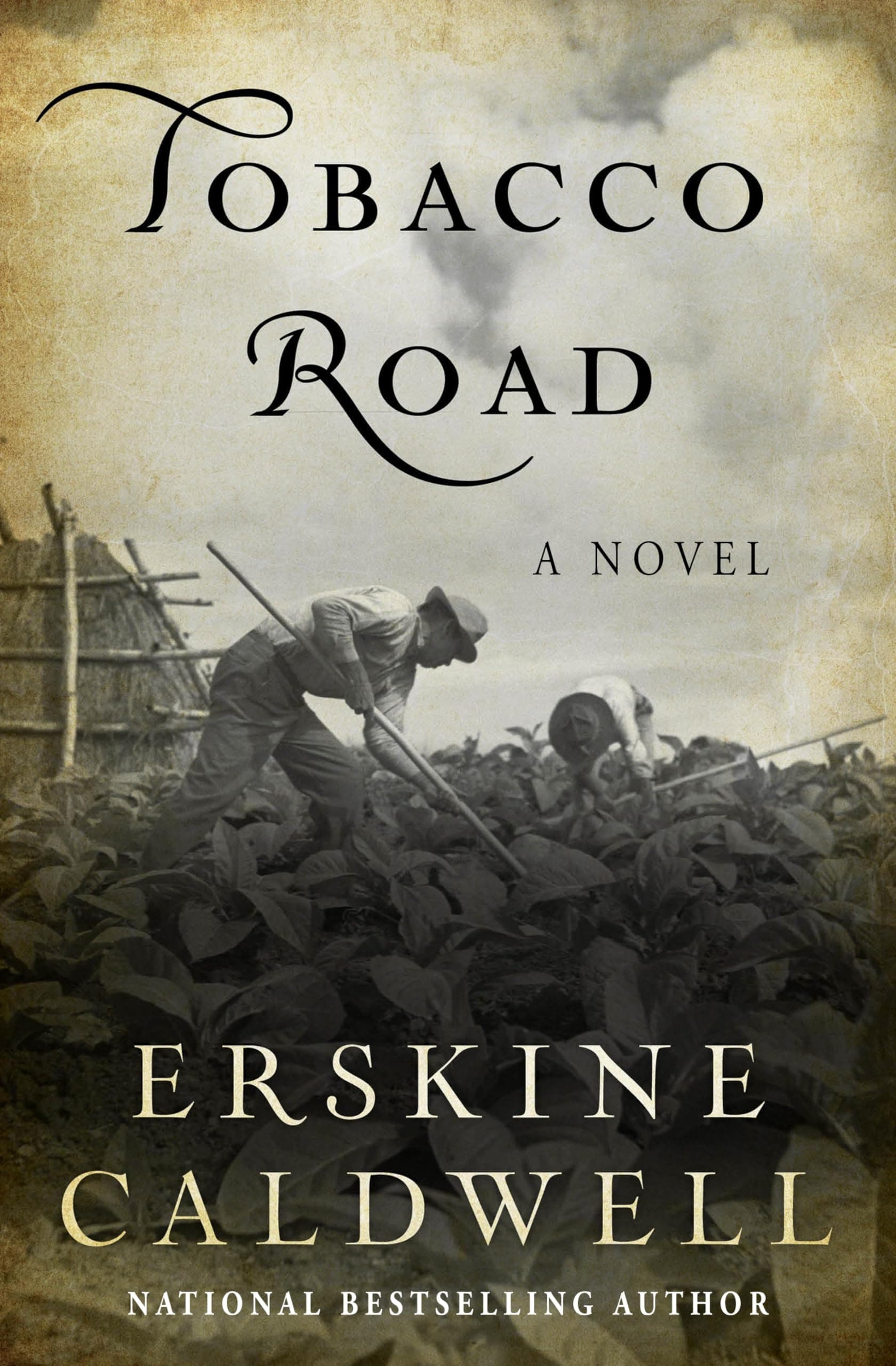
Tobacco Road: A Novel - Kindle edition by Caldwell, Erskine. Download it once and read it on your Kindle device, PC, phones or tablets. Use features like bookmarks, note taking and highlighting while reading Tobacco Road: A Novel. Review: An Archetypal Folk Carnival - Erskine Caldwell's folk carnival 'Tobacco Road' (1932) documents the last days in the lives of Jeeter and Ada Lester, poverty-stricken and permanently befuddled sharecroppers living in rural Georgia during the Great Depression. The tragic elements, initially almost undiscernable, strike sharply and rapidly in quick lunges before vanishing again beneath the book's brilliant comic surface. The novel has an archetypal framework: Patriarch Jeeter, dispossessed of his ancestral land, upon which nothing will now grow but "broom sedge and scrub oak," perpetually dreams of bringing his dead and depleted soil to life. While musing on his farm's infertility, and when not lusting after the women around him, Jeeter, a father of twelve, is preoccupied with ending his own ability to reproduce via self-castration. Like the Hanged Man of the Tarot, habitually procrastinating Jeeter is continually hamstrung and locked in the stupefying eternal moment. Caldwell is particularly cruel in drawing his female characters: simple-minded and otherwise beautiful daughter Ellie May has a disfiguring harelip; man-crazy, self-appointed preacher Bessie has a good figure and a set of nostrils but no nose, the unnamed, unspeaking grandmother is starved by the other family members, who will no longer acknowledge her; struggling wife Ada, who has not always been faithful, dreams only of having a dress of correct length and current style to be buried in; and twelve year-old child bride Pearl has lost the will to speak and sleeps on the floor to avoid her adult husband's sexual advances. In contrast, Jeeter and handsome teenage son Dude are merely imbecilic, gullible, and grossly self-serving. All of the characters are God-fearing and largely well-intentioned towards one another, though uneducated and of extremely limited consciousness: they are guiltless of malice, if not of responsibility. In a scene intended to shock, newlyweds Dude and Bessie accidentally kill a Black man, but think nothing of it. But this blank, spontaneous indifference to reality and the reality of other people is what makes the 'Tobacco Road' hilariously funny. The ancient grandmother meets a painful and grueling death through another careless accident with the car; Jeeter discusses Ellie May's disfigurement in front of her without the slightest regard for her feelings; Bessie, perpetually in heat, nearly rapes unwilling, unresponsive, 16 year-old Dude; car salesmen gather to enthusiastically stare down Bessie's nostril holes and insult her; Jeeter attacks his son-in-law and steals the bag of turnips he walked has seven miles to obtain; Ellie May casually masturbates in the front yard; the whole family gathers, tribe-like, to watch Dude and Bessie make awkward love on their wedding night; the Lesters destroy a new automobile (a symbol of the modern, productive, urbanized world they will never be a part of) within a few days due to recklessness and the family tradition of being unable to respect and maintain any material possession. Like many of the characters in Muriel Spark's novels, the cast of 'Tobacco Road' are only vaguely aware, if aware at all, of themselves as moral, spiritual, or ethical beings, despite the occasional religious trappings around them. This lack of moral awareness, "and the comedy that arises from it" is what fuels 'Tobacco Road.' Caldwell has written the lightest of black comedies, and it is to his credit that he is capable of allowing his audience to embrace and enjoy these occasionally vigorous lost souls, even though only tragedy seems to lay ahead for all. The universal literary and commercial success of 'Tobacco Road' in 1932 (the novel was adapted into a long-running Broadway play, and a bowdlerized John Ford film in 1941) gave new life to the country bumpkin genre in the 20th-century. Its success helped usher in the Ma And Pa Kettle films, the Li'l Abner comic strip, some of Tennessee William's short stories, and classic American television series such as 'The Andy Griffith Show' (1960-1968), 'The Beverly Hillbillies' (1962-1971), 'Petticoat Junction' (1963-1970), and 'Green Acres' (1965-1971). Despite the many ways in which sexual intentions go awry throughout the novel, 'Tobacco Road' has a natural, healthy approach to sexuality, as does 'God's Little Acre,' the equally-successful book which followed it. In this age of political correctness and sexual suspiciousness, the book's vibrant acceptance of sexuality as one of life's givens is admirable. Some Southerners, at the time of its publication and continuing to the present, have objected to the book as an indictment of Southern culture. But 'Tobacco Road' is clearly a soulful high satire, and its characters are intentionally caricatures of the basest order. Ultimately, 'Tobacco Road' is a novel which seductively illuminates and instructs while it seamlessly entertains. Review: Controversial, seminal, excellent. - There's a lot of controversy about this book. Is it a pulp novel, black comedy, tragedy, trage-comedy, does it "bash The South"? I can only say it's largely a little bit of all of the above. For sure it is a bare bones, no holds barred depiction of a moment in time. Characters that may not have been real per se but be assured there WERE real people quite like them. It not so much addresses as depicts the issues of poverty, ignorance, sloth yes but more so the phenomenon of being placed in the situation of having expectations, however low, placed upon you & then sinking to them; all the while feeling yourself a victim of the system that places those expectations. Violence, substance abuse, hunger, sexual abuse and promiscuity, desensitization are all depicted as the scourge of the rural South at the time. Oddly these things are lamented as the scourge of urban America now. So we've learned little other than how to transplant our problems' locale. It may be unflattering and downright disturbing but never the less an excellent read.
| ASIN | B0054TB664 |
| Accessibility | Learn more |
| Best Sellers Rank | #123,413 in Kindle Store ( See Top 100 in Kindle Store ) #145 in Add Audiobook for $3.99 or Less #332 in Dark Humor #1,003 in Historical Literary Fiction |
| Customer Reviews | 3.8 3.8 out of 5 stars (1,526) |
| Enhanced typesetting | Enabled |
| File size | 5.7 MB |
| ISBN-13 | 978-1453216972 |
| Language | English |
| Page Flip | Enabled |
| Print length | 265 pages |
| Publication date | June 21, 2011 |
| Publisher | Open Road Media |
| Screen Reader | Supported |
| Word Wise | Enabled |
| X-Ray | Enabled |
T**C
An Archetypal Folk Carnival
Erskine Caldwell's folk carnival 'Tobacco Road' (1932) documents the last days in the lives of Jeeter and Ada Lester, poverty-stricken and permanently befuddled sharecroppers living in rural Georgia during the Great Depression. The tragic elements, initially almost undiscernable, strike sharply and rapidly in quick lunges before vanishing again beneath the book's brilliant comic surface. The novel has an archetypal framework: Patriarch Jeeter, dispossessed of his ancestral land, upon which nothing will now grow but "broom sedge and scrub oak," perpetually dreams of bringing his dead and depleted soil to life. While musing on his farm's infertility, and when not lusting after the women around him, Jeeter, a father of twelve, is preoccupied with ending his own ability to reproduce via self-castration. Like the Hanged Man of the Tarot, habitually procrastinating Jeeter is continually hamstrung and locked in the stupefying eternal moment. Caldwell is particularly cruel in drawing his female characters: simple-minded and otherwise beautiful daughter Ellie May has a disfiguring harelip; man-crazy, self-appointed preacher Bessie has a good figure and a set of nostrils but no nose, the unnamed, unspeaking grandmother is starved by the other family members, who will no longer acknowledge her; struggling wife Ada, who has not always been faithful, dreams only of having a dress of correct length and current style to be buried in; and twelve year-old child bride Pearl has lost the will to speak and sleeps on the floor to avoid her adult husband's sexual advances. In contrast, Jeeter and handsome teenage son Dude are merely imbecilic, gullible, and grossly self-serving. All of the characters are God-fearing and largely well-intentioned towards one another, though uneducated and of extremely limited consciousness: they are guiltless of malice, if not of responsibility. In a scene intended to shock, newlyweds Dude and Bessie accidentally kill a Black man, but think nothing of it. But this blank, spontaneous indifference to reality and the reality of other people is what makes the 'Tobacco Road' hilariously funny. The ancient grandmother meets a painful and grueling death through another careless accident with the car; Jeeter discusses Ellie May's disfigurement in front of her without the slightest regard for her feelings; Bessie, perpetually in heat, nearly rapes unwilling, unresponsive, 16 year-old Dude; car salesmen gather to enthusiastically stare down Bessie's nostril holes and insult her; Jeeter attacks his son-in-law and steals the bag of turnips he walked has seven miles to obtain; Ellie May casually masturbates in the front yard; the whole family gathers, tribe-like, to watch Dude and Bessie make awkward love on their wedding night; the Lesters destroy a new automobile (a symbol of the modern, productive, urbanized world they will never be a part of) within a few days due to recklessness and the family tradition of being unable to respect and maintain any material possession. Like many of the characters in Muriel Spark's novels, the cast of 'Tobacco Road' are only vaguely aware, if aware at all, of themselves as moral, spiritual, or ethical beings, despite the occasional religious trappings around them. This lack of moral awareness, "and the comedy that arises from it" is what fuels 'Tobacco Road.' Caldwell has written the lightest of black comedies, and it is to his credit that he is capable of allowing his audience to embrace and enjoy these occasionally vigorous lost souls, even though only tragedy seems to lay ahead for all. The universal literary and commercial success of 'Tobacco Road' in 1932 (the novel was adapted into a long-running Broadway play, and a bowdlerized John Ford film in 1941) gave new life to the country bumpkin genre in the 20th-century. Its success helped usher in the Ma And Pa Kettle films, the Li'l Abner comic strip, some of Tennessee William's short stories, and classic American television series such as 'The Andy Griffith Show' (1960-1968), 'The Beverly Hillbillies' (1962-1971), 'Petticoat Junction' (1963-1970), and 'Green Acres' (1965-1971). Despite the many ways in which sexual intentions go awry throughout the novel, 'Tobacco Road' has a natural, healthy approach to sexuality, as does 'God's Little Acre,' the equally-successful book which followed it. In this age of political correctness and sexual suspiciousness, the book's vibrant acceptance of sexuality as one of life's givens is admirable. Some Southerners, at the time of its publication and continuing to the present, have objected to the book as an indictment of Southern culture. But 'Tobacco Road' is clearly a soulful high satire, and its characters are intentionally caricatures of the basest order. Ultimately, 'Tobacco Road' is a novel which seductively illuminates and instructs while it seamlessly entertains.
J**E
Controversial, seminal, excellent.
There's a lot of controversy about this book. Is it a pulp novel, black comedy, tragedy, trage-comedy, does it "bash The South"? I can only say it's largely a little bit of all of the above. For sure it is a bare bones, no holds barred depiction of a moment in time. Characters that may not have been real per se but be assured there WERE real people quite like them. It not so much addresses as depicts the issues of poverty, ignorance, sloth yes but more so the phenomenon of being placed in the situation of having expectations, however low, placed upon you & then sinking to them; all the while feeling yourself a victim of the system that places those expectations. Violence, substance abuse, hunger, sexual abuse and promiscuity, desensitization are all depicted as the scourge of the rural South at the time. Oddly these things are lamented as the scourge of urban America now. So we've learned little other than how to transplant our problems' locale. It may be unflattering and downright disturbing but never the less an excellent read.
K**R
Not quite a masterpiece, but not a waste of time, either
If you're well acquainted with this novel, and merely wondering whether the Kindle version is plagued with the sloppy editing that all-to-often infests older titles in e-book form, go ahead and buy this. I found no more issues than I would with a paper-and-glue edition. If you're not acquainted with this "classic," read on, if you want an in-depth analysis. The Plot: The story follows a few days in the lives of the Lesters -- a hillbilly family of former sharecroppers living on their former employer's land beside a "tobacco road." Jeeter, the self-doomed patron of the Lester family, is obsessed with trying to farm the land again despite its increased infertility and his toxic reputation amongst creditors. His family is so consumed with hunger that they have room for few thoughts, other than wanting a fashionable dress to die in, (his wife), a working car horn to honk, (his son), and a man to seduce (his harelipped daughter). We are introduced to the family when Lov, the son-in-law, stops by to ask for assistance in coercing his twelve year-old bride into sleeping with him. Having bought her from Jeeter for food, he expects the full use of his purchase. Jeeter notices the sack of turnips he has with him, and waxes poetic about how much he's been craving turnips for the next several pages--to the point that he couldn't care less about the overtly public seduction of Lov that Ellie Mae attempts. Finally, Jeeter promises to help his son-in-law sexually coerce his own child, then, with the other members of the family running interference, he steals Lov's bag of turnips, (and only reluctantly decides to share with his family afterwards). If you didn't know before that you were reading a book about trashy backwoods tragicomic figures, you do now. Sister Bessie, the nose-less preacher's-widow-turned-preacher comes along just after the theft. She accepts a stolen turnip or two before praying over Jeeter to absolve him of the sin of theft (a well-penned example of irony, I must admit, and one that had me thinking about mafia "Dons" and the Catholic church for a micro second). Having decided (aka "received a message from God") that her widowhood has gone on long enough, she sets her eyes on Jeeter's 16 year-old son, Dude. (Yes, his name is Dude, a word that at the time of publication meant a fashionable city slicker -- another bit of wink-nudge irony). Of course, Dude the pretty boy isn't at all interested in marrying a 40-something widow with a facial deformity, or becoming her side-kick street preacher. So, what super-human feat must she perform in order to win his hand in marriage? Easy -- say she'll buy a new car with the insurance money her husband left her. Dude's only question regarding whether a car is worth a lifelong commitment to a woman more than twice his age is, "Will the horn work?" The depth and complexity of character here is staggering, isn't it? As Bessie and Dude go on to automotive shenanigans and connubial not-quite-bliss, hijinks ensue, and the book gets much more readable. Jeeter tries to go along for the ride, and more hijinks ensue, even if the book does put a toe or two over the boundary of believability. I won't say any more about what happens, because I don't want to give away the good parts, so I'll just get to my critical analysis. The Good: There is something approaching the poetic in Caldwell's use of repetition here -- it seems designed to portray the ruts a mind falls into when the path it is on is barren and charmless. I found myself reminded of Whitman, but with none of the joy, and almost none of the insight -- only the incidental music. Caldwell's characters, especially Jeeter, worry every thought like a dog with a bone -- the less meat to the thought, the more they seem to chew on it. This was intriguing at first, but became a little tiresome after a bit, (I swear, you could skip entire pages once Jeeter starts talking about wanting something). The artistry of the portrayal was subjugated by the subject--I can only read the inane sentences about wanting turnips or guano so many times before I become a bit numb to the brilliance of the repetition. Ok, ok, I get it, Mr. Caldwell -- hunger and longing is all these people have left to fill their claptrap lives, and they have fallen so low that even tasteless food and feces are transformed into symbols of elevated status. The portrayal of systemic abject poverty and the inhumanity such a condition breeds is very well done here. The atmosphere of starvation, desperation, and bewilderment is palpable. There is also a clear and believable picture of how people (on every rung of the social ladder) will ruthlessly take advantage of others. Caldwell doesn't go for the easy-out of castigating the rich for the plight of the poor; nor does he allow the poor to be solely the authors of their own tragedy. His characters -- illiterate, insolvent sharecroppers living on land they don't own and can no longer afford to farm -- are constantly taken advantage of by city folk. But they refuse to help themselves in many ways -- Jeeter is in love with the land that will no longer yield anything but unsalable "blackjack" wood for him. He cannot bring himself to leave the home his family lived in for generations, the land they tilled, or the methods and traditions they upheld. It is this stubborn resistance to progress that authors his fate, and the fate of those who have not yet escaped him. The Mixed (bad put to good use): The inhumane treatment of others by every (white) person in the book is abhorrent, and at times made the book damn near unreadable. The grandmother, for example is openly abused and despised, presumably for her drain on the available resources; even Sister Bessie, the "preacher woman" who should know about the biblical commandments regarding one's elders, treats her like a dog she'd like to kick. Blacks, (of course referred to in the most temporally-accurate derogatory language), are viewed as animals. The only thing more frightening to the Lesters than starving to death is being laughed at by one of the black workers trudging past their yard. The Lesters are starving, illiterate, bankrupt, lazy, ignorant, thieving squatters living in filth and rags and marrying off their underage children for food, but at least they have a group of people to whom they can feel superior! The portrayal here makes it easy to see why racism is still alive and well in the world -- when you have no good qualities to rely on but a sense of unearned superiority, you're not likely to give that little bit up. It is, in part, an artistically astute image of the human addiction to status, and, in part, a scathing condemnation of the lack of empathy that can accompany despair. It makes it REALLY hard to like any character in the book, though. Which leads me to: The BAD While this book may be well-worded (if a tad too repetitive), and while it may raise interesting questions about the relationship between poverty and inhumane behavior, and whether a detachment from humanity and the progress humanity is wont to make can be a contributing factor to economic calamity, there is simply too much negativity here to make this book an astounding work of fiction. There is NO HOPE here -- the cycle is getting ready to repeat itself by the end of the book, as Jeeter's son learns nothing from his father's self-destructive actions. None of the characters grow one tiny bit, or learn any single lesson, (other than a car needs oil), or discover any ounce of empathy or ingenuity within themselves. They start with the emotional depth of Saharan rain puddles, and they end as they began. They are so unbelievably unlikeable that, when they are grossly taken advantage of, it becomes comical, instead of eliciting outrage or sympathy. (This book could almost be read as a brilliantly successful comedy, if it wasn't for some of the pervasively depressing and disgusting overtones.) Don't get me wrong, I can get along with a good anti-hero, but he or she must do something worth reading about other than steal turnips, try to sell twigs, and whine about not having seed cotton or guano to procrastinate planting with. I can get along with dark and dreary fiction, too, but the characters must be fully fleshed-out and thoroughly engaging. When the characters seem to be so utterly uncharmed by their lives that they can't be bothered to fight for it, I can't be bothered to find their story compelling, either. Give me something of beauty, or hope, or epiphany, or, at the very least, human connection, please! Overall This is a quick read, it's rather entertaining in some places, and there is some salient social and historical commentary, so it's not at all a waste of time. It's just not at all a masterpiece, either.
M**L
Curiosa edición, sin ninguna fioritura, visiblemente bajo control de Amazon. Se llega a dudar de si el texto está completo y controlado. Aunque con buena calidad de papel y de impresión.
A**ー
面白いです。登場人物各々にしっかりと性格が与えられていて、話も劇的、読む者を飽きさせません。英語も平易で読み易く、長さも適切でしょう。しかし、この作品で論文を書くというのは中々至難の技で、私などは大変苦労しました。しかし、自動車や綿花栽培、タバコロードという外部から遮断された土地における信仰など、掘り下げる要素は多くあります。趣味にも研究にもお勧めの一冊です。
B**S
come da descrizione
J**T
Very moving picture of a disappearing world and some people who fight to keep things as they were. Sad and somehow depressing, it depicts characters through their conversations rather than through descriptions. Short but really powerful.
T**C
Just reread this after about 30 years and found it still captivating At 180 pages this is not a long read but it is an extremely interesting story which demands your attention throughout. The story is set in the Deep South, Georgia, during the great depression - 1929 -1939, Jeeter Lester has farming in his blood and is a man of the countryside who's not prepared to go anywhere else for work, even though he has none. He does a lot of thinking about work, but strapped for cash and living in poverty its years since he actually did anything other than bemoan his bad luck. Jeeter lives with his useless teenage son Dude, his faithful wife Ada, daughter, Ellie May, who unfortunately has a cleft lip & Grandma Lester who is constantly ignored by all. They are all uneducated, penniless & starving. Lov Bensey is Jeeter's son in law, having married Jeeter's 12 year old daughter Pearl! This doesn't stop Jeeter from bushwhacking him for his hard earned sack of parsnips, which he has just completed a 9 mile hike to get. Into the story comes Bessie who is a self-proclaimed preacher of uncertain character who lusts after Lester's son. The story has some great characters, is delightfully put together, very dead pan and witty, though ultimately very sad and thought provoking I thoroughly enjoyed it and would especially recommend it to those who enjoy reading about the Deep South. This reminded so much of The Beverly Hill Billies.. Excellent read in my view, a comedy with many moral messages. This and Caldwell's other main novel God's Little Acre are still two of the best selling American novels of all time. Selling something like 24 million copies. Quite a compliment to the quality of the read.
Trustpilot
Hace 3 semanas
Hace 3 días